Gut Health & Digestion: The Ultimate Guide (Microbiome, Bloating, IBS Basics, Probiotics, and Fiber)
Gut health affects more than digestion. It can influence energy, mood, appetite, and immune function. Still, most gut problems don’t need extreme “detox” plans. They need a clear strategy: build a gut-friendly diet, identify triggers, and use supplements only when they make sense.
This guide covers the microbiome, bloating, IBS basics, probiotics/prebiotics, and fiber in a simple, practical way.
Key Takeaways
- Your gut improves fastest when you eat more fiber slowly and reduce ultra-processed foods.
- Bloating usually comes from diet triggers, stress, constipation, or eating habits, not “toxins.”
- Probiotics can help in specific cases, but fiber and food variety matter more long-term. If you prefer gummies, see my guide to the best daily gummy vitamins for energy, gut, and immune support.
- Digestive enzymes help certain people, but they don’t fix every stomach issue.
- If you have red-flag symptoms, you should get medical evaluation.
1) Gut Health Basics (What It Actually Means)
What the microbiome is
Your microbiome is the community of bacteria and other microbes living in your gut. These microbes help:
- break down fiber
- produce helpful compounds (like short-chain fatty acids)
- support gut barrier function
- influence immune signaling
You support your microbiome most through food patterns, not expensive supplements.
What “good digestion” looks like
Good digestion is not “perfect.” It usually means:
- regular bowel movements
- minimal pain or cramping
- manageable gas and bloating
- stable appetite and energy
2) The Gut-Friendly Foundations (Food First)
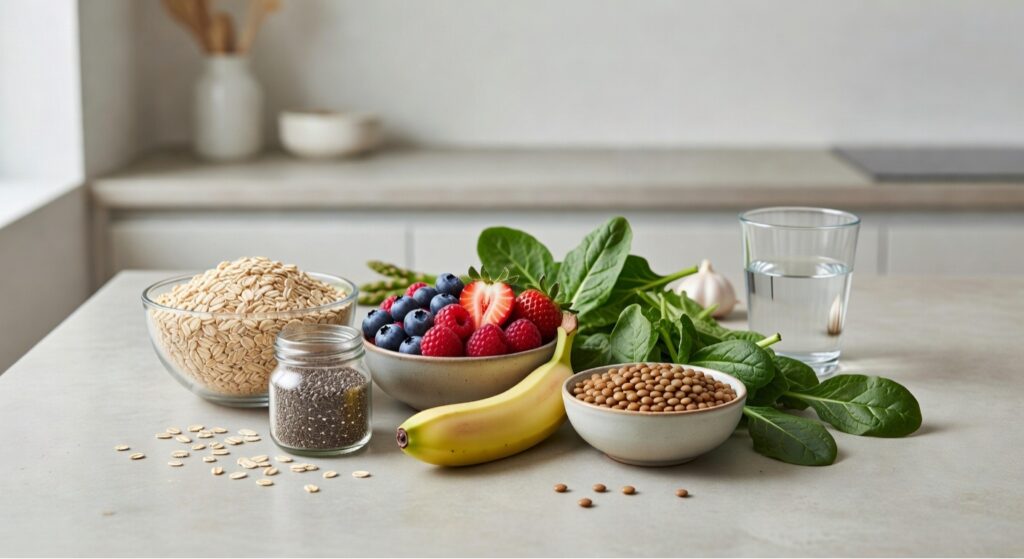
If you want the best gut results, build these habits before adding supplements.
Eat more fiber, but do it slowly
Fiber feeds beneficial gut bacteria and supports bowel regularity. Many people increase fiber too fast and feel worse. A slow increase works better.
How to increase fiber without bloating
- Add one high-fiber food per day for one week.
- Increase again only if you tolerate it.
- Drink water consistently.
High-fiber foods that work well
- oats
- chia seeds
- berries
- beans and lentils
- vegetables (especially leafy greens)
- apples and pears
Increase food variety
A varied diet supports a more resilient microbiome.
Easy variety goal: Rotate proteins, vegetables, and fruit across the week.
Reduce ultra-processed foods
Ultra-processed foods can worsen bloating, constipation, and irregular stools in many people especially when they replace whole foods.
3) Bloating: The Real Causes (Not the Internet Myths)
Bloating can feel scary, but it often has a simple explanation.
Common causes of bloating
- eating too fast or overeating
- carbonated drinks and chewing gum
- constipation
- high-FODMAP foods (for some people)
- lactose intolerance or sensitivities
- stress and poor sleep
- sudden fiber increase
- sugar alcohols (like sorbitol, xylitol)
Quick bloating fixes that often work
- Walk for 10–15 minutes after meals.
- Eat slower and stop at “comfortably full.”
- Reduce carbonated drinks for a few days.
- Increase water if constipation is present.
- Adjust fiber slowly instead of cutting it completely.
4) IBS Basics (Simple, Safe Education)
IBS (irritable bowel syndrome) often involves abdominal pain with bowel changes (constipation, diarrhea, or both). Many people improve symptoms with structured diet changes and stress management.
IBS-style symptoms can overlap with other conditions. If symptoms are persistent or severe, you should get a medical evaluation.
IBS-friendly habits that help many people
- steady meal timing
- smaller meals if large meals trigger symptoms
- soluble fiber support
- stress reduction and better sleep
- targeted trigger identification
5) Probiotics vs Prebiotics
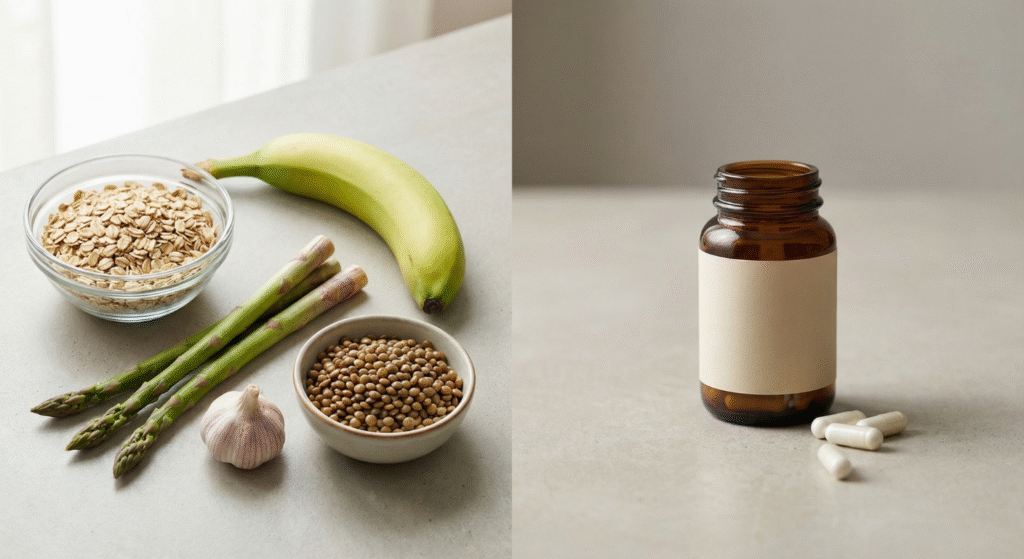
Probiotics
Probiotics are live bacteria that may support gut function in specific cases. They can help some people with:
- antibiotic-associated diarrhea prevention
- certain IBS symptoms
- temporary digestion support during travel or stress
Probiotics don’t work the same for everyone because strains differ and gut environments vary.
Prebiotics
Prebiotics are fibers that feed beneficial bacteria. Many people get prebiotics from foods:
- onions, garlic (if tolerated)
- oats
- bananas (especially slightly green)
- legumes
- asparagus
Simple truth: Prebiotics and fiber often matter more long-term than probiotics.
6) Digestive Enzymes (Who They Help and Who Can Skip)
Digestive enzymes can help when your body struggles to break down certain foods. Examples:
- lactase for lactose intolerance
- enzymes for high-fat meals (for some people)
- enzyme support for certain digestive patterns
They don’t “fix” gut health alone. If your symptoms come from stress, constipation, or food triggers, enzymes won’t solve the root cause.
7) Fiber Supplements (Psyllium and Other Options)
Fiber supplements can help when you struggle to hit fiber targets through food. Soluble fiber often feels gentler than rough insoluble fibers.
Psyllium husk (a popular option)
Psyllium is a soluble fiber that can:
- support bowel regularity
- support stool consistency
- improve satiety for many people
Use it correctly
- Start with a small amount.
- Increase slowly.
- Drink water with it.
Other fiber types can suit different needs, but most people do well when they start with a gentle soluble fiber.
8) Antibiotics and Gut Recovery (What Actually Helps)
Antibiotics can disrupt gut microbes temporarily. People often want the “best probiotic” immediately, but food and routine still matter.
What helps gut recovery after antibiotics
- eat fiber gradually if digestion tolerates it
- prioritize whole foods
- avoid heavy alcohol during recovery
- improve sleep and stress management
- use a probiotic strategy if you tolerate it and it matches your goal.
9) A Simple 14-Day Gut Reset (Food-First)
This plan stays realistic and avoids extreme restriction.
Days 1–7
- Eat one high-fiber food daily (oats, berries, beans, chia).
- Walk 10 minutes after your largest meal.
- Drink water consistently.
- Reduce carbonated drinks and sugar alcohols.
Days 8–14
- Add a second fiber source daily if tolerated.
- Increase vegetable variety across the week.
- Track 1–2 trigger foods that clearly worsen symptoms.
If your bloating increases, reduce the fiber increase and move slower.
Red Flags: When to Get Medical Help
Get medical evaluation if you have:
- blood in stool
- unexplained weight loss
- persistent severe pain
- fever with digestive symptoms
- ongoing vomiting
- anemia or extreme fatigue
- symptoms that wake you up at night
These signs need medical assessment.
FAQs
How long does it take to improve gut health?
Many people notice changes in 2–4 weeks with consistent diet and fiber habits. Some issues take longer.
Should I take probiotics every day?
Some people benefit short-term, but long-term gut support usually comes from fiber and food variety.
What’s the fastest fix for bloating?
Walk after meals, eat slower, reduce carbonated drinks, and check constipation. These steps help quickly for many people.
Is psyllium safe?
Most people tolerate it well, but you should start low, increase slowly, and drink water.
Are digestive enzymes safe?
They can be useful for specific issues like lactose intolerance. They don’t replace gut-friendly habits.
Conclusion:
Gut health improves when you focus on fundamentals: fiber, food variety, hydration, movement, and trigger awareness. Use probiotics and enzymes as targeted tools, not as a “gut cure.”
DISCLAIMER: This content provides general education and does not replace medical advice. If you have persistent symptoms or take medications, confirm next steps with a qualified clinician.
 ✓
✓