Red light therapy (RLT) also called photobiomodulation (PBM) or low-level light therapy (LLLT) is a non-invasive treatment that uses specific wavelengths of red and near-infrared (NIR) light to support normal cellular function. People use it for skin support, muscle recovery, joint comfort, and hair support in some cases.
The big question is simple: Does it actually work and is it worth buying a panel?
This guide breaks down the science, realistic benefits, safety, and how to choose a device without the hype.
Key Takeaways
- Red light (630–660 nm) targets more surface-level needs like skin appearance and redness.
- Near-infrared (810–850 nm) penetrates deeper, so it’s often more relevant for muscles and joints.
- Results depend on dose + device quality + consistency (not “LED count” marketing).
- Most people do best with 3–5 sessions/week for several weeks.
- Safety is generally good when used correctly, but eyes, medications, and certain conditions matter.
What Is Red Light Therapy?
Red light therapy uses low-intensity red and near-infrared light, typically in these ranges:
- Red light: ~630–660 nm (more surface-level; commonly used for skin)
- Near-infrared (NIR): ~810–850 nm (deeper penetration; commonly used for muscles/joints)
Unlike UV light, red/NIR light does not tan or burn your skin under normal use. Instead, it delivers light energy that cells may use to support recovery and normal repair processes.
How Red Light Therapy Works (Science, Simplified)
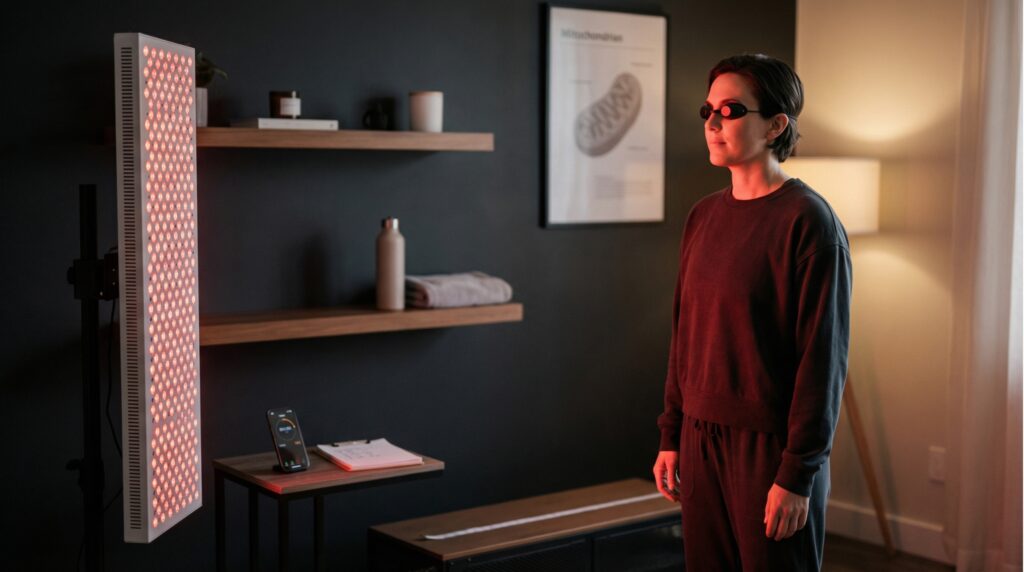
Your cells generate energy inside mitochondria. A leading explanation is that red/NIR light interacts with mitochondrial pathways (often discussed around cytochrome c oxidase) and can support:
- ATP production (cellular energy)
- Microcirculation (blood flow support)
- Inflammatory signaling balance
- Tissue recovery over time
In practical terms: when you combine better cellular energy and better signaling, you get a solid reason why people use RLT for skin recovery, and inflammation-related discomfort support.
Red Light Therapy Benefits (What It May Help With)
1) Skin Health & Anti-Aging Support
Many people use RLT to support:
- Fine lines and overall texture
- Redness and mild inflammation
- Post-treatment recovery (commonly used in clinical settings)
Reality check: You usually see gradual change. Consistency matters more than intensity-chasing.
2) Muscle Recovery & Performance Support
Athletes often use RLT to support:
- Reduced soreness (DOMS)
- Faster recovery between sessions
- Better circulation support
Why NIR matters: NIR penetrates deeper tissue, so it often aligns better with recovery goals.
3) Joint Comfort & Inflammation Support
Some research and user outcomes suggest improvements in:
- Stiffness
- Mobility
- Inflammation-related discomfort
Use it as a support tool, not a replacement for medical care.
4) Hair Growth Support
Hair-focused devices (caps/helmets) and some panel routines aim to support:
- Scalp circulation
- Follicle activity
- Thicker-looking hair over time
Expectation setting: results often take 12+ weeks, and outcomes vary widely.
5) Sleep & Evening Wind-Down
Red light in the evening (instead of blue-heavy light) may support sleep routines by creating a calmer light environment. This is often indirect (routine + light hygiene), not a guaranteed “sleep cure.”
Evidence Strength Meter (Honest Summary)
Here’s the practical, no-hype view:
| Goal | Evidence Strength | Notes |
| Skin texture / wrinkles | Moderate | Device quality + consistency drive results |
| Redness / mild inflammation | Moderate | Often improves gradually |
| Muscle recovery / soreness | Moderate | Dose and distance matter a lot |
| Joint comfort support | Moderate (varies) | Best as complementary support |
| Hair growth support | Mixed-to-Moderate | Takes longer; device quality varies |
| Sleep | Limited / Indirect | Mostly routine + light environment |
| Fat loss / spot reduction | Weak | Commonly over-marketed |
Does Red Light Therapy Really Work?
Yes it can, especially for specific goals. But results depend on four factors:
- Consistency
Aim for 3–5x/week for several weeks (not once a week). - Device quality
- you need transparent specs (wavelengths + irradiance). Here’s exactly what to check in our panel buying checklist: Red Light Therapy Panels: The Complete Problem-Solving Guide
- Correct protocol
Distance and session time control your dose. - Realistic expectations
RLT supports your biology. It doesn’t deliver “overnight transformations.”
Common problem: Many studies use clinical-grade devices. Many consumer devices are underpowered or vague on specs, so users copy a protocol that the device can’t realistically deliver.
At-Home vs Clinic-Grade: What to Expect
Why clinics often show stronger results
Clinics typically use devices with:
- Higher, calibrated output at treatment distance
- More consistent protocols
- Supervised scheduling
When at-home devices can still work well
At-home routines can work when:
- The device shows transparent specs
- You follow a consistent protocol for weeks
- You stick to realistic goals
Realistic timelines
- Skin: 4–8+ weeks
- Recovery/discomfort support: 2–8 weeks
- Hair: 12+ weeks
The Dose Problem: Why Distance and Time Matter
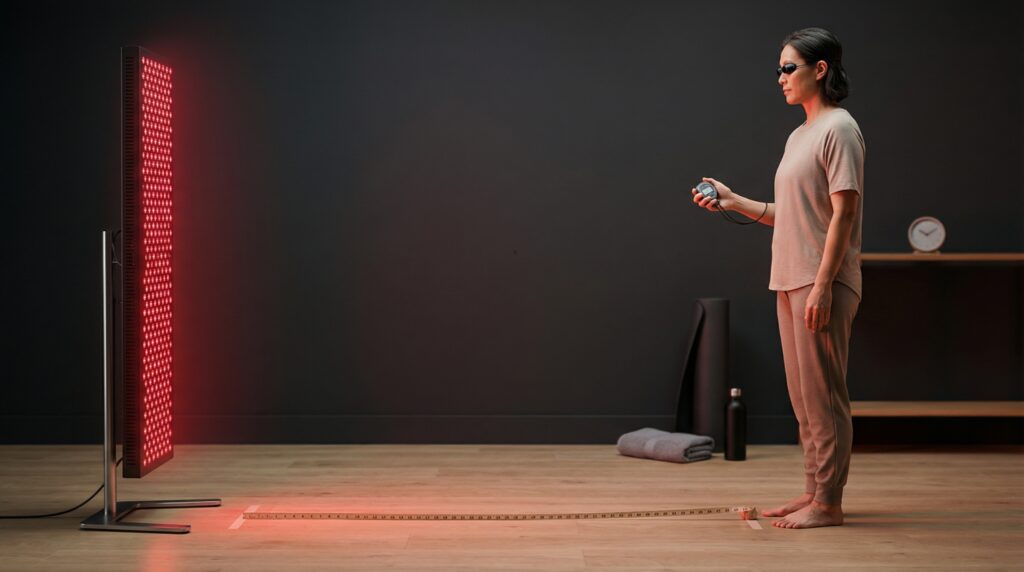
Two people can buy “red light panels” and get totally different outcomes because of dose.
Dose depends on:How Red Light Therapy Works
- Irradiance (power delivered to skin, often shown as mW/cm²)
- Distance (irradiance drops as you move away)
- Session time
- Coverage area (how much body area gets treated per session)
More is not always better. Many PBM researchers discuss a “biphasic dose response,” meaning too little does nothing, but too much can reduce benefits or cause overstimulation.
Protocols by Goal
Always follow your device’s manual first. Use this as a sensible baseline.
| Goal | Best Light | Distance | Session Time | Frequency | Timeline |
| Fine lines / texture | Red 630–660 (+ optional NIR) | 6–18 in | 5–10 min | 3–5x/week | 4–8+ weeks |
| Workout recovery | NIR 810–850 (+ red) | 6–24 in | 8–15 min | 3–6x/week | 2–6 weeks |
| Joint comfort | NIR-heavy | 6–18 in | 8–15 min | 4–6x/week | 3–8 weeks |
| Hair/scalp | Device-dependent | Per device | 8–12 min | 3–5x/week | 12+ weeks |
If you get headaches, irritation, or feel “wired”: reduce session time, increase rest days, or increase distance.
A Simple Starter Plan
If you want a safe, consistent ramp-up:
Week 1
- 3 sessions total
- 5–8 minutes per area
- Moderate distance (don’t stand ultra-close)
Weeks 2–4
- 4–5 sessions/week
- 8–12 minutes per area (if you tolerate it)
- Keep distance consistent
Track one goal at a time (skin or recovery or joint comfort). You’ll spot progress faster.
Is Red Light Therapy Safe?
For most healthy adults, RLT is generally considered low risk when used properly. If you’re still new to red light therapy, start with ourRed Light Therapy: Benefits, Safety, Cellulite, Hair Growth & Best At-Home Options to understand the basics first.
Safety tips that actually matter
- Don’t stare into high-intensity LEDs
- Use eye protection if your device recommends it (especially for facial use)
- Follow the recommended distance and session time
- Start lower and build gradually
- Don’t treat irritation as “detox” reduce dose
Who should avoid it or ask a clinician first
Use extra caution or get medical guidance if you have:
- Pregnancy (precaution-based)
- Active cancer or current cancer treatment
- Photosensitizing medications or conditions
- Light-triggered epilepsy
- Serious eye conditions (especially for facial routines)
Important: RLT supports wellness routines. It does not diagnose, treat, cure, or prevent disease.
Types of Red Light Therapy Devices
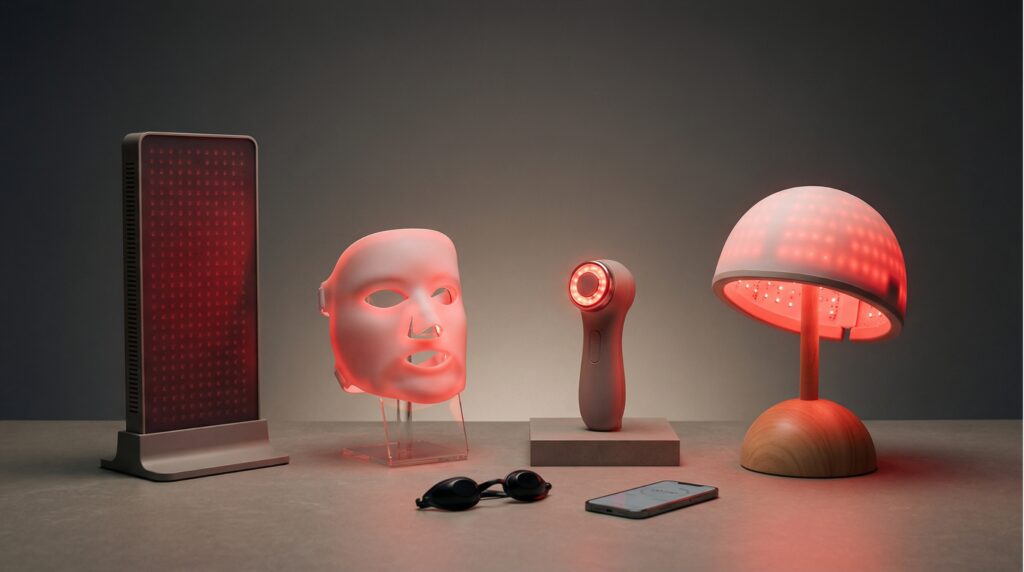
1) Full Panels (Best overall for coverage)
Best for: full-body routines, recovery, consistent home setup
Pros: strong coverage, often higher output, flexible use
Cons: higher cost, needs space
2) Face Masks (Convenient for skincare)
Best for: face-focused skin routines
Pros: easy, portable, consistent placement
Cons: often lower power than panels
Tip: Masks can still work well, but they usually require more patience.
3) Handheld Devices (Small areas)
Best for: targeted joints, small zones
Pros: portable, budget-friendly
Cons: slow for large areas, easy to use inconsistently
4) Caps/Helmets (Hair-focused)
Best for: scalp routines
Pros: consistent positioning
Cons: quality varies massively between brands
How to Choose the Best Red Light Therapy Panel (Buying Checklist)
If you want results, don’t shop by “LED count” or vague wattage. Shop by specs that affect dose.
What actually impacts performance
- Wavelength list (example: 660 + 850 combo)
- Irradiance at a stated distance (example: “measured at 6 inches”)
- Coverage area (bigger area = fewer reposition sessions)
- Clear protocol guidance (distance + time recommendations)
- Warranty + support (trust signal)
- Transparent testing (strong credibility signal)
Device Red Flags (Avoid These)
Be cautious if a brand shows:
- No wavelength info (or vague “red + infrared” without nm values)
- No irradiance data (only “LED wattage” marketing)
- Unrealistic claims (“melts fat,” “cures disease,” instant transformations)
- No meaningful warranty/support
- No clear distance or time instructions
Common Mistakes That Kill Results
- Using it once a week and expecting real change
- Standing too far away (dose drops fast)
- Buying underpowered devices with unclear specs
- Overdoing it daily (“more” often backfires)
- Treating RLT as a replacement for medical care
FAQs
How often should I use red light therapy?
Most people do best with 3–5 sessions per week. Recovery goals sometimes use 4–6 sessions/week if tolerated.
When is the best time to use it?
Use it when you can stay consistent. Many people prefer morning or post-workout for recovery and evening for wind-down (keep sessions reasonable to avoid overstimulation).
Can I use red light therapy every day?
You can, but you don’t always need to. If you feel overstimulated, reduce frequency or time.
Does red light therapy cause tanning or burning?
Red/NIR light does not work like UV. It doesn’t tan your skin under normal use. Heat can happen with high output at close range, so follow distance guidelines.
Do I need eye protection?
For facial sessions, yes if recommended, and never stare into LEDs. Eye safety depends on device intensity and design.
Final Verdict: Is It Worth It?
Red light therapy isn’t magic but it isn’t pure hype either.
It’s worth considering if you:
- want non-invasive skin support,
- train regularly and care about recovery,
- want an at-home wellness device you can use consistently.
If you plan to buy, prioritize transparent specs and a protocol you’ll actually follow. And if Mito is on your shortlist, read our Mito Red Light Reviews
 ✓
✓