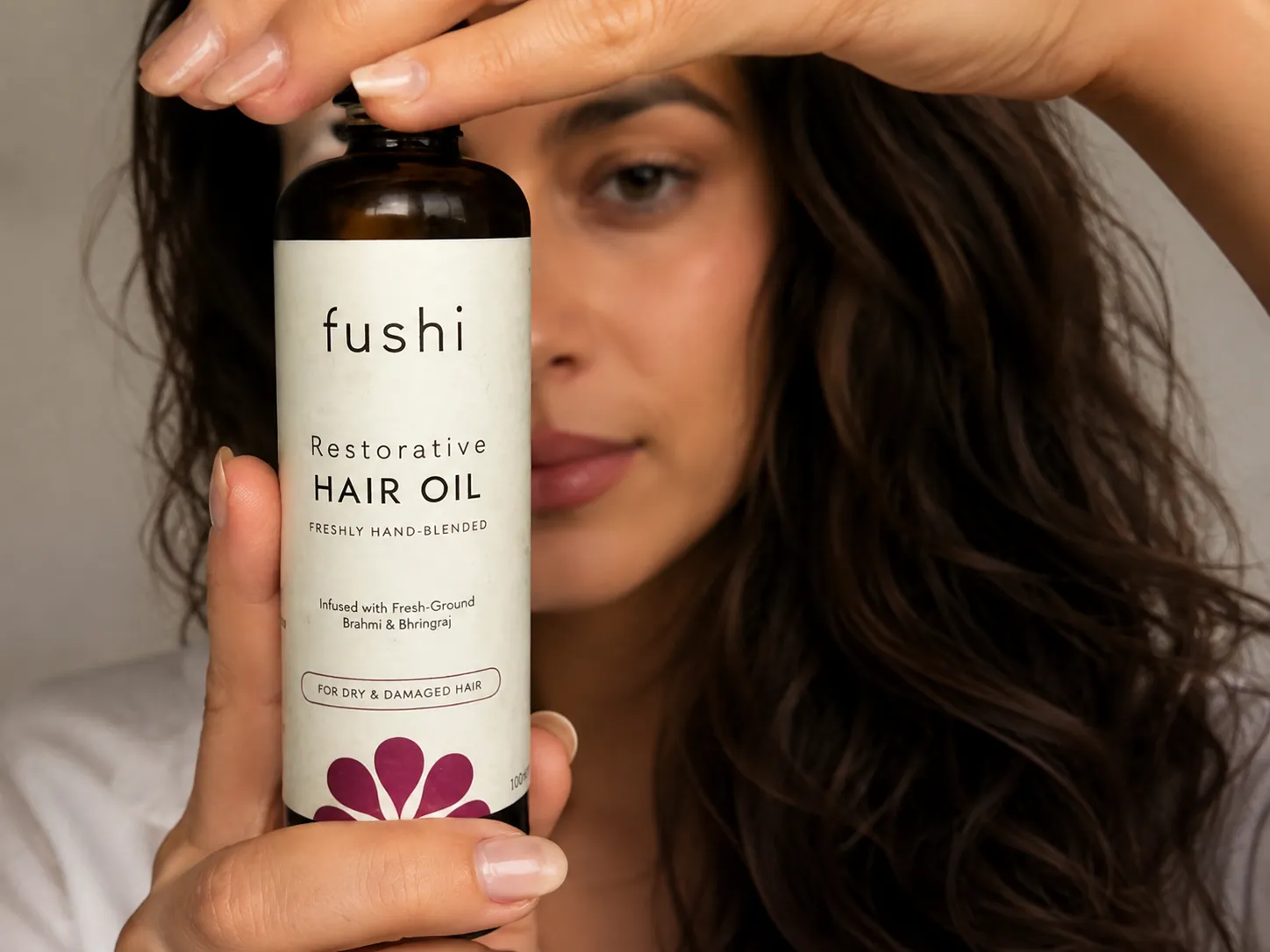
Research-based review — HealthAffPro did not physically test this product. Official product and policy information was checked on September 29, 2026. Customer experiences are identified separately from product claims and our analysis.
Fushi Really Good Hair Oil is a 100ml treatment made with sesame, coconut, avocado, sweet almond and argan oils, plus brahmi, neem, jasmine and vitamin E. Fushi currently sells it for £32 and positions it for all hair types, especially dry, damaged, thinning and colored hair. The useful question is whether the formula is worth importing to the US once shipping, hair type, scent and realistic results are taken into account. [1]
Fushi Really Good Hair Oil is most convincing as a rich conditioning treatment for dry, damaged, colored or frizz-prone hair. Feefo and Hwahae customer reviews commonly mention softer, smoother or more manageable hair, while greasiness from using too much is one of the clearest drawbacks. [3] [4]
For US buyers, the value is less obvious. The bottle costs £32, and Fushi lists $15 US shipping for orders under $300 and up to 2kg. Check the checkout total for currency conversion, tax, customs and any card charges. [1] [2]
We would consider it for conditioning and frizz control, but not as a clinically proven treatment for persistent hair loss.
How much does Fushi Really Good Hair Oil cost for US buyers?
| US buying factor | What to expect |
|---|---|
| Product price | £32 for 100ml. [1] |
| Smaller trial option | 10ml is listed at £5. It can help assess scent and richness, though US shipping and checkout costs still apply. [11] |
| US shipping | $15 flat-rate shipping for qualifying orders under $300 and up to 2kg. [2] |
| Final US cost | £32 product price plus $15 listed US shipping, with possible tax, customs and card conversion charges. Confirm the checkout total. |
| International delivery | Fushi says international delivery may take up to 21 working days. [2] |
| International returns | Eligible health and beauty products must be unopened and unused, and international customers pay return postage. [9] |
Is Fushi Really Good Hair Oil worth ordering in the US?
HealthAffPro Analysis: The formula is more specialized than simply buying one carrier oil. Fushi combines sesame, coconut, avocado, sweet almond and argan oils with brahmi, neem, jasmine and vitamin E. [1]
If that exact blend and pre-wash treatment style appeal to you, the extra import cost may be reasonable. If your goal is simply to smooth dry ends, a locally available basic oil or lighter serum may meet the same practical need more cheaply.
Fushi’s standard refund policy requires eligible health and beauty products to be unopened and unused, and international customers pay return postage. Because scent and richness are subjective, keep this in mind before opening an internationally shipped bottle. [9]
Which hair types are the best fit for Fushi Really Good Hair Oil?
| Hair type or concern | Fit | Why |
|---|---|---|
| Dry or damaged hair | Good fit | Softness and smoother hair are common review themes. [3] [4] |
| Colored or bleached hair | Good fit for conditioning | Fushi specifically includes colored hair in its target audience, and Hwahae feedback includes users with damaged or dyed hair. [1] [4] |
| Frizz-prone hair | Good fit | Customer reports mention smoother texture and easier manageability. [3] [4] |
| Fine hair | Use cautiously | Small amounts may work well, but excessive application can feel greasy or heavy. [4] [5] |
| Very oily hair or scalp | Less obvious fit | This is designed as a rich treatment oil rather than a weightless daily serum. [1] |
| Fragrance-sensitive users | Check carefully | The formula contains jasmine absolute and naturally occurring fragrance components. Fushi recommends a patch test before first use. [1] |
Does Fushi Really Good Hair Oil help dry, damaged or frizzy hair?
Feefo currently displays 98 historical reviews for Fushi Really Good Hair Oil. Visible comments include softer-feeling hair and positive scent experiences, although the larger Feefo review set is old and should not be treated as fresh customer sentiment. [3]
Customer Experience: Hwahae has multiple listings for this product with small, older review sets. The selected listing shows 16 reviews and a 4.44/5 rating, while another shows 7 reviews and 4.43/5 at this check. Comments describe softness, manageability and smoother frizz, alongside heaviness or greasiness and divided views on the floral scent. These samples are too small and dated to establish typical results. [4]
There is also ingredient-level evidence supporting some hair-fiber benefits. A published study found coconut oil reduced protein loss from hair, while a separate laboratory study found argan-oil pretreatment reduced protein loss after oxidative damage. [6] [7]
HealthAffPro Analysis: Those studies tested individual oils, not Fushi Really Good Hair Oil. Ingredient-level hair-fiber findings do not establish clinical outcomes for this finished formula or prove hair regrowth.
Will Fushi Really Good Hair Oil make fine hair greasy?
The Reddit user reported that a small amount worked well on the ends of very fine, easily tangled hair but that using too much could make the hair greasy. That is one person’s experience rather than controlled testing, but it matches the greasiness theme seen on Hwahae. [4] [5]
How should fine hair start using Fushi Really Good Hair Oil?
- Start with a very small amount.
- Spread the oil across your palms before touching the hair.
- Focus on dry mid-lengths and ends first.
- Add more only if the hair still feels dry.
- If leave-in use feels heavy, use the oil as a pre-shampoo treatment instead.
Fushi itself recommends only a few drops when the product is used as a leave-in oil on dry or frizzy areas. [1]
Does Fushi Really Good Hair Oil actually help hair grow?
This distinction matters because hair can look smoother, fuller or less damaged without new follicles producing more hair. Conditioning and medical hair-loss treatment are different outcomes.
The American Academy of Dermatology notes that hair loss can have many causes and that identifying the cause matters when choosing treatment. If ongoing thinning or shedding is your main problem, an oil should not replace determining why the hair loss is happening. [8]
Which ingredients in Fushi Really Good Hair Oil are most useful to know about?
| Ingredient | What it means for a buyer |
|---|---|
| Coconut oil | Published research supports a role in reducing hair protein loss. That is hair-fiber protection, not proof of regrowth. [6] |
| Argan oil | Laboratory research found reduced protein loss after oxidative hair damage when argan oil was used as a pretreatment. [7] |
| Sesame, avocado and sweet almond oils | These contribute to the rich multi-oil base and help explain why the product behaves like a treatment oil rather than a lightweight serum. [1] |
| Brahmi and neem | These are central to Fushi’s Ayurvedic positioning. Claims about growth, scalp circulation or other specific benefits should be read as brand claims unless separately supported. [1] |
| Jasmine absolute | This contributes to the noticeable floral scent and may matter more than expected if you dislike strongly scented hair products. [1] [4] |
What do real users say about Fushi Really Good Hair Oil?
| Source | Sample | Main useful takeaway | Limitation |
|---|---|---|---|
| Feefo | 98 historical reviews | Softness, hair feel and scent are common positive themes. | Visible reviews are largely old. |
| Hwahae | Two small listings: 16 and 7 reviews at this check | Softness and manageability, with greasiness and scent complaints. | Small, mostly older samples; duplicate listings should not be combined into one rating. |
| Individual user experience | Very fine hair may do better with a tiny amount on the ends. | Anecdotal, not representative. |
Customer reviews are most useful here for texture, scent and application feedback. They cannot establish whether the product treats hair loss or causes biological hair growth.
Does Fushi Really Good Hair Oil have a strong scent?
Verified Fact: Fushi’s ingredient list includes jasmine absolute and naturally occurring fragrance components: linalool, eugenol, benzyl alcohol, benzyl benzoate and geraniol. Its marketing language about no added fragrances does not make this an unscented or fragrance-free choice. The brand recommends a 24-hour patch test before first use. [1]
How should you use Fushi Really Good Hair Oil?
For a pre-wash treatment
- Massage the oil into the scalp and hair.
- Leave it on before washing.
- Shampoo the oil out thoroughly.
Fushi’s official directions include an overnight treatment and a 30-minute treatment, with the option to leave the oil on longer for deeper conditioning. [1]
For leave-in use
- Use only a few drops.
- Focus on dry ends or frizzy areas.
- Use less on fine hair.
- Add more only if needed.
Who should buy Fushi Really Good Hair Oil, and who should skip it?
| More likely to suit you | More likely to disappoint you |
|---|---|
| Dry or damaged hair | Very oily hair that becomes heavy easily |
| Colored or frizz-prone hair | Anyone wanting a weightless daily serum |
| People who already enjoy pre-wash hair oiling | People who strongly dislike jasmine/floral scents |
| Buyers who specifically want Fushi’s multi-oil blend | US buyers who only need a basic low-cost conditioning oil |
| Fine-hair users willing to use very small amounts | Anyone buying mainly for proven hair-loss treatment |
What is the final verdict on Fushi Really Good Hair Oil?
The strongest reasons to consider it are its multi-oil formula and customer feedback around softness, smoothness and manageability. Its main practical drawbacks are potential greasiness on fine hair, the noticeable floral scent and the additional cost of ordering directly to the US. [2] [3] [4]
For someone with dry, damaged or frizz-prone hair who specifically wants this type of pre-wash oil blend, the product is worth considering. If you simply need a basic conditioning oil or are looking for a proven hair-loss treatment, there are stronger reasons to skip it.
If you prefer a simpler single-oil option instead of Fushi’s multi-oil blend, see our Fushi Castor Oil Review.
Fushi’s price, exchange rate and shipping terms can change, so check the current checkout total before ordering.
Check Current US Price & ShippingFrequently asked questions about Fushi Really Good Hair Oil
Is Fushi Really Good Hair Oil good for fine hair?
Yes, it can work for fine hair, but start with a very small amount. Hwahae and Reddit feedback suggest that excessive application is more likely to make fine hair look or feel greasy. Focus first on the ends rather than coating the whole head. [4] [5]
Can you leave Fushi Really Good Hair Oil in overnight?
Yes. Fushi’s official directions include an overnight treatment: massage the oil into the scalp, leave it overnight and wash it out the next morning. The brand also provides shorter treatment options. [1]
Does Fushi Really Good Hair Oil help hair growth?
Fushi markets the formula and brahmi toward hair-growth support, but we did not find a clinical trial showing that this finished product regrows hair. Its evidence is more convincing for conditioning than for treating persistent hair loss. [1] [8]
Will Fushi Really Good Hair Oil make my hair greasy?
It can if you use too much, particularly on fine hair. Fushi itself describes the product as an oily treatment and recommends only a few drops when it is used as a leave-in product. [1] [4]
How much does Fushi Really Good Hair Oil cost in the US?
The 100ml bottle is listed at £32. Fushi lists $15 US shipping for orders under $300 and up to 2kg. Currency conversion, possible tax or customs, and card fees can change the final checkout total. [1] [2]
Is Fushi Really Good Hair Oil worth ordering in the US?
It is most worth considering if you specifically want Fushi’s multi-oil treatment for dry, damaged or frizz-prone hair. It is less compelling if you only need basic conditioning because the product price, $15 shipping, international delivery time and buyer-paid return postage add meaningful cost and inconvenience. [2] [9]
Sources & references
- Fushi Wellbeing — Really Good Hair Oil 100ml Open source ↗
- Fushi Wellbeing — Delivery & Returns Open source ↗
- Feefo — Fushi Really Good Hair Oil Reviews Open source ↗
- Hwahae — Fushi Really Good Hair Oil Reviews Open source ↗
- Reddit — r/BeautyEmpties discussion about Fushi Really Good Hair Oil Open source ↗
- Rele AS, Mohile RB — Effect of mineral oil, sunflower oil, and coconut oil on prevention of hair damage Open source ↗
- Sharifi N, Hamedeyazdan S, Shokri J, Monajjemzadeh F — Argan oil as a pretreatment of human hair before exposure to oxidative damage Open source ↗
- American Academy of Dermatology — Hair Loss Overview Open source ↗
- Fushi Wellbeing — Refund Policy Open source ↗
- Fushi Wellbeing — Really Good Hair Oil 10ml Open source ↗
Editorial note: Prices, exchange rates, shipping rules and review counts can change. Manufacturer statements are identified as Fushi-provided information. Customer reviews are treated as user experiences rather than clinical evidence.
 ✓
✓