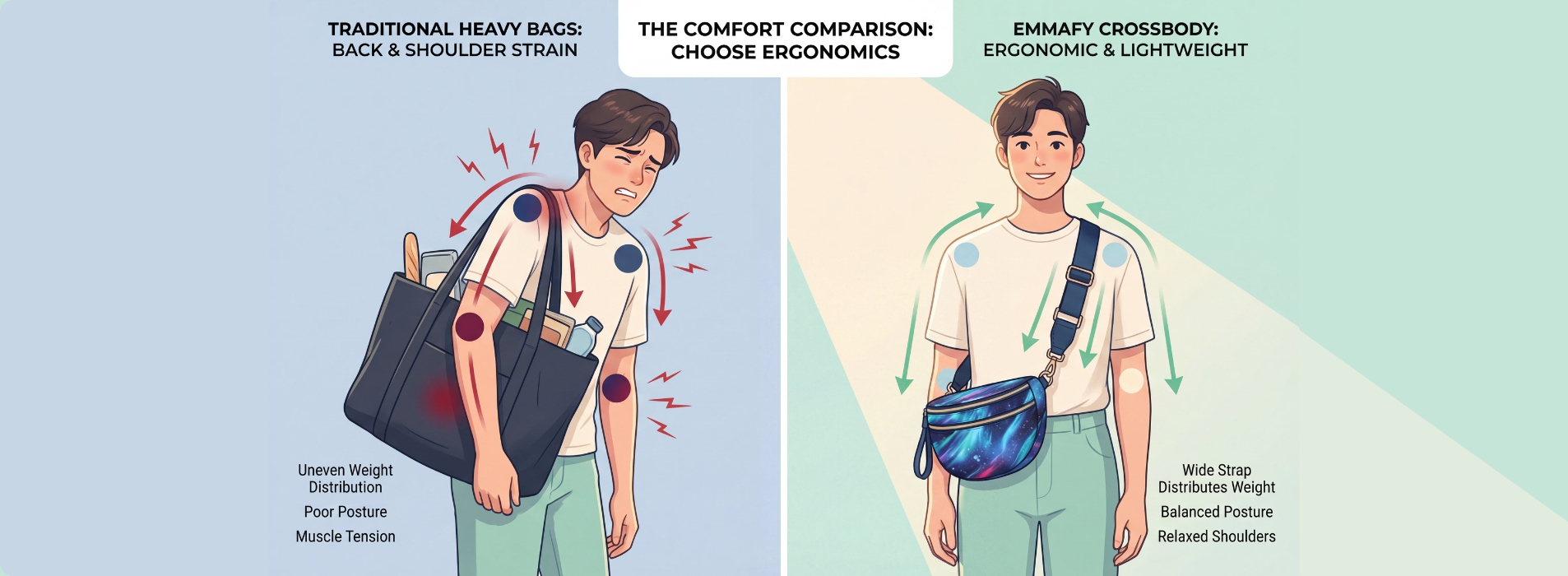
Back and shoulder strain from bags is usually caused by thin straps, poor weight distribution, and wearing the bag at the wrong height mnot just “heavy weight.” If you carry a bag daily and feel pain in your shoulder, neck, or upper back, the issue is often more than “weight.” Most strain comes from strap width, bag design, and how you carry it. Use this guide to reduce strain and stop the pain from returning.
Note: If your pain is severe, keeps coming back, or you feel numbness/tingling in your arm/hand, it’s better to consult a clinician.
1) The Problem: Heavy Bag + Thin Strap = Strain
A thin strap concentrates pressure on one small area of your shoulder. Your shoulder muscles tighten, your neck compensates, and your upper back starts to burn.
A one shoulder bag can also pull your posture to one side, increasing strain especially when the load is uneven or overloaded.
2) What to Look For in a Bag (Quick Checklist)
Choose a wide strap
A wider strap spreads pressure across your shoulder and reduces “cutting” or digging.
Choose an adjustable strap
Adjustable length helps you set a comfortable height and keeps your posture more balanced.
Choose a lightweight bag
Heavy materials add weight before you even pack anything lighter bags reduce total load.
Choose a design that spreads weight evenly
Crossbody styles usually distribute weight better than one-shoulder carry.
For example, Emmafy crossbody bags can be a good option because crossbody carry reduces single-shoulder pressure but the key is still strap width + correct adjustment. (Any brand with a wide, adjustable strap can work.)
3) Crossbody Carry Tips That Reduce Pain Fast

Set the right strap height
Keep the bag around waist to hip level.
- Too low → it swings and pulls you
- Too high → neck/shoulder tightness increases
Quick test: Walk 20 steps. If it swings a lot, tighten the strap.
Keep the bag close to your body
When the bag sits far from your torso, your shoulder muscles work harder to stabilize it.
Limit the load
Carry only essentials: phone, wallet, keys, small sanitizer, small power bank (if needed).
Avoid heavy extras like big water bottles or bulky pouches.
Simple rule: If your shoulder drops when you lift the bag, it’s too heavy.
4) Quick Fixes You Can Start Today
- If you use a shoulder bag, switch sides every 15–20 minutes.
- Place heavier items centered (not in corners) to keep weight stable.
- Use one small pouch to prevent items shifting and creating uneven load.
- Reset posture: shoulders relaxed back, neck long, 5 slow deep breaths.
5) Signs You Should Change Your Bag
Change your bag if:
- The strap cuts into your shoulder
- You feel daily neck tightness
- You get red marks on your shoulder
- The bag swings a lot and can’t be adjusted properly
Final Takeaway
To reduce back and shoulder strain, focus on three things:
- Wide, adjustable strap
- Lightweight bag
- Small, controlled load + correct strap height
Do this for one week and most people feel a clear difference.
Disclosure: This article is for informational purposes only and is not medical advice. Some links may be affiliate links, which means we may earn a small commission at no extra cost to you.