Nutrition & Healthy Eating: The Ultimate Guide
Healthy eating feels complicated when you chase perfect rules. It gets easy when you use a repeatable system: build balanced meals, hit protein and fiber most days, drink enough fluids, and choose a diet style you can follow long-term.
This guide explains macros, micros, meal planning, hydration, and diet styles in a practical, easy-to-follow way.
Key Takeaways
- Consistency beats perfection. You don’t need a “clean” diet. You need a doable routine.
- Protein + fiber make meals more filling and easier to stick with.
- Food quality controls hunger. Calories matter, but better foods make calories easier to manage.
- Hydration isn’t just water. Your activity level, climate, and sodium intake change your needs.
- The best diet style is the one you can follow for months without feeling miserable.
1) The Nutrition Basics That Drive Results
Calories: The Energy Budget
Calories measure energy. Your body uses energy to keep you alive, move, recover, and think. When you eat more energy than you use over time, your weight tends to go up. When you eat less, your weight tends to go down.
Even ‘healthy’ foods can cause weight gain if portions are too big read this: Americans gain weight while eating healthy
You don’t need to track calories forever. You can manage them with simple habits:
- Build meals around protein + produce.
- Limit liquid calories (sugary drinks, sweet coffee drinks).
- Keep snacks intentional, not automatic.
Macros vs Micros
- Macronutrients (macros) = protein, carbs, fats. They provide energy and structure meals.
- Micronutrients (micros) = vitamins and minerals. They support health, performance, and recovery.
You get better results when you focus on both:
- Use macros to build satisfying meals.
- Use micros to avoid common deficiencies and support overall health.
2) Macros Made Simple
Protein
Protein helps you feel full and supports muscle, metabolism, and recovery. Most people improve their diet fastest by increasing protein.
Easy protein sources
- Eggs, Greek yogurt, cottage cheese
- Chicken, turkey, fish, lean beef
- Tofu, tempeh, edamame
- Beans, lentils
- Protein powder (as a convenience tool)
Practical rule: Add a protein source to every meal.
Protein mistakes to avoid
- You “save” protein for dinner only.
- You snack all day and miss real protein servings.
- You eat “healthy” but not enough protein to feel full.
Carbohydrates (Fuel That Works When You Choose Well)
Carbs give your body quick fuel. They also support training performance and can help with sleep and mood for many people.
Smarter carb choices
- Oats, rice, potatoes, quinoa
- Beans and lentils
- Fruit
- Whole grains (if they work for your digestion)
Limit more often
- Sugary drinks
- Candy and pastries
- Ultra-processed snack foods that never fill you up
Simple carb rule: Choose whole-food carbs most of the time and keep ultra-processed carbs as occasional foods.
Fats (Essential, Not the Enemy)
Fats support hormones, brain function, and vitamin absorption.
Best fat sources
- Olive oil, avocado
- Nuts, seeds, nut butters
- Fatty fish (salmon, sardines)
Simple fat rule: Use healthy fats daily, but keep portions reasonable because fats add calories quickly.
3) The Plate Method (The Fastest Way to Eat Better)
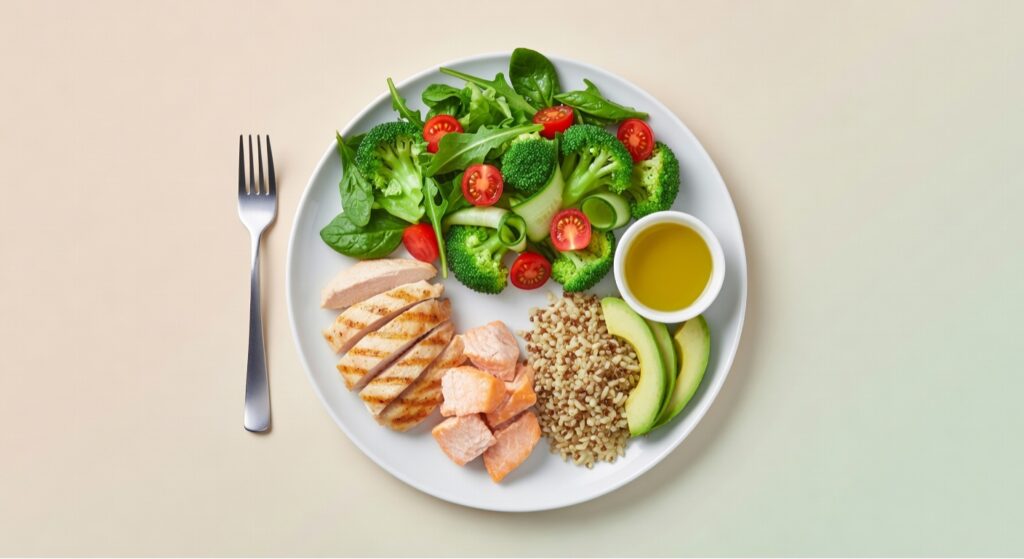
If you want a system you can use anywhere, start here:
Build a balanced plate
- ½ plate: non-starchy vegetables (or fruit)
- ¼ plate: protein
- ¼ plate: carbs (optional based on goals/activity
Add: healthy fat in a reasonable portion
Why this works
- It increases protein and fiber.
- It controls calories without tracking.
- It improves micronutrient intake automatically.
4) Micronutrients That Matter Most
You don’t need to memorize every vitamin. Focus on the common gaps.
Fiber
Fiber improves digestion, supports gut health, and helps control hunger.
High-fiber foods
- Beans and lentils
- Berries, apples, pears
- Oats, chia, flax
- Vegetables (especially leafy greens and cruciferous vegetables)
Simple target: Add one high-fiber food daily if you feel stuck.
Potassium + Magnesium
These minerals support muscle function, hydration balance, and overall wellness.
Potassium foods
- Potatoes, bananas, oranges
- Beans and lentils
- Yogurt
- Leafy greens
Magnesium foods
- Nuts and seeds
- Dark leafy greens
- Beans
- Whole grains
Calcium + Vitamin D (Bone Support)
Many adults fall short on calcium. Vitamin D status varies by sunlight exposure and diet.
Calcium sources
- Dairy (milk, yogurt, cheese)
- Fortified plant milks
- Sardines with bones
- Tofu made with calcium
Iron (Especially Important for Many Women)
Iron needs can increase with menstruation.
Iron sources
- Lean red meat
- Lentils, beans
- Spinach (pair with vitamin C foods to improve absorption)
5) Meal Planning That Stays Easy
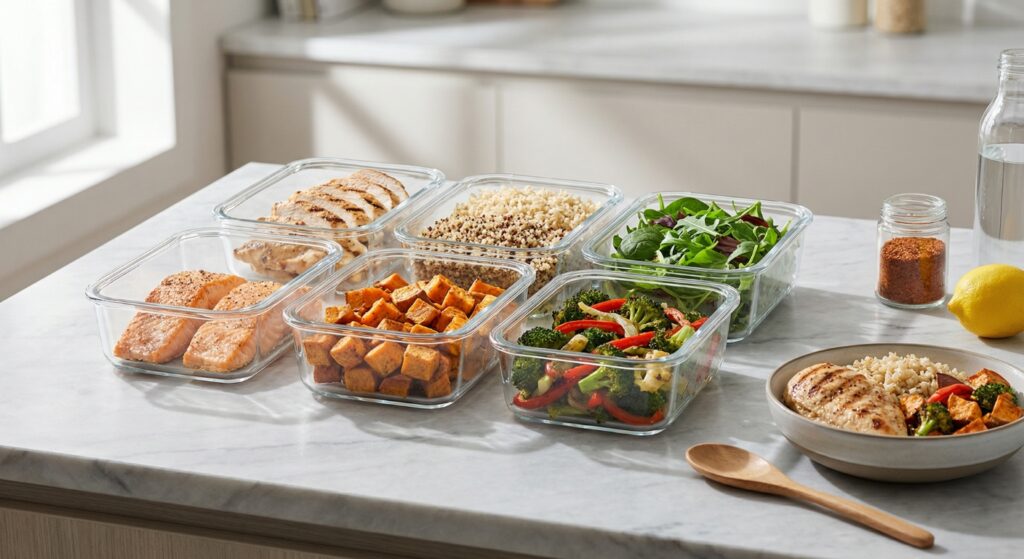
Meal planning fails when it becomes a second job. Keep it simple and repeatable.
The “2–2–2” Weekly Plan (10 Minutes)
Pick:
- 2 proteins (chicken + salmon, or tofu + turkey)
- 2 carbs (rice + potatoes)
- 2 vegetables (salad mix + frozen veggies)
Then mix and match all week.
A Practical Grocery Framework
- Proteins: eggs, Greek yogurt, chicken, tofu, canned tuna
- Carbs: oats, rice, potatoes, fruit
- Vegetables: salad mix, frozen vegetables, 2 fresh vegetables
- Fats: olive oil, nuts, avocado
- Flavor: salsa, spices, lemon, garlic, low-sugar sauces
Cook Once, Eat Twice
Batch one thing at a time:
- Cook a protein that works in multiple meals.
- Roast vegetables on one tray.
- Cook one carb base.
- Change sauces to prevent boredom.
This approach saves time and keeps your diet consistent.
6) Hydration: What Most People Get Wrong
Hydration supports energy, focus, digestion, training performance, and appetite control.
A Simple Hydration Check
- Pale yellow urine most of the day usually signals adequate hydration.
- Dark yellow often signals you need more fluids.
Easy Hydration Habits
- Drink a glass of water within an hour of waking.
- Drink water before lunch.
- Carry a bottle and refill it once or twice daily.
When Electrolytes Make Sense
Electrolytes can help when you:
- Sweat heavily (exercise, heat, outdoor work)
- Get sick with vomiting or diarrhea
- Start very low-carb eating and feel lightheaded
- Cramp frequently despite drinking water
Most people do not need daily electrolyte drinks if they eat balanced meals and drink water consistently.
7) Diet Styles: Choose What You Can Maintain
Diet styles work when they match your lifestyle and appetite. No single diet wins for everyone.
Mediterranean
Best for: most people who want a balanced, sustainable approach.
Focus: vegetables, fruits, legumes, fish, olive oil, whole grains.
Low-Carb
Best for: people who control hunger better with fewer refined carbs.
Focus: protein, vegetables, healthy fats, controlled carbs.
Keto
Best for: a smaller group who prefers strict structure and does well with very low carbs.
Watch-outs: low fiber, early fatigue, electrolyte shifts, and difficulty sustaining.
Plant-Based
Best for: people who enjoy plant foods and plan protein intentionally.
Focus: legumes, tofu/tempeh, whole grains, vegetables, healthy fats.
Watch-outs: protein planning, iron, B12 (depending on choices).
Best rule: Choose a style you can follow for 3-6 months, not 3-6 days.
8) How to Read Food Labels Without Overthinking
Labels help when you use them correctly.
Start with the ingredient list
- Shorter lists usually mean less processing.
- Look for real foods you recognize.
- Watch for added sugars and refined oils if you eat them often.
Use macros as a quick check
- Choose products with decent protein and some fiber when possible.
- Don’t fear fats or carbs. Focus on the overall pattern.
Don’t fall for marketing traps
“Natural,” “keto-friendly,” and “clean” don’t guarantee quality. The ingredient list tells the truth.
9) The Starter System (Do This for 14 Days)
If you want a simple plan you can stick with, start here:
- Eat protein at every meal.
- Add produce at lunch and dinner.
- Eat one high-fiber food daily (beans, oats, berries, chia, vegetables).
- Drink water consistently (especially before lunch).
- Keep one repeatable breakfast and one repeatable lunch.
This system improves hunger control and consistency without strict tracking.
10) Common Mistakes and Fast Fixes
Mistake: You skip meals and crash later
Fix: Eat a protein-focused breakfast or a protein snack by late morning.
Mistake: You “graze” all day
Fix: Eat real meals first. Then snack only if you still feel hungry.
Mistake: You drink your calories
Fix: Choose water, unsweetened tea, or black coffee most days.
Mistake: You change everything at once
Fix: Change one habit per week and keep it.
FAQs
Do I need to count macros?
You don’t need to. The plate method works well for most people. Tracking can help temporarily if you want precise control.
What’s the simplest “healthy meal” formula?
Choose a protein + a vegetable + a carb (optional) + a healthy fat. Keep it repeatable.
Is a multivitamin worth it?
A multivitamin can help fill gaps, but it cannot replace food quality. Treat it as backup support, not the foundation.
Can I eat carbs and still lose fat?
Yes. Your total pattern matters more than fear of carbs. Protein, fiber, and consistency drive results.
How do I stay consistent when life gets busy?
Keep two default meals you can repeat, stock easy protein options, and plan groceries around your routine.
Conclusion:
Healthy eating works when it feels repeatable. Build meals around protein and produce, add fiber daily, hydrate consistently, and choose a diet style you can maintain. You don’t need perfect nutrition. You need a system you can follow.
Disclaimer: General education only. If you manage a medical condition or take medications, confirm changes with a qualified professional.