

Supplements & Vitamins, Simplified: What to Take, What to Skip, and How to Stay Safe
Supplements can support your routine, but they don’t replace food, sleep, movement, and consistency. You get the best results when you use supplements like tools: you choose the right ones, you avoid risky combinations, and you stick to evidence-based basics.
This pillar covers vitamins, minerals, herbal supplements, simple stacks, and safety/interactions in a practical, easy-to-read format.
Key Takeaways
- Supplements work best when you use them to fill gaps, not “fix everything.”
- You improve safety when you follow three rules: don’t megadose, check interactions, and choose tested products.
- Most people don’t need a giant stack. They need a small, consistent plan.
- Labs and symptoms can guide you, but a clinician should confirm deficiencies when risk is high.
- Quality matters. Choose brands that use third-party testing and clear labeling.
- Example: Read my Goli Gummies review to see how to judge a gummy supplement label.
1) Supplements 101: What They Can and Can’t Do
What supplements can do
- Support nutrition when your diet misses key nutrients
- Help performance and recovery with specific, well-studied options
- Support goals like sleep quality, stress management, or joint comfort in some cases
What supplements can’t do
- Outwork a poor diet, chronic stress, or low sleep
- Replace medical care for serious symptoms
- Guarantee results when you use inconsistent routines
Use this mindset: Supplements amplify good habits. They don’t create them.
Example: If you’re considering collagen for skin/joints, read my Elavate Collagen review.
2) Safety First (Read This Before You Stack Anything)
Supplements can interact with medications and medical conditions. You protect yourself when you treat supplements like real compounds, not harmless “natural” products.
People who should be extra careful
- Pregnant or breastfeeding individuals
- People with kidney disease, liver disease, or heart rhythm issues
- People on blood thinners, thyroid meds, diabetes meds, antidepressants, or seizure meds
- Anyone preparing for surgery
- Anyone with unexplained symptoms (fatigue, dizziness, chest pain, severe anxiety, rapid weight loss)
Common interaction risks
- Blood thinners: some herbs and high-dose vitamins can increase bleeding risk. Greens powders can include high vitamin K and lots of herbs, so always check the label see my guide: best daily greens powders for energy and gut health
- Thyroid medication: minerals like calcium, iron, and magnesium can interfere with absorption if you take them too close.
- Antibiotics: minerals can bind certain antibiotics and reduce effectiveness.
- Stimulant stacks: combining caffeine, “fat burners,” and stimulating herbs can raise anxiety and heart rate.
- If you use caffeine-based blends, always check the ingredient list and who should avoid them see this Spacegoods review.
Simple timing rule: If you take prescription medication, separate mineral supplements by a few hours unless your clinician instructs otherwise.
3) How to Choose High-Quality Supplements (Without Guessing)
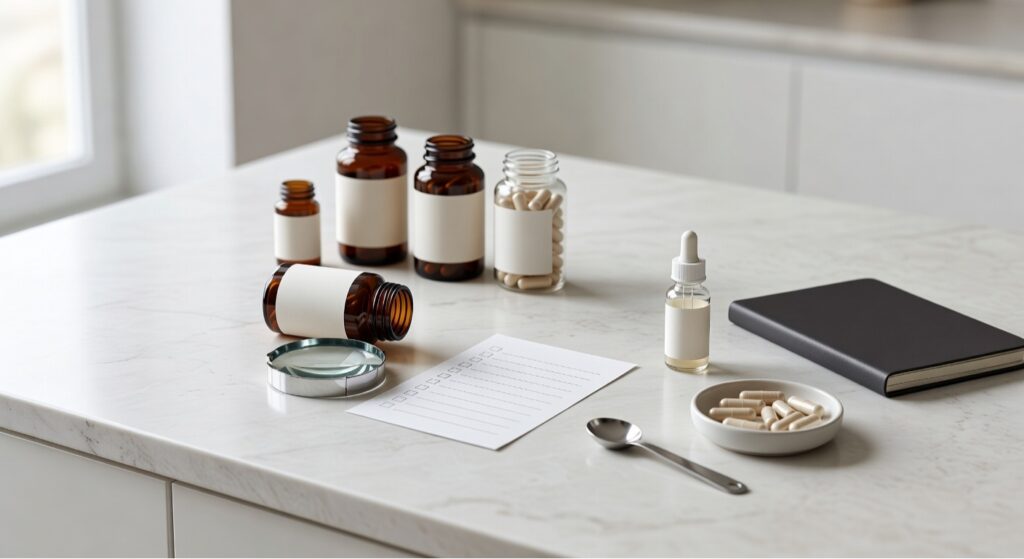
Quality varies a lot. You avoid low-quality products by checking the label like a pro.
Look for third-party testing
Choose brands that mention testing or certification from reputable programs (examples include USP, NSF, or Informed Choice). Third-party testing helps confirm identity and reduce contamination risk.
Check for clear labeling
A quality product clearly lists:
- exact ingredient forms (not vague “proprietary blend”)
- amount per serving
- serving size
- other ingredients (fillers, dyes, sweeteners)
Avoid these red flags
- “Proprietary blends” with hidden doses
- Mega-dose claims and miracle promises
- Too many stimulants in one formula
- Extreme “detox” positioning
- Products that look like medication replacements
Use one goal per supplement
You get cleaner results when you choose supplements that match a single goal:
- sleep support
- performance support
- nutrition gap support
- joint/skin support
4) The Core Categories (Vitamins, Minerals, Herbs, Performance)
Vitamins (Basics)
Vitamins support essential functions, but most people benefit most from:
- improving food quality first
- using targeted supplementation when risk or deficiency exists
Common situations where vitamins matter
- limited sunlight or indoor lifestyle (vitamin D risk)
- low animal foods (B12 risk)
- limited fruits/vegetables (broader micronutrient gaps)
Minerals (Basics)
Minerals often affect energy, sleep, muscle function, and hydration balance.
Key mineral reality: Form and timing matter more than hype.
Herbal supplements (Use extra caution)
Herbs can act like drugs in the body. They can also interact with medications.
Use herbs conservatively:
- start with one herb at a time
- track your response
- stop if you notice side effects
Performance supplements
Performance-focused options have stronger evidence than many “wellness blends.” You still need consistent training and sleep to see results.
5) Smart Stacking (Keep It Simple and Safe)
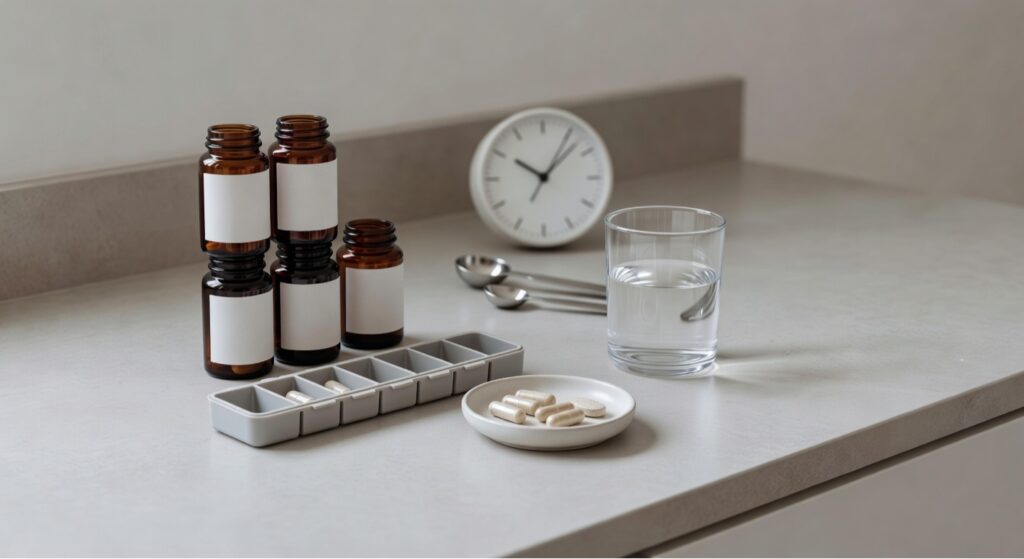
A stack should match a goal and stay small.
The “Minimal Stack” rule
Start with one supplement. Add a second only if:
- you tolerate the first well
- you can explain why you need the second
- the combination stays safe for your situation
Example stack goals (general education)
- General coverage: food-first + targeted basics
- Training support: a proven performance option + hydration routine
- Skin/joints: a collagen strategy + protein consistency
- Sleep support: routine first, then a simple non-stimulant approach
You don’t need a 10-product plan. You need a plan you will actually follow.
6) Pillar Spoke: Magnesium Types (Glycinate vs Citrate vs Threonate)
Magnesium isn’t one thing. Different forms behave differently.
Magnesium glycinate
- Often feels gentler on digestion
- Many people use it for relaxation support
Magnesium citrate
- Can support bowel regularity
- Some people find it too stimulating for digestion at higher amounts
Magnesium threonate
- Often marketed for brain support
- People choose it for cognitive-focused goals
Practical magnesium rule: Choose a form that matches your goal, and start low to assess tolerance. Avoid combining multiple magnesium products unless you track total intake.
7) Pillar Spoke: Vitamin D (Deficiency, Testing, and Safe Use)
Vitamin D status depends on sunlight, location, skin coverage, and diet.
How deficiency happens
- low sun exposure
- winter season
- indoor work
- consistent sunscreen use (which still matters for skin protection)
Testing matters
A clinician can check vitamin D status with a blood test commonly called 25-hydroxy vitamin D.
Avoid the megadose trap
People often take very large doses without testing. That approach increases risk. Use testing and professional guidance when you suspect deficiency or you have risk factors.
8) Pillar Spoke: Collagen (Types, Benefits, Best Use)
Collagen works best as a consistency supplement, not a miracle product.
Common collagen types
- Type I and III: often used for skin and connective tissue support
- Type II: often used for joint-focused support
What collagen can realistically support
- skin hydration and elasticity support for some people
joint comfort support in some cases - protein intake support when you use it consistently
What collagen won’t do alone
- replace protein-rich meals
- fix poor sleep and stress
- create results without time and consistency
Practical collagen rule: Use it daily for several weeks, and keep expectations realistic.
9) Pillar Spoke: Creatine (Women and Men, Safety and Results)
Creatine has strong evidence for performance and strength training support.
What creatine supports
- strength and power output
- training volume support
- muscle recovery support in many routines
What people often misunderstand
- Creatine can increase water inside muscles. That effect can slightly raise scale weight without increasing body fat.
- Creatine works best with consistent training.
Practical creatine rule: Choose a simple, single-ingredient creatine product and use it consistently. Avoid “loaded” blends that hide doses.
10) How to Decide What You Need (A Clear System)
Use this system to avoid random supplement buying.
Step 1: Identify your goal
Pick one:
- general coverage
- training/performance
- sleep/stress support
- skin/joint support
Step 2: Identify your risk factors
- limited diet variety
- low sunlight
- intense training
- digestive issues
- medication use
Step 3: Choose one supplement
Start with one that matches your goal and risk.
Step 4: Track outcomes for 2–4 weeks
Track simple signals:
- energy
- sleep quality
- digestion
- training performance
- side effects (headache, nausea, anxiety, rash)
If you don’t see benefit and you tolerate it, you can adjust your plan. If you feel worse, stop and reassess.
FAQs
Should I take supplements every day?
You can, but only if you have a clear reason and you tolerate them well. Consistency matters more than stacking.
Can I take multiple supplements together?
You can, but you should keep stacks small and check interactions especially if you take medication.
Are “natural” supplements always safe?
No. Herbs and high-dose nutrients can cause side effects and interactions.
Do I need a multivitamin?
Some people use a multivitamin as backup coverage, but food quality still matters most. You get better results when you target your biggest gaps first.
When should I get labs?
If you suspect deficiency, have strong risk factors, or have persistent symptoms, labs and clinician guidance improve safety and accuracy.
Conclusion:
Supplements work best when you use them with a clear goal, strong safety rules, and high-quality products. Start with a minimal plan, track outcomes, and avoid mega-doses and complicated stacks.
DisclaimerThis content provides general education and does not replace medical advice. If you take medication or manage a medical condition, confirm supplement choices with a qualified clinician.