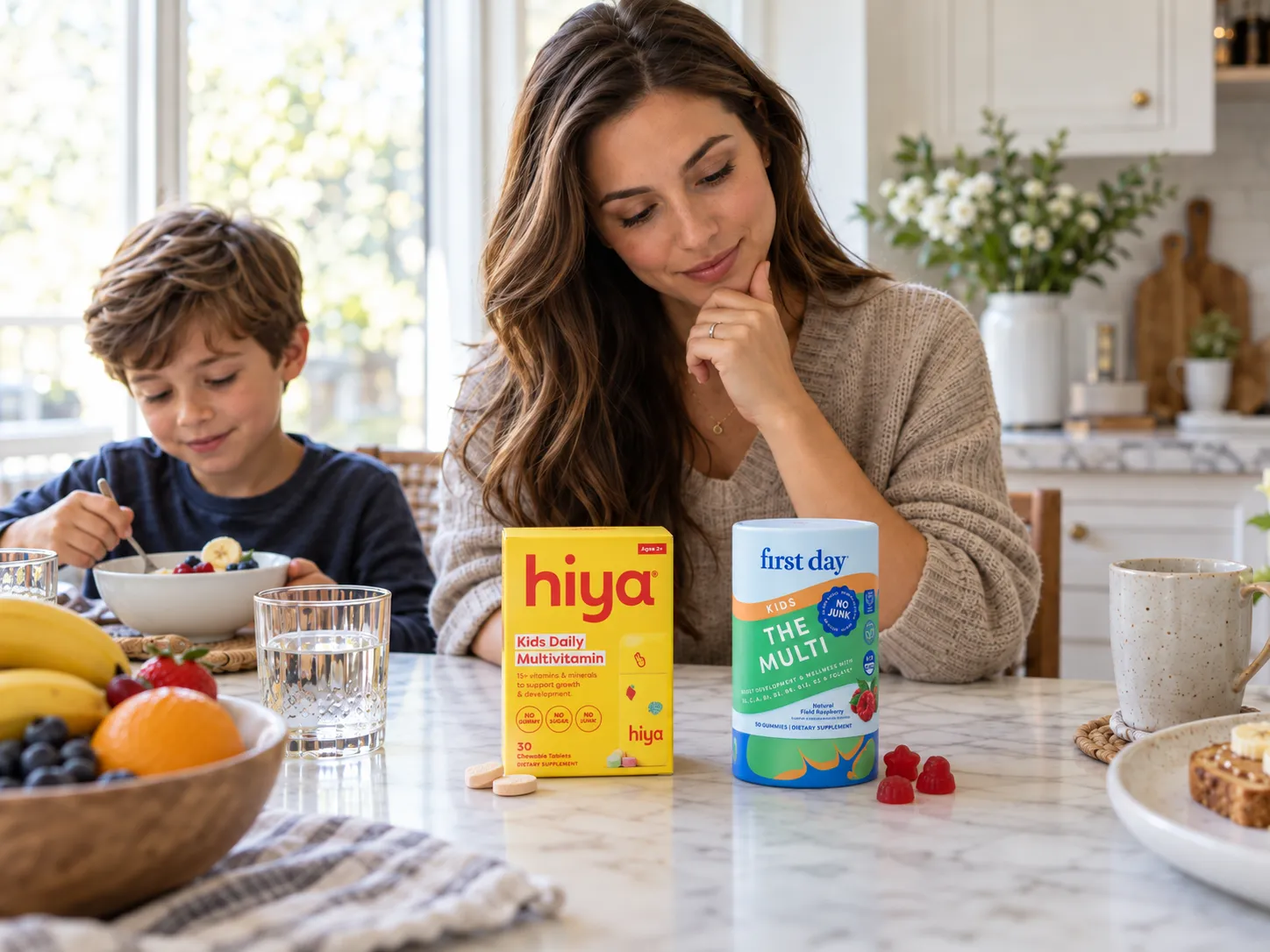
If Hiya and First Day are already on your shortlist, you probably do not need another explanation of why children’s multivitamins exist. The real question is much narrower: which one is more likely to fit your child’s age, eating habits, taste preferences and your own buying priorities?
That distinction matters because Hiya and First Day approach the same category differently. Hiya uses a one-a-day, zero-added-sugar chewable tablet, while First Day’s Kids Multi uses two gummies per day. Hiya’s standard formula covers children starting at age 2, while First Day’s Kids Multi is positioned for ages 4–12.[1][2]
Quick Verdict
Hiya makes more sense if: you want 0 g added sugar, prefer a non-gummy vitamin, need a formula labeled from age 2, and are comfortable with recurring monthly refills.
First Day deserves more attention if: your child is 4–12, strongly prefers gummies, or you want more flexibility between subscription and one-time ordering.
There is no useful universal winner. The better choice depends heavily on which product your child is realistically likely to take consistently.
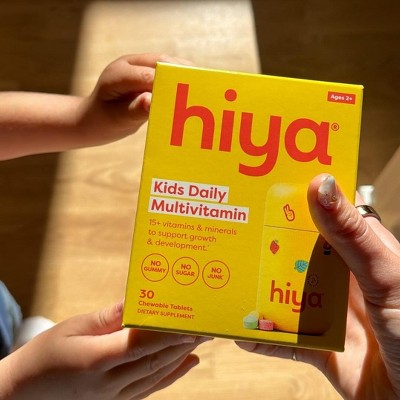
Hiya Kids Daily Multivitamin
A one-a-day chewable multivitamin with 15+ listed vitamins and minerals, designed for children starting at age 2.
$15 first order
$30 regular monthly price per child
- 1 chewable tablet daily
- 0 g added sugar
- 15+ vitamins and minerals
- Monthly refill subscription
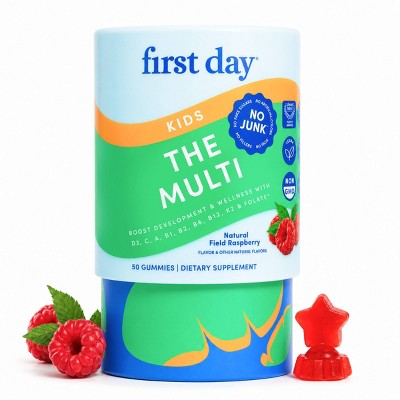
First Day “No Junk” Kids Multi Gummies
A two-gummy daily multivitamin for ages 4–12, built around nine key nutrients and a blend of 21 organic superfoods.
Current subscription offer: $23.21
Current one-time offer: $27.85
- 2 gummies daily
- Designed for ages 4–12
- 9 key nutrients + 21-superfood blend
- Subscription and one-time purchase options
Price note: First Day is currently running promotional pricing, so its displayed price can change. Check the live offer before publishing or purchasing.
The First Decision Is Not Ingredients — It Is Whether Your Child Will Take It
It is easy to start this comparison by counting vitamins. For many families, that is not actually the first practical issue.
Hiya is a chewable tablet, while First Day is a gummy. Hiya’s current Supplement Facts list one chewable per day and 0 g added sugar. First Day’s standard Kids Multi uses two gummies and lists cane sugar and tapioca syrup among its ingredients.[1][2]

That creates a genuine trade-off. A parent who specifically wants to move away from gummy vitamins may see Hiya’s format as an advantage. But a child who strongly rejects tablet-like textures may respond differently.
Independent reviews also do not support declaring one universal taste winner. Innerbody’s testing favored First Day’s gummy texture over Hiya’s multivitamin chewable, while Healthline’s dietitian reviewer reported that her child took Hiya successfully for an extended period before eventually losing interest in the flavor.[3][4]

The practical point: the best nutrient profile on paper has limited value if the product regularly gets refused. For a very selective eater, format and texture deserve to be considered before marginal differences in ingredient count.
Age Can Narrow the Decision Before Price or Taste
Hiya provides serving information for children ages 2–3 and for children age 4 and older. First Day’s standard Kids Multi is labeled for ages 4–12.[1][2]
That means a parent shopping for a 2- or 3-year-old is not really comparing equivalent products when looking at Hiya Kids Daily Multivitamin and First Day Kids Multi. First Day offers a separate toddler multivitamin for that age group.
If your child is under 4, check the age-specific label first. It makes little sense to choose based on flavor, price or “superfood” claims before confirming that you are comparing the correct products for that age.
Which Nutrient Approach Is Actually More Useful?
Hiya takes the broader nutrient-list approach. Its current formula includes vitamins A, C, D and E, multiple B vitamins, calcium, iodine, zinc, selenium, manganese and vitamin K, among other listed nutrients.[1]
First Day takes a more selective approach. The Kids Multi highlights nine key nutrients together with a blend of 21 organic superfoods.[2]

At first glance, Hiya’s longer nutrient list can appear automatically “better.” That is not a sound way to choose a children’s supplement.
More nutrients only matter when those nutrients are relevant to the child’s actual diet. A child eating a reasonably varied diet may have very different gaps from a highly selective eater. Neither formula should be treated as a substitute for food, and neither should be assumed to correct a diagnosed deficiency simply because the ingredient panel looks comprehensive.
What About Iron?
Iron is a good example of why label reading matters.
Hiya’s standard Kids Daily Multivitamin does not list iron on its current Supplement Facts panel. Hiya instead sells a separate Daily Iron+ product. The standard First Day Kids Multi likewise is not positioned primarily as an iron supplement.
If suspected iron deficiency is the main reason you are shopping, this stops being a normal “Hiya vs First Day” purchasing decision. Iron needs and dosing can vary by child, so a pediatrician should guide supplementation rather than choosing whichever general multivitamin appears to contain more ingredients.
Hiya Has the Clearer Advantage If Zero Added Sugar Is the Priority
Hiya’s current label shows 0 g total sugar and 0 g added sugar. The brand uses a non-gummy chewable formulation.
First Day positions its gummies as lower-sugar than many conventional gummies, but its ingredient list still includes cane sugar and tapioca syrup.[1][2]
So if your decision is specifically:
- “I do not want another gummy,” or
- “I specifically want 0 g added sugar,”
Hiya has the simpler case.
But that advantage should still be balanced against whether the child accepts the chewable format. Zero sugar does not create practical value if the vitamin is not taken consistently.
Which One Creates Less Financial Risk If Your Child Hates It?
This is one of the more meaningful differences that basic ingredient comparisons tend to bury.
Hiya currently lists the Kids Daily Multivitamin at $15 for the introductory first order and $30 per child for the regular monthly price. Its US terms say subscriptions renew and charge every 30 days until canceled.[1][5]
Hiya’s current US refund policy also says discounted introductory orders are generally non-refundable. Returns are limited and generally require an unopened product in original packaging within the stated return period.[5]
First Day’s current Kids Multi page shows both subscription and one-time purchase options. Its live offer currently displays approximately $23.21 for the subscription offer and $27.85 for the promotional one-time purchase, although those campaign prices can change.[2]
First Day also publishes a 45-day Satisfaction Guarantee for qualifying first purchases, subject to its current terms.[6]
This makes buying flexibility part of the product comparison.
If you already know your child handles chewable tablets well, Hiya’s subscription structure may not bother you. If this is a highly texture-sensitive child and you genuinely do not know whether the product will be accepted, First Day’s one-time route and qualifying first-purchase guarantee may carry more weight.
Do Not Compare the First-Order Discount — Compare Month Two
Introductory offers can distort the comparison.
A $15 first Hiya order looks dramatically cheaper than a $30 recurring price. First Day also uses changing promotional pricing. If you expect to use either vitamin for months, the meaningful question is:
“What will I pay once the introductory promotion disappears?”
Before ordering, compare:
- normal recurring price;
- servings per container;
- servings needed each day;
- whether shipping changes after the first order;
- whether you must subscribe to get the displayed price;
- how easily you can skip, pause or cancel;
- what happens if your child refuses the product.
This gives you a much more realistic value comparison than simply putting two sale prices next to each other.
What About Third-Party Testing and Safety?
Hiya states that its products undergo third-party testing and publishes information about testing for contaminants including heavy metals and microbials. First Day also says its products undergo third-party testing for potency and contaminants.
For a normal buying comparison, these testing statements are relevant quality-control signals. They should not be turned into absolute statements such as “completely safe,” “zero heavy metals,” or “doctor approved for every child.”
Which One Makes More Sense for Different Types of Kids?
For a 2- or 3-year-old
Hiya is the more direct standard-product comparison because its Kids Daily Multivitamin includes serving guidance starting at age 2. For First Day, look at its separate toddler formula instead of the standard 4–12 Kids Multi.
For a child who only likes gummies
First Day becomes more relevant. Its format directly matches that preference. Whether that is enough to outweigh Hiya’s zero-added-sugar advantage depends on your priorities.
For a child who dislikes gummy vitamins
Hiya becomes more interesting because it uses a chewable-tablet format rather than another gummy.
For a very texture-sensitive picky eater
There is no evidence-based universal winner. Look first at the format your child already accepts. Purchase and refund flexibility also matter more in this situation because the risk of outright refusal is higher.
For parents specifically avoiding added sugar
Hiya has the clearer fit: its current Kids Daily Multivitamin label lists 0 g added sugar.
For parents who dislike automatic subscriptions
First Day currently provides more obvious initial purchasing flexibility because a one-time purchase route is available alongside the subscription option.
Hiya vs First Day: The Decision Framework
Choose Hiya if…
- Your child is age 2 or older.
- 0 g added sugar is important to you.
- Your child accepts chewable tablets.
- You prefer one daily chewable.
- You prefer Hiya’s broader listed nutrient profile.
- You are comfortable managing monthly refills.
Choose First Day if…
- Your child is ages 4–12.
- Gummy acceptance is likely to improve consistency.
- You are comfortable with some added sugar.
- You prefer First Day’s nine-nutrient + superfood approach.
- You want a one-time purchase route before committing.
- First-purchase refund flexibility is important to you.
Final Verdict: Hiya or First Day?
There is no strong evidence-based reason to crown one product as the best children’s vitamin for every family.
Hiya is the more natural fit when zero added sugar, a non-gummy format, one chewable per day and age eligibility beginning at 2 are the biggest priorities.
First Day makes more sense when the child is 4–12, gummy acceptance is important and purchase flexibility matters more.
The most useful order for making the decision is:
- Is the product labeled for your child’s age?
- Will your child realistically take that format?
- Does the nutrient profile address something relevant to their diet?
- How important is avoiding added sugar?
- What will the product cost after the first-order promotion?
- What happens if your child refuses it?
That framework avoids the biggest mistake in this comparison: choosing the vitamin with the longest feature list rather than the one that actually fits the child and the family’s buying situation.
Frequently Asked Questions
Is Hiya better than First Day for picky eaters?
Not automatically. Hiya is a chewable tablet and First Day is a gummy. A child’s existing taste and texture preferences are more useful than assuming all picky eaters will prefer the same format.
Which has less added sugar?
Hiya’s current Kids Daily Multivitamin lists 0 g added sugar. First Day’s current Kids Multi ingredient list includes cane sugar and tapioca syrup.[1][2]
Can a 2-year-old take First Day Kids Multi?
The standard First Day Kids Multi is positioned for ages 4–12. First Day sells a separate toddler multivitamin for ages 2–3. Follow the relevant product label rather than modifying an older-child serving yourself.
Does Hiya contain iron?
The standard Hiya Kids Daily Multivitamin does not currently list iron on its Supplement Facts panel. Hiya sells a separate Daily Iron+ product. If iron deficiency is suspected, discuss supplementation with a pediatrician rather than adding iron automatically.
Which is cheaper?
That depends on whether you compare introductory promotions or ongoing cost. Hiya currently advertises $15 for the first order and $30 regular monthly pricing per child. First Day is currently running a separate promotional offer. Compare recurring prices at the time you order rather than treating today’s sale as permanent.
Sources & References
-
Hiya Health — Kids Daily Multivitamin
Used for current age labeling, serving size, sugar content, nutrient information and current pricing. -
First Day — “No Junk” Kids Multi Gummies
Used for age range, serving format, current promotional pricing, purchase options and product formulation information. -
Innerbody — Hiya / First Day testing and review coverage
Used only for attributed independent taste and texture observations. -
Healthline — Hiya Vitamins Review by a dietitian and parent
Used for attributed real-world Hiya adherence and taste context. -
Hiya Health — Shipping & Returns
Used for 30-day renewal, cancellation, introductory-order refund restrictions and return conditions. -
First Day — Terms of Service / Refund Policy
Used for current subscription terms and the qualifying 45-day first-purchase Satisfaction Guarantee.
 ✓