Powder gives you more of the whole pollen material, while an extract concentrates selected compounds into a liquid. The better option depends on your priorities—not on broad claims that one form always absorbs or works better.
TL;DR
- Powder contains dried whole pollen material; extract contains compounds pulled into a liquid solvent.
- Cracked-cell powder is processed to disrupt the pollen wall, but this does not prove better health results.
- Tinctures are convenient and avoid loose powder, but many contain alcohol.
- Powder may retain a broader whole-material profile, though digestion and taste can be drawbacks.
- Choose according to ingredients, testing, allergies, alcohol preferences, and convenience.
- Do not choose either format as a substitute for testosterone therapy or medical treatment.
Pine Pollen Extract vs Powder: Quick Decision Table
| Buyer Question | Better Starting Option |
|---|---|
| I want more of the whole pollen material | Powder |
| I want an easy liquid format | Extract or tincture |
| I dislike the taste or texture of powder | Extract may be easier, depending on its taste. |
| I avoid alcohol | Powder or a verified alcohol-free extract. |
| I want guaranteed better absorption | Neither can guarantee this |
| I have pollen allergies or asthma | Pause and ask a qualified healthcare professional. |
| I want a ready-made premium tincture | Boreome may be worth comparing. |
| Discount note | Use code WELCOME30 and verify eligibility at checkout. |
| Overall verdict | Choose by format and quality—not unsupported benefit claims |
Why Buyers Compare These Two Forms
Pine pollen buyers often see strong claims on both sides. Powder sellers may describe their product as complete, whole-food, or nutrient-rich. Tincture sellers may describe their extract as faster, stronger, or more bioavailable.
The problem is that these phrases can oversimplify what is happening. Whole pollen and liquid extract are not identical products, and a processing advantage does not automatically become a meaningful health advantage.
Before comparing the formats, it helps to understand what pine pollen is, which compounds it may contain, and how the evidence works .
What Is the Difference Between Pine Pollen Extract and Powder?
Pine pollen powder is usually made by collecting, drying, cleaning, and milling pollen. It may be sold as whole-wall, cracked-cell, or broken-wall powder.
Pine pollen extract is made by placing pollen or related plant material in a solvent. The solvent may include alcohol, water, glycerin, or a combination. Selected compounds move into the liquid, which is then filtered and bottled.
Contains more of the original solid pollen material, including compounds that may not dissolve efficiently into a tincture.
Contains a filtered liquid profile shaped by the solvent, extraction ratio, time, temperature, and plant material.
A spoonful of powder and a measured tincture serving cannot be compared simply by volume or weight.
This means an extract is not merely powder in liquid form. It is a differently processed product with a different chemical profile.
How Pine Pollen Powder Works
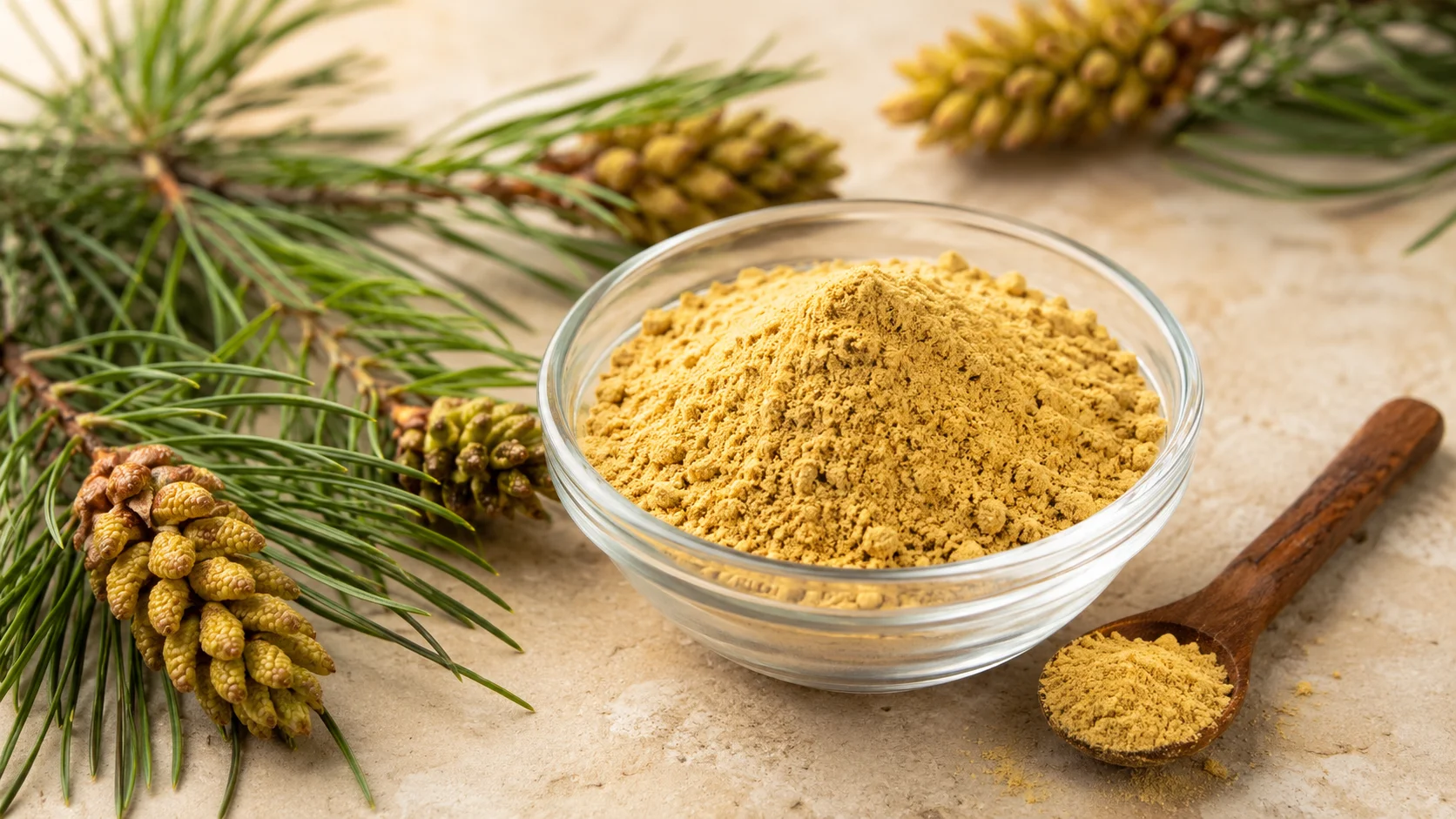
Powder provides dried pollen in a form that can be mixed into water, smoothies, yogurt, or other foods. Capsules can also contain the same type of material in a measured format.
Whole-wall powder
Whole-wall powder leaves the outer structure of the pollen grain relatively intact. That wall helps protect the pollen in nature, but it may also make some of the internal material harder to release during digestion.
Cracked-cell or broken-wall powder
Manufacturers may mechanically disrupt the outer wall. The purpose is to expose more of the grain’s internal material.
This is a plausible processing distinction, but the phrase “cracked cell” should not be treated as evidence that a product will increase testosterone, improve libido, or produce better clinical results.
- Provides more of the whole pollen material.
- Usually avoids alcohol.
- Can be added to food or drinks.
- Available as loose powder or capsules.
- May suit buyers seeking a food-like botanical format.
- Taste and texture may be unpleasant.
- Loose powder can be inconvenient to measure.
- Airborne particles may concern sensitive users.
- The intact pollen wall may affect digestibility.
- Quality and cracked-cell claims vary by manufacturer.
How Pine Pollen Extract Works
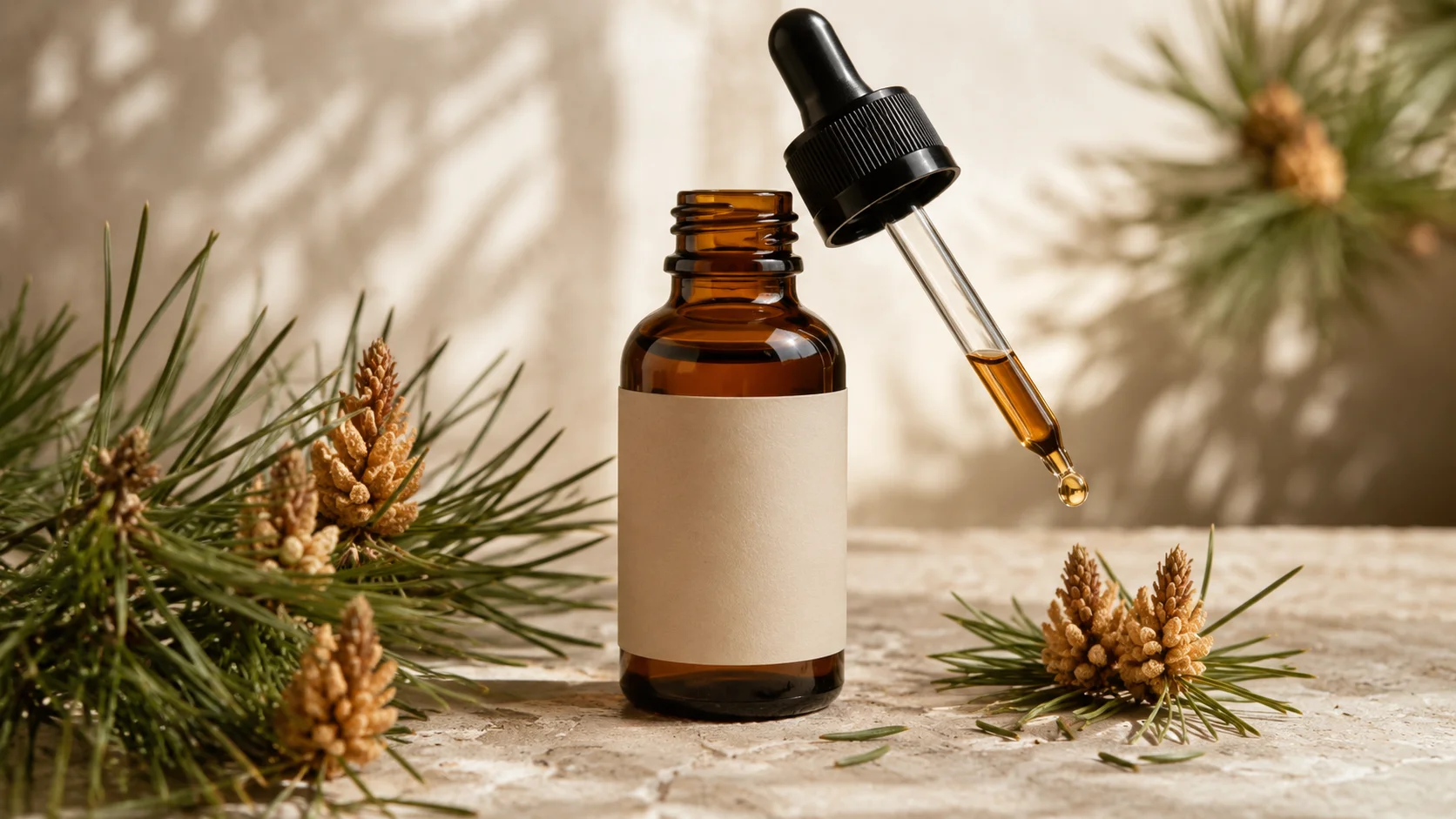
An extract uses liquid to separate selected compounds from the original botanical material. The final formula depends heavily on what solvent was used and how the extraction was performed.
Alcohol-based extract
Alcohol is a common botanical-extraction solvent. It may pull compounds that do not dissolve as readily in water, while also helping preserve the finished tincture.
Alcohol-containing products will not suit everyone. Buyers may avoid them for health, medication, recovery, religious, pregnancy-related, or personal reasons.
Water or glycerin-based extract
Alcohol-free products may use water, glycerin, or another extraction system. These formulas can appeal to alcohol-avoidant buyers, but they may not extract the same range or concentration of compounds as an alcohol-based product.
- Convenient liquid measurement.
- No loose powder or powder texture.
- Selected compounds are already present in liquid form.
- Easy to carry when the bottle is properly sealed.
- May suit buyers who dislike capsules and powders.
- Often contains alcohol.
- Does not contain the complete solid pollen material.
- Taste may still be strong.
- Extraction ratios are not always clearly explained.
- “Fast absorption” claims may exceed the available evidence.
Which Form Is Better Absorbed?
There is no reliable universal answer showing that every pine pollen extract is better absorbed than every powder.
Powder must be digested, and the pollen wall may affect how easily internal material is released. Cracked-cell processing is intended to address that issue.
Extract already places selected compounds in a liquid medium, but that does not mean every constituent enters the bloodstream in a clinically meaningful amount. The solvent may also leave some compounds behind.
Sublingual instructions are also not proof that a complete botanical formula bypasses digestion or enters the bloodstream intact. Some small compounds may be absorbed through oral tissues, while much of a swallowed serving may still reach the digestive system.
Complete Pine Pollen Extract vs Powder Comparison
| Factor | Pine Pollen Powder | Pine Pollen Extract |
|---|---|---|
| Main form | Dried solid pollen | Filtered liquid extract |
| Whole-material profile | More complete | Selected soluble compounds |
| Convenience | Requires scooping, mixing, or capsules | Easy liquid measurement |
| Taste | Earthy or pollen-like | May taste strong, bitter, sweet, or alcoholic |
| Alcohol | Usually absent | Common in tinctures |
| Pollen-wall issue | Relevant unless processed | Less directly relevant after extraction |
| Absorption certainty | Depends on processing and compounds | Depends on solvent, compounds, and dose |
| Allergy concern | Still relevant | Still relevant |
| Best for | Whole-material and alcohol-free preference | Convenience and liquid-format preference |
| Medically proven superior? | No | No |
Where Boreome Pine Pollen Extract Fits
Boreome sells a liquid pine pollen extract rather than a whole-powder product.
The official ingredient list identifies alcohol, distilled water, wild-harvested Québec jack pine pollen, vegetable glycerin, and catkins. This means the formula may suit buyers specifically looking for an alcohol-based botanical tincture, but it is not appropriate for buyers who need or prefer an alcohol-free product.
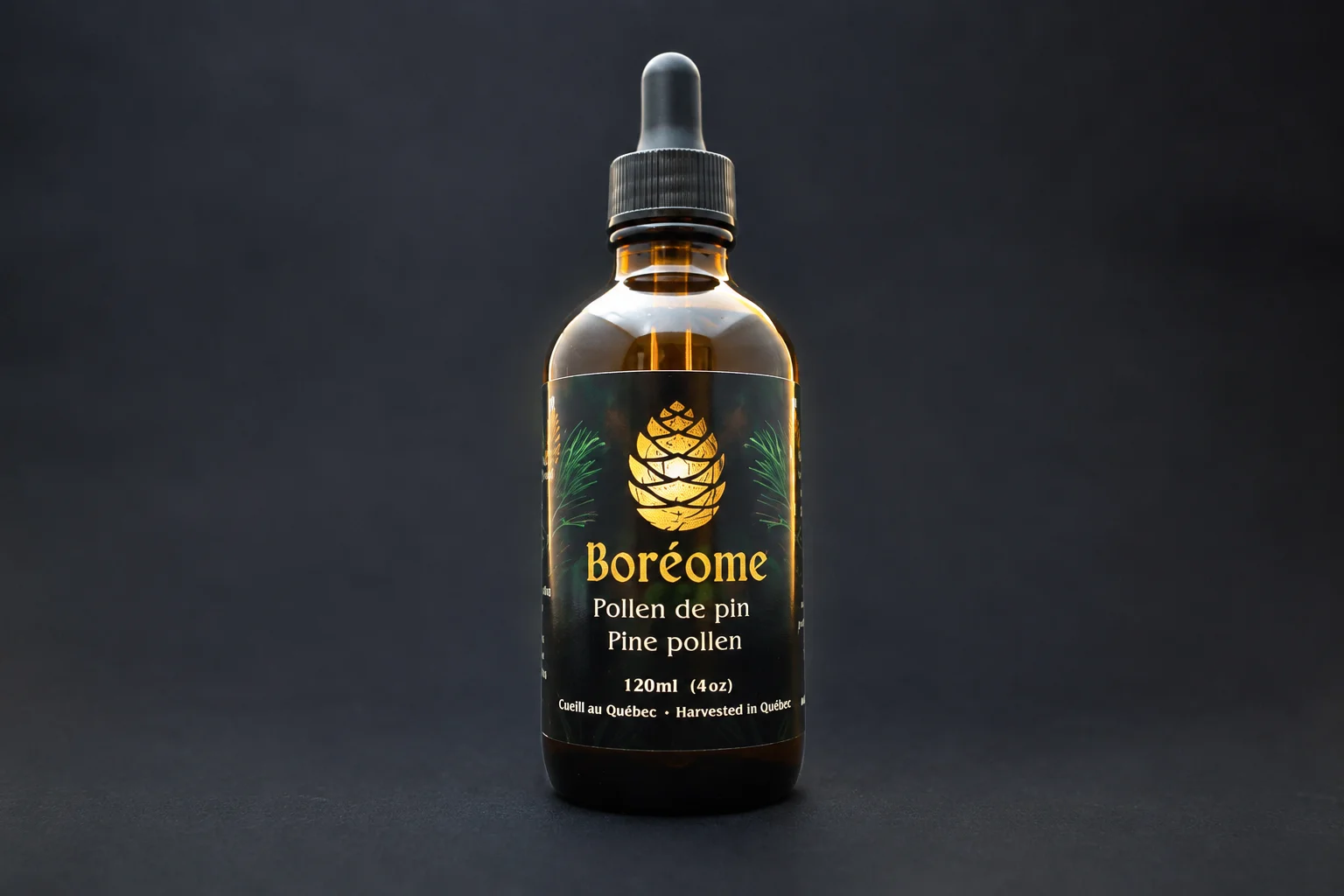
The brand identifies the pollen as Québec jack pine, also known as Pinus banksiana.
The dropper format may be easier for buyers who dislike powders or capsules.
The solvent is an important product feature and a possible reason to skip it.
The official website advertises a 90-day money-back guarantee. Verify current terms before ordering.
The tincture should not be treated as testosterone replacement, ED medication, or fertility treatment.
Best suited to adults who prefer tinctures and understand the limits of supplement evidence.
What a Buyer May Realistically Notice
The most immediate difference between powder and extract is likely to be the user experience rather than a measurable hormone change.
Powder users may notice its texture, taste, mixing behavior, and the need to measure a serving. Extract users may notice the dropper format, alcohol or glycerin taste, and the convenience of a small liquid serving.
Some users may report subjective changes in energy, mood, or libido, but those experiences do not prove that pine pollen caused the change. Sleep, stress, diet, exercise, expectations, medication, hormones, and underlying health can all influence those outcomes.
No personal testing was used for this comparison.
Buyer Checklist: Which One Should You Choose?
Choose powder if you:
- Want more of the whole pollen material.
- Prefer to avoid alcohol.
- Do not mind mixing powder or taking capsules.
- Can verify the pine species and processing method.
- Understand that cracked-cell processing does not guarantee a health result.
Choose extract if you:
- Prefer a liquid dropper format.
- Dislike loose powder or capsules.
- Understand that an extract contains selected compounds rather than the complete solid pollen.
- Are comfortable with the listed solvent and other ingredients.
- Can verify testing, sourcing, serving instructions, and return terms.
Skip both for now if you:
- Have a significant pollen allergy or uncontrolled asthma.
- Need medical treatment for low testosterone or sexual dysfunction.
- Are pregnant, breastfeeding, or purchasing for a child.
- Use hormone-related medication without professional guidance.
- Expect rapid, guaranteed, or clinically proven results.
Prefer a Ready-Made Pine Pollen Tincture?
Review Boreome’s current ingredients, bottle options, testing information, shipping terms, and guarantee on the official website before deciding.
View Boreome Product Details →
Verify the code, current price, ingredients, subscription terms, and refund conditions before checkout.
Safety, Allergies, and Medical Limitations
Pine pollen is a potential allergen. Sensitive people may experience sneezing, nasal congestion, watery eyes, coughing, wheezing, skin symptoms, or other reactions.
Trouble breathing, throat or tongue swelling, rapidly worsening wheezing, widespread hives, faintness, or severe facial swelling requires urgent medical attention.
Powder may create more loose airborne material during handling, but this does not make tincture automatically safe for someone with pollen allergy.
Speak with a clinician or pharmacist before use if you have asthma, hormone-sensitive conditions, prostate concerns, fertility concerns, chronic illness, liver disease, alcohol restrictions, or take prescription medication.
Persistent fatigue, reduced libido, erectile problems, menstrual changes, infertility, or suspected low testosterone should be medically assessed. Neither extract nor powder should delay appropriate diagnosis.
Frequently Asked Questions
Not universally. Extract may be more convenient, while powder provides more of the whole pollen material. The better choice depends on ingredients, alcohol preference, product quality, taste, and how you plan to use it.
This has not been established for all pine pollen compounds or products. Liquid extraction changes which compounds are present, but it does not guarantee superior human absorption or better clinical results.
Cracking the pollen wall may release more internal material during digestion. However, that processing advantage does not prove greater testosterone, libido, energy, or medical benefits.
Not necessarily. Extraction selects compounds according to the solvent and process. Some solid, insoluble, or poorly extracted material may not remain in the final liquid.
Many tinctures do, including Boreome’s listed formula. Alcohol-free extracts may use glycerin or water, but buyers should verify the full ingredient list rather than assuming.
Neither form has enough strong human evidence to be recommended as a reliable testosterone treatment. Suspected low testosterone requires appropriate symptoms review and blood testing.
An extract is not automatically allergy-safe. Anyone with significant tree pollen allergy, asthma, or a history of severe reactions should seek individualized professional advice.
Boreome’s main pine pollen product is a liquid alcohol-based extract or tincture. Its official ingredient list includes Québec jack pine pollen, catkins, alcohol, distilled water, and vegetable glycerin.
Pine Pollen Extract vs Powder: The Bottom Line
Choose pine pollen powder when your priority is consuming more of the whole pollen material, avoiding alcohol, or using a food-like powder or capsule.
Choose pine pollen extract when your priority is convenient liquid use and you are comfortable with the solvent, ingredients, and incomplete whole-material profile.
Neither format is proven medically superior, and neither should be selected because of guaranteed testosterone, libido, anti-aging, or disease claims.
Boreome may be worth considering for adults who specifically want a wild-harvested Québec jack pine tincture and accept its alcohol-based formula. Use code WELCOME30, but verify that it applies before completing an order.
Powder or an alcohol-free product is the more suitable route for buyers who want to avoid alcohol or prefer the complete dried pollen material.
How This Comparison Was Prepared
This comparison reviewed pine pollen processing research, broader pollen digestibility evidence, official Boreome product information, and established allergy guidance.
The formats were evaluated according to whole-material content, extraction method, convenience, alcohol content, label transparency, allergy risk, evidence quality, and buyer fit. No personal testing was conducted.
Sources and References
- Pine pollen: Chemical composition, health effects, processing, and food applications
- The application of pollen as a functional food and the role of pollen-wall digestibility
- Bibliometric analysis of pharmacological and clinical pine pollen research
- American College of Allergy, Asthma & Immunology: Pine tree allergy
- Boreome official pine pollen tincture information
Last Updated: July 2026 · HealthAffPro
 ✓
✓