
Collagen can support skin and joints but dose and type matter. This guide covers side effects, how much to take, and bovine vs marine collagen.
What is collagen?
Collagen is a structural protein in your body. It supports your skin, joints, bones, tendons, and other connective tissues. That’s why many people take collagen supplements for skin hydration, fine lines, joint comfort, and stronger hair and nails.
Some research reviews report benefits for things like skin hydration and elasticity. But your results depend on the product, the dose, and how consistently you take it.
Note: This is not medical advice. If you are pregnant, breastfeeding, or taking medicines, talk to a clinician before you start any supplement.
Types of collagen supplements: powder vs gummies
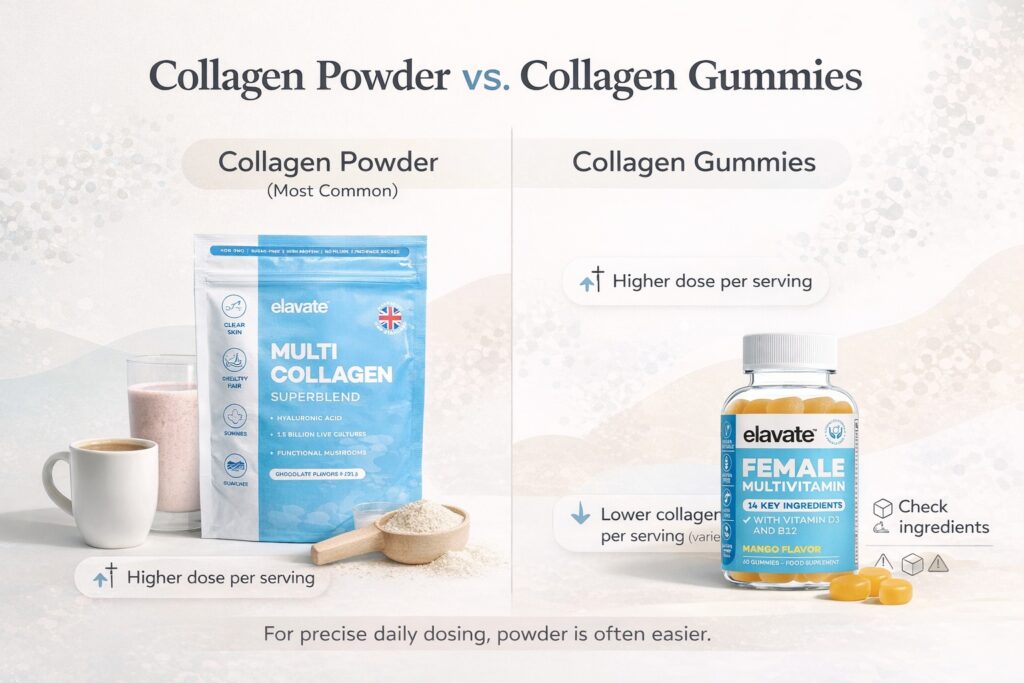
People often compare collagen powder and collagen gummies. Each format fits a different lifestyle.
1) Collagen powder (most common)
- You can usually get a higher collagen dose per serving.
- You can mix it into coffee, smoothies, milk, or yogurt for example ,Elevate collagen powder (or similar collagen peptide powders) works well in coffee or smoothies because it blends easily.
- Many people buy marine collagen powder in this format.
2) Collagen gummies
- Gummies feel convenient and travel-friendly.
- Many gummy products provide less collagen per serving than powder (it varies by brand).
- Always check the ingredient list for sweeteners and allergens.
If you want more precise daily dosing, powder often makes it easier.
How much collagen per day?
Most people ask: How much collagen should I take per day?
Here’s simple guidance:
- Many sources commonly mention ~10g/day of collagen peptides as a typical daily amount people use (often in time-limited routines).
- Many skin studies use 1–10 g/day, and they report improvements in some cases (studies vary).
If you want a brand-specific example, read our Elavate Collagen review.
Beginner-friendly routine
- Start with 5g/day (or 1 serving of your product).
- Take it consistently for 8–12 weeks (results usually don’t show overnight).
- Track 1–2 outcomes, such as:
- skin hydration
- nail breakage
- joint comfort
Collagen side effects
Most people tolerate collagen well, but some people get side effects—especially if the product includes extra ingredients.
Commonly reported side effects:
- stomach heaviness or mild digestive upset
- mild diarrhea (rare)
- skin rash (rare, often allergy-related)
Biggest practical risk: allergy or source sensitivity
- If you have a fish/seafood allergy, avoid marine (fish-based) collagen.
- If you have a beef allergy/sensitivity, avoid bovine (cow-based) collagen.
Bovine vs marine collagen
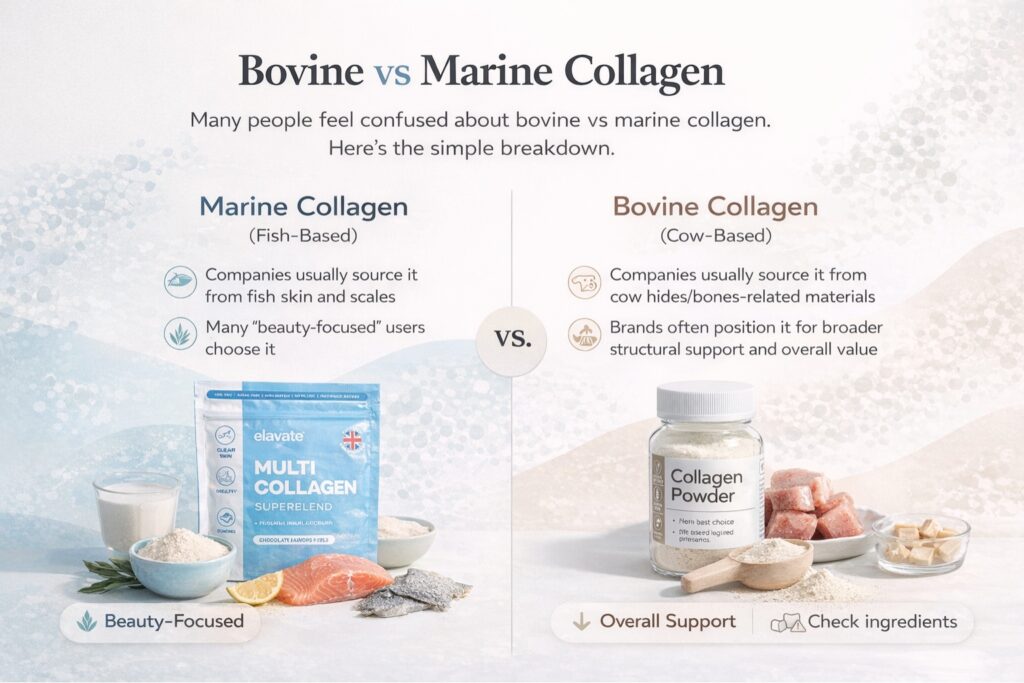
Many people feel confused about bovine vs marine collagen. Here’s the simple breakdown.
Marine collagen (fish-based)
- Companies usually source it from fish skin and scales.
- Many “beauty-focused” users choose it (partly due to marketing, and partly due to how brands position it).
Bovine collagen (cow-based)
- Companies usually source it from cow hides/bones-related materials.
- Brands often position it for broader structural support and overall value.
Which is better?
- If you mainly care about skin, many users prefer marine.
- If you want overall support and better value, many people choose bovine.
The best choice depends on your diet preferences, allergies, budget, and consistency.
Vitamin C and collagen
Vitamin C matters because your body uses it for normal collagen formation. That’s why many brands:
- add vitamin C into the formula, or recommend taking collagen with a vitamin C source
- Pairing collagen with vitamin C can be a practical move, especially if your diet is low in vitamin C.
“Best collagen” searches (women / UK)
People often search phrases like:
- best collagen for women
- best collagen UK
- collagen supplements UK
Instead of chasing hype, use this simple buying checklist.
Quick checklist (buying guide)
- Dose per serving: aim for a practical daily range (often 5–10g/day)
- Source: bovine vs marine collagen
- Added support: vitamin C or hyaluronic acid (optional)
- Allergen fit: fish or beef sensitivity
- Review quality: read 3-4 star reviews too, not only 5-star
If you want a real example to compare, you can review Elevate collagen powder details on elavate.com (source, serving size, and added ingredients). If you choose to purchase through our link, you’ll get £10 off. We may earn a small commission at no extra cost to you.
Collagen myth: “weight loss magic”
Collagen is not a weight-loss miracle. It’s a protein supplement. It may help you feel more satisfied in some cases, but fat loss mainly comes from:
- your total diet pattern
- activity level
- consistent habits over time
Brand comparisons (search intent)
People often compare brands like:
- Ancient + Brave collagen reviews
- Absolute Collagen
- Nutrition Geeks collagen (Geeks Collagen)
No matter the brand, apply the same checklist:
- dose
- source
- ingredients
- cost per serving
- taste and mixability
- allergen safety
Quick FAQ
Q: Collagen powder or collagen gummies what’s better?
A: Choose powder if you want a higher dose consistently. Choose gummies if you prioritize convenience.
Q: How much collagen per day for beginners?
A: Start with 5g/day, then stay consistent for 8–12 weeks.
Q: Do I need vitamin C?
A: Vitamin C supports collagen formation, so pairing it with collagen can help—either through your diet or a supplement.
 ✓
✓