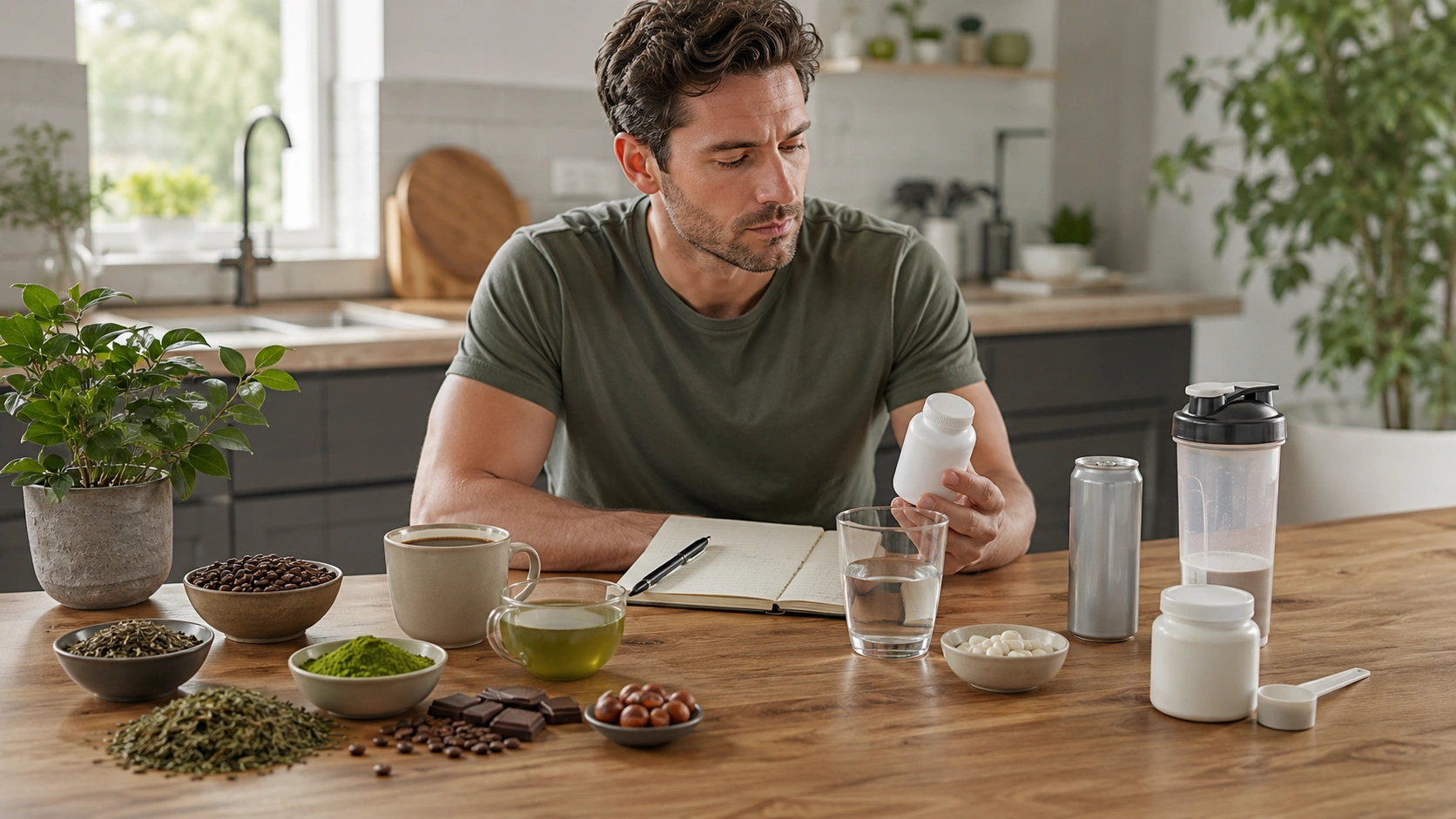
You’ve seen “natural caffeine” on labels and wondered if it’s actually better — or if “synthetic” caffeine is something to avoid. The honest answer is more practical than the marketing makes it sound.
Chemically, natural and synthetic caffeine are the same molecule — 1,3,7-trimethylxanthine. The U.S. Food & Drug Administration states there’s no difference in how your body handles the caffeine that occurs naturally in coffee and tea versus caffeine added to a product.
So “natural” is not automatically safer, and “synthetic” is not automatically bad. What actually shapes how caffeine feels and how safe it is for you is the dose, the timing, the delivery format (drink vs. pill vs. pre-workout), the other ingredients in the product, and your own sensitivity — not the word on the label.
At a glance
If you only remember a few things, remember these.
| The question | The short, honest answer |
|---|---|
| Is natural caffeine a different molecule? | No. It’s identical to synthetic caffeine once it’s in your body. |
| Is natural caffeine safer? | Not automatically. Safety depends on total dose and your sensitivity. |
| Is synthetic caffeine harmful? | Not by default. It’s widely used in sodas, energy drinks, and supplements. |
| What actually changes the experience? | Dose, timing, format, co-ingredients (like L-theanine in tea), sleep, and you. |
| How much is generally okay for adults? | Up to ~400 mg/day for most healthy adults, per the FDA — from all sources combined. |

What is natural caffeine?
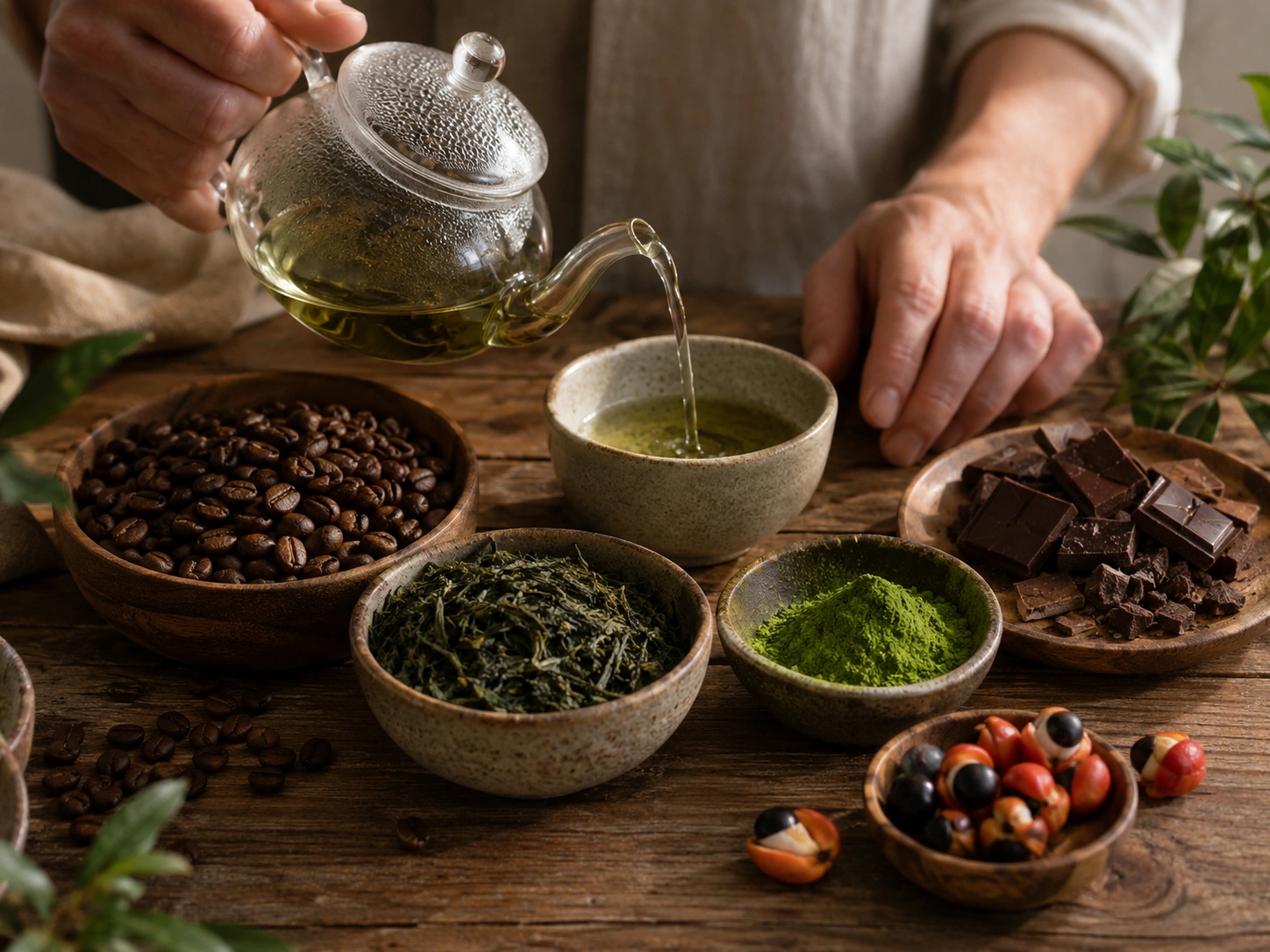
“Natural” caffeine simply means caffeine that comes from a plant. Coffee beans, tea leaves, cacao, yerba mate, guarana seeds, and the kola nut all make caffeine on their own. When a product says it uses “green tea caffeine” or “caffeine from coffee,” that’s plant-derived caffeine extracted from one of these sources.
Plant sources also bring along other compounds — antioxidants in coffee, catechins and the amino acid L-theanine in tea. Those extras can subtly shape how a drink feels, which we’ll get to below. But the caffeine itself is the same compound no matter which plant it came from.
What is synthetic caffeine?
Synthetic caffeine is made in a lab rather than extracted from a plant. It’s produced industrially from urea-derived precursors, and a large share of the synthetic caffeine used in the United States is manufactured overseas. On supplement and energy-product labels it often appears as “caffeine anhydrous” — a dried, water-free form that’s popular because it’s pure, stable, and easy to dose precisely.
That dosing precision is actually why many energy drinks and pre-workouts use it: a manufacturer can put an exact, repeatable amount of caffeine in every serving. None of that makes it inherently dangerous. As with the plant version, the important variable is how much you take in and how your body responds.
The real difference (it’s smaller than you think)
Here’s the part the marketing usually skips: caffeine is caffeine. Whether it’s pulled from a green coffee bean or built in a factory, the molecule that reaches your bloodstream is identical — the same 1,3,7-trimethylxanthine.
The FDA puts it plainly, saying there’s no difference in the way your body handles the caffeine that occurs naturally in coffee and tea and the caffeine added to a product. Small head-to-head human studies back this up: when researchers compared plant-extract caffeine with synthetic caffeine at the same dose, the body absorbed them about the same way.
So the popular idea that “synthetic caffeine spikes you and crashes you faster, while natural caffeine is slow and smooth” isn’t supported by the head-to-head evidence. Any real difference in how a coffee feels versus an energy drink comes from the format and the dose, not from a hidden difference in the caffeine molecule.
Common natural caffeine sources
Caffeine content varies a lot with brewing time, processing, serving size, and the specific product. Treat these as ballpark ranges, not exact numbers.
| Source | Typical serving | Approx. caffeine |
|---|---|---|
| Brewed coffee | 8 oz cup | ~80–100 mg |
| Espresso | 1 oz shot | ~63 mg |
| Black tea | 8 oz cup | ~25–48 mg |
| Green tea | 8 oz cup | ~25–50 mg |
| Yerba mate | 1 cup (more with refills) | ~80 mg, can climb higher |
| Matcha | ~1 tsp (2 g) | ~60–80 mg |
| Dark chocolate | ~0.5 oz (14 g) | ~7 mg (more at higher cocoa %) |
Sources: FDA and Mayo Clinic general ranges. Actual amounts vary widely.
Guarana deserves a note: its seeds are caffeine-dense (roughly two to three times the caffeine concentration of coffee beans by weight), which is why it’s often added to energy products as a “natural” caffeine source. Curious how these fit into workout fuel? See our guide to a natural pre-workout and our breakdown of raw honey for energy.
Where synthetic caffeine shows up
You’ll most often find synthetic (or lab-made) caffeine in:
Energy drinks
Roughly 54–328 mg per 16 oz, depending on the brand and size.
Sodas
Usually modest amounts, around 23–83 mg per 12 oz.
Pre-workouts
Often “caffeine anhydrous,” sometimes in high or stacked doses.
Caffeine pills
Precise, concentrated doses — easy to overshoot if you stack them.
Some products labeled “natural” still combine plant-derived and lab-made caffeine, or use caffeine-rich extracts. That’s not a scandal — it just means the label word matters less than the milligram total, which we’ll come back to.
Does natural caffeine feel “smoother”?
This is the one place where “natural” has a plausible, research-backed angle — but it’s about the company the caffeine keeps, not the caffeine itself.
Tea (and matcha) naturally pair caffeine with L-theanine, an amino acid found almost only in tea. Research on caffeine combined with L-theanine suggests small-to-moderate benefits for attention and mood in the first one to two hours, and some people find the combination feels calmer than coffee alone. That’s a reasonable reason green tea can feel like a gentler lift.
Important caveats: these effects are modest, short-term, and dose-dependent, and the “calm” feeling is partly subjective. One study found L-theanine tended to soften caffeine’s rise in blood pressure but didn’t clearly reduce “jitteriness.” So it’s fair to say tea-derived caffeine may feel smoother for some people — not that it’s proven to beat every other source.
Dose matters more than the word “natural”
If there’s one habit worth building, it’s adding up your total daily caffeine from every source — coffee, tea, soda, chocolate, pre-workout, and supplements combined.
For most healthy adults, the FDA cites about 400 mg a day — roughly two to three 12-oz cups of coffee — as an amount not generally linked to negative effects. The agency also notes wide variation in how sensitive people are and how quickly they clear caffeine. At the far extreme, the FDA estimates toxic effects such as seizures can occur with rapid intake of around 1,200 mg, which is why ultra-concentrated pure-caffeine powders are so risky.
What helps caffeine work for you
- A moderate, consistent dose
- Earlier in the day, not close to bed
- With food and water
- Knowing your own sensitivity
What tends to backfire
- Stacking coffee + pre-workout + energy drink
- Large doses late in the afternoon
- Concentrated pills or powders without measuring
- Ignoring total daily intake
Natural vs synthetic caffeine: side-by-side
| Factor | Natural caffeine | Synthetic caffeine |
|---|---|---|
| The molecule | 1,3,7-trimethylxanthine | 1,3,7-trimethylxanthine (identical) |
| Source | Coffee, tea, mate, guarana, cacao | Made industrially; often labeled “caffeine anhydrous” |
| How your body absorbs it | About the same in head-to-head studies | About the same in head-to-head studies |
| Common products | Coffee, tea, some “clean” supplements | Energy drinks, sodas, pre-workouts, pills |
| Co-ingredients | Antioxidants, L-theanine (in tea) | Usually isolated; depends on the formula |
| Dosing precision | Varies by brew and serving | Very precise and repeatable |
| What changes the experience | Dose, timing, format, other ingredients, sleep, and individual sensitivity — for both | |
Timing, sleep & tolerance
Caffeine works by blocking adenosine, the chemical that builds up and makes you feel sleepy. With regular use your body adapts, so tolerance develops and the same cup does a little less over time.
It also lingers. Caffeine’s half-life averages around five hours, but it ranges widely — roughly 1.5 to 9.5 hours — depending on your genetics, pregnancy, smoking, certain medications, and oral contraceptives. If you’re a slower metabolizer, an afternoon coffee can still be in your system at bedtime, quietly chipping away at sleep. Cutting back suddenly can trigger short-lived withdrawal — headache, fatigue, irritability, low focus — usually starting within a day, which is why tapering works better than quitting cold turkey.
How to read a caffeine label
Marketing words like “natural energy” or “clean caffeine” aren’t regulated promises. Here’s a quick checklist to cut through it.
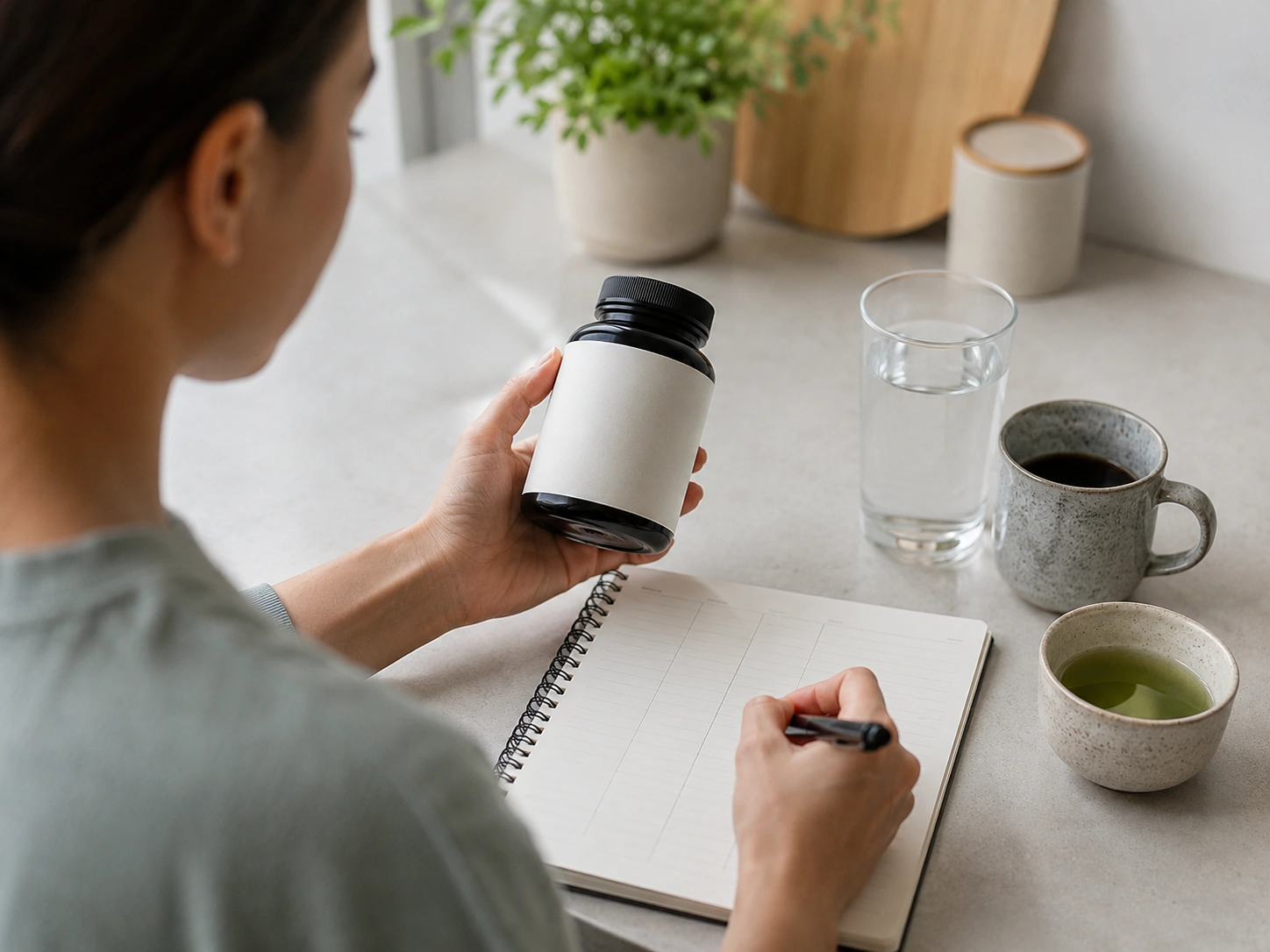
- Find the caffeine amount per serving — and check how many servings you’ll actually use.
- Look for the source (coffee, green tea, guarana, or “caffeine anhydrous”) — useful info, not a safety verdict.
- Add it to your other caffeine for the day to stay under your personal limit.
- Scan for other stimulants stacked into the formula.
- Check the Supplement Facts or Nutrition Facts panel — not just the front-of-pack claims.
- Remember exact milligram amounts aren’t federally required on every product, so “a little caffeine” can be vague.
Want to see this applied to a real formula? Our breakdown of what’s in SuperCharged Honey walks through an ingredient list the same way.
Common mistakes people make
- Assuming “natural caffeine” means they can have more of it safely.
- Treating “synthetic” as a red flag while ignoring the actual dose.
- Forgetting that coffee, soda, chocolate, and pre-workout all stack up.
- Using concentrated pills or powders without measuring carefully.
- Drinking caffeine late in the day, then blaming poor sleep on something else.
- Expecting caffeine to “burn fat” or guarantee a better workout — it doesn’t.
Who should be careful with caffeine
Caffeine isn’t right for everyone in the same amounts. Be extra cautious — and consider talking to a healthcare professional — if you:
- Are pregnant or trying to conceive. ACOG suggests keeping intake under about 200 mg a day; nursing parents should also be mindful.
- Are a child or teen. Pediatric guidance is that energy drinks aren’t for kids or teens, and ages 12–18 should stay at or below ~100 mg/day.
- Have a heart condition, high blood pressure, or arrhythmia.
- Live with anxiety, panic, or sleep problems — caffeine can worsen all three.
- Have GERD, reflux, or ulcers.
- Take medications (some antibiotics, asthma, heart, or psychiatric medicines can interact with caffeine).
One firm rule: avoid pure or highly concentrated caffeine powders and pills. A small mistake in measuring these can be dangerous — even fatal — which is why the FDA treats bulk pure caffeine sold to consumers as effectively illegal.
What a green-tea-caffeine product looks like
If you want a concrete example of a plant-derived caffeine format, RONE SuperCharged Honey is one option. Each single-serve packet pairs raw honey with green tea caffeine, plus lion’s mane mushroom and a pinch of Himalayan pink salt. The 100 mg version delivers caffeine roughly comparable to one cup of coffee.
It’s worth being clear-eyed here: because green-tea caffeine is chemically the same as any other caffeine, this isn’t “safer caffeine” — it’s a particular formulation and flavor. The same daily-limit math and the cautions above still apply, and the maker notes it’s not intended for children, pregnant or nursing people, or those sensitive to caffeine. For our full hands-on take, read the RONE Nutrition review.
View the SuperCharged Honey productAffiliate link. We may earn a commission if you buy — at no extra cost to you. Not a recommendation over any other product, and not a substitute for professional advice.
How we approached this guide
Experience
We’ve reviewed many energy and focus products and seen how often “natural” is used as a marketing shortcut rather than a meaningful safety claim.
Expertise
Caffeine figures and safety thresholds here are checked against the FDA, Mayo Clinic, ACOG, pediatric guidance, MedlinePlus, and peer-reviewed pharmacology studies.
Trust
We don’t claim caffeine burns fat, guarantees performance, or that any source is risk-free. Where evidence is limited, we say so.
Browse more in our energy & focus reviews.
Frequently asked questions
Is natural caffeine better than synthetic caffeine?
Not in any chemical sense — they’re the same molecule, and studies show the body absorbs them about the same. “Better” usually comes down to the whole product: the dose, the format, the other ingredients, and how it fits your routine.
Is synthetic caffeine bad for you?
Not by default. It’s widely used in sodas, energy drinks, and supplements, often because it allows precise dosing. As with natural caffeine, problems come from taking too much, not from the source.
Does green tea caffeine feel different from coffee caffeine?
Some people find tea feels calmer, likely because tea pairs caffeine with L-theanine. The research suggests modest, short-term benefits for attention and mood from that combination — but results vary from person to person.
How much caffeine is too much?
For most healthy adults, the FDA cites about 400 mg a day — roughly two to three 12-oz cups of coffee — counting every source. Lower limits apply during pregnancy and for teens, and individual sensitivity matters a lot.
Can caffeine affect sleep?
Yes. Caffeine has a half-life of around five hours (often longer), so afternoon and evening doses can interfere with falling and staying asleep, especially in slower metabolizers.
Should I use caffeine before exercise?
Many people use a moderate dose for a workout, but it’s not required and it’s not a guaranteed performance boost. Hydration, sleep, and overall fueling matter more. See our natural pre-workout guide for a fuller picture.
What should I check on an energy supplement label?
The caffeine amount per serving, the number of servings you’ll use, any other stimulants in the formula, and how it adds to your total caffeine for the day. The source word matters less than the milligram math.
Final thoughts
“Natural vs synthetic caffeine” sounds like a big decision, but the molecule is the same either way — and your body treats it the same. The label word is mostly about marketing and personal preference.
What truly shapes your experience is practical and within your control: how much you take, when you take it, what format it’s in, what else is in the product, and how your own body responds. Track your total daily caffeine, respect the cautions if any apply to you, and pick the format you actually enjoy. That’s a far more useful filter than the word “natural.”
- U.S. Food & Drug Administration — Spilling the Beans: How Much Caffeine is Too Much?
- Mayo Clinic — Caffeine: How much is too much?
- MedlinePlus (NIH/NLM) — Caffeine
- American College of Obstetricians & Gynecologists — Moderate Caffeine Consumption During Pregnancy
- American Academy of Pediatrics — Guidance on children, teens, caffeine & energy drinks
- NIH News in Health — Tired or Wired? Caffeine and Your Brain
- Morton et al. (2018), Clinical Pharmacology in Drug Development — Natural vs. synthetic caffeine pharmacokinetics
- USDA FoodData Central — Caffeine content of foods & beverages
- U.S. Federal Trade Commission — Disclosures 101 (affiliate & endorsement guidance)
- RONE Nutrition (official) — SuperCharged Honey product page (formula details)
 ✓
✓