Direct answer: how to get lean legs without bulking
Getting lean legs without bulking usually means combining overall fat-loss habits, low-to-moderate cardio such as walking, and resistance training that supports tone, posture, strength, and joint health without excessive lower-body volume.
You cannot force fat loss from only your thighs, but you can build a routine that helps your whole body become leaner while tracking how your legs personally respond to different training styles.
Quick decision table
Use this table to decide whether this guide matches your current goal and what to avoid before changing your routine.
| Question | Best answer |
|---|---|
| Who is this guide for? | Adults who want a leaner, toned lower-body look without chasing extreme dieting, punishing workouts, or thigh-fat myths. |
| Best use case | You feel your legs respond quickly to heavy lower-body training and want a more balanced plan with walking, mobility, and controlled resistance work. |
| What to avoid | Avoid spot-reduction promises, crash diets, daily intense leg workouts, and copying a plan that ignores your recovery and personal response. |
| Key takeaway | Lean-looking legs come from a full-body strategy: sustainable activity, smart strength training, nutrition consistency, sleep, patience, and honest tracking. |
The real-life problem: “Why do my legs feel bigger when I work out?”
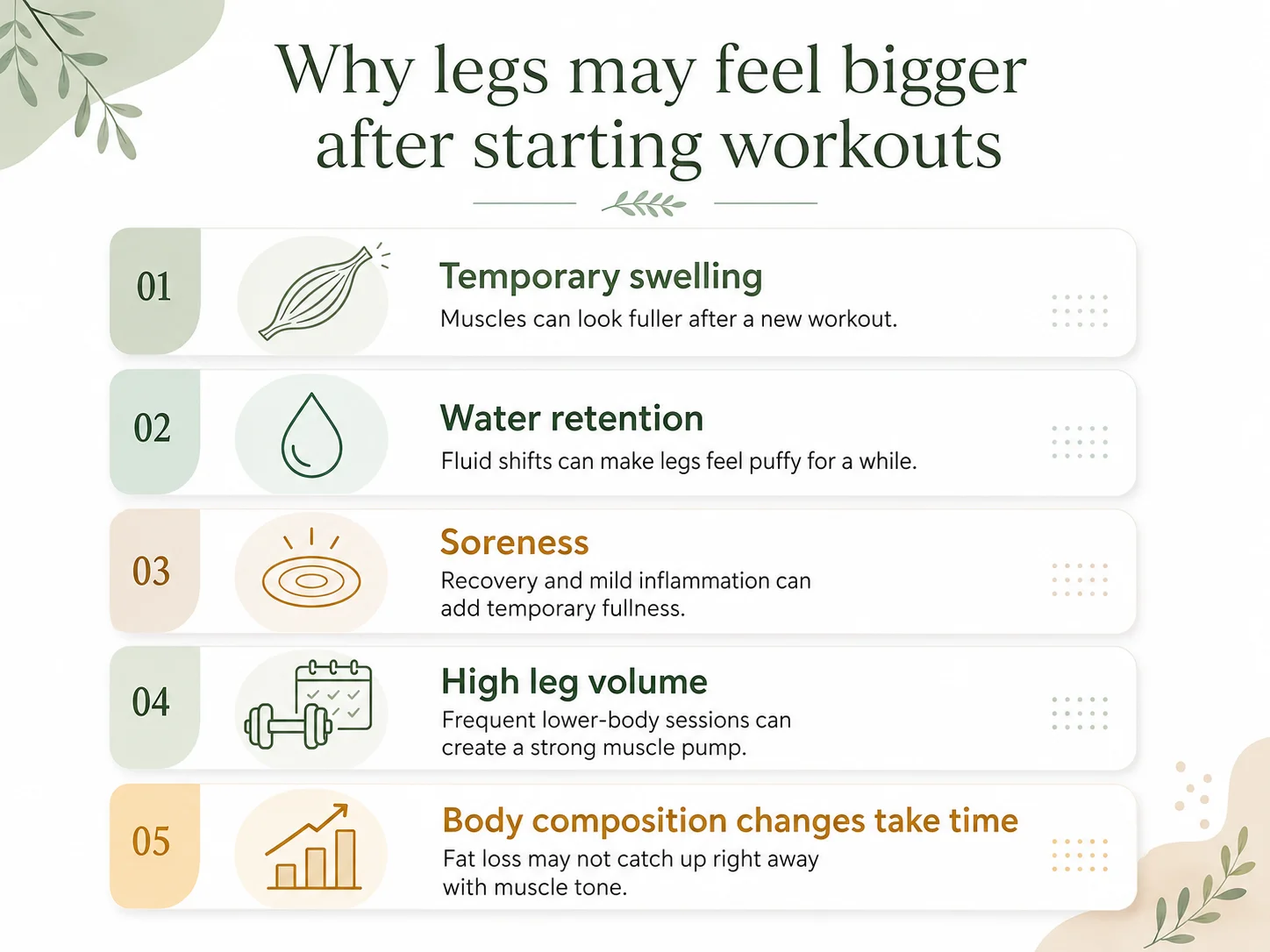
A common lower-body fitness frustration sounds like this: you start working out, add squats and lunges, do more HIIT, feel proud of your consistency, then notice your jeans feel tighter around the thighs.
That can be discouraging, especially if your goal was a leaner look rather than a stronger or more muscular one. The problem is not always the exercise itself. It may be the amount of lower-body volume, the intensity, the recovery gap, temporary water retention, or the fact that fat loss has not caught up with new muscle tone yet.
The solution is not to fear strength training. The solution is to understand the training signals you are sending your body and adjust them to match the look, health, and performance you actually want.
What “lean legs without bulking” really means
“Lean” is not a specific exercise. It is a visual result of body composition, muscle tone, posture, genetics, hydration, and how your body stores fat.
“Bulking” usually means gaining noticeable muscle size, but many people use the word casually to describe any lower-body fullness they do not prefer. A useful lean-leg plan should be honest about this difference.
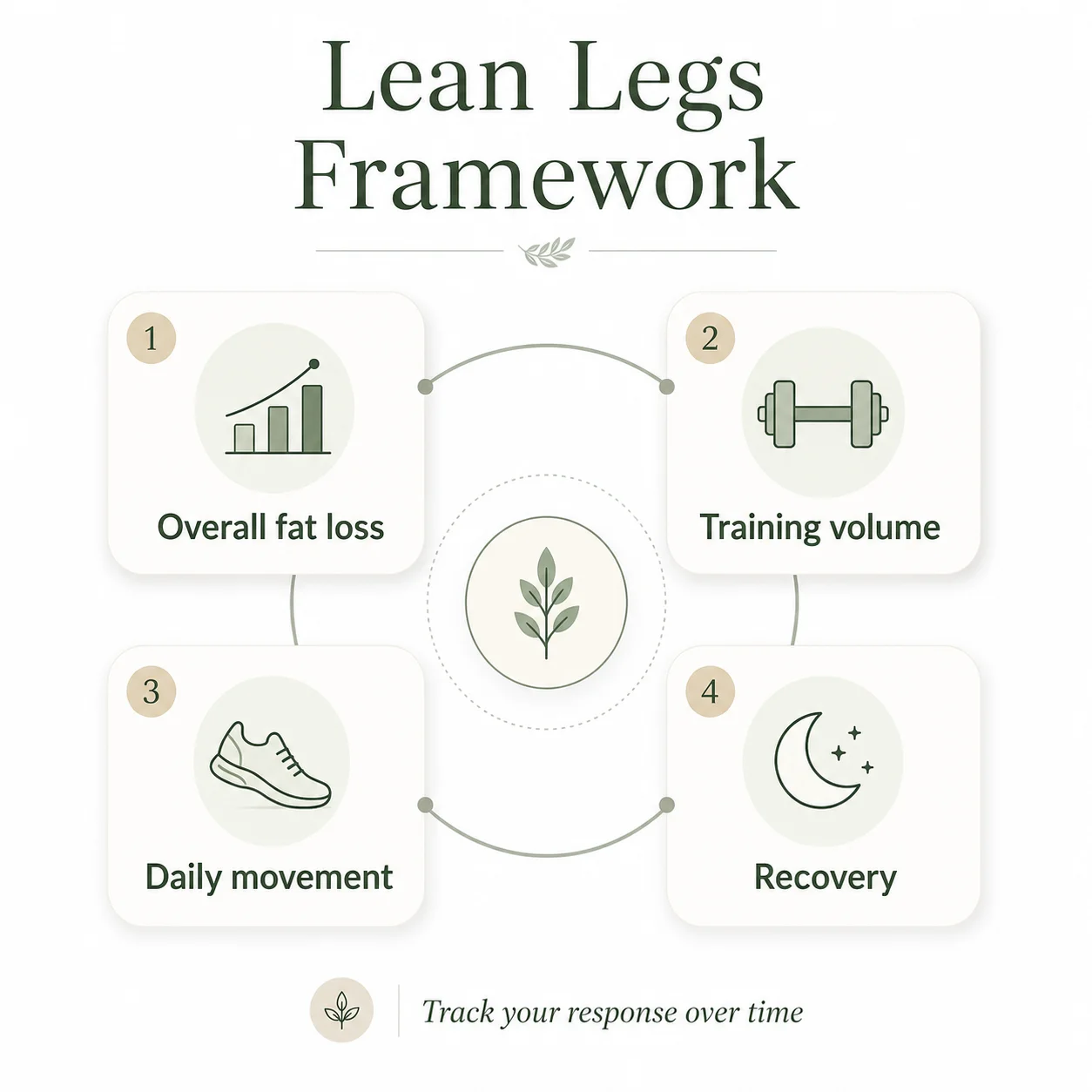
Overall fat loss
You cannot choose where fat leaves first, but overall fat loss can change how legs look over time.
Training volume
Exercise selection, sets, reps, load, and frequency influence how much muscle-building stimulus your legs receive.
Daily movement
Walking and general activity can support calorie expenditure without feeling like a punishing workout.
Recovery
Soreness, water retention, poor sleep, and too much intensity can make legs feel heavy or swollen.
A helpful way to think about this is the “shape signal” framework. Every week, your plan sends your body a signal through food, movement, strength work, cardio, sleep, stress, and consistency.
If the signal is mostly heavy leg volume and poor recovery, your legs may feel fuller. If the signal is steady activity, balanced resistance training, and sustainable nutrition, the result may better match a leaner goal. For broader wellness context, visit HealthAffPro’s health and wellness resources and weight-loss guidance.
Important myth check
Leg exercises can strengthen and shape leg muscles, but they do not guarantee fat loss from only the thighs. A routine can support overall fat loss and lower-body tone, but genetics, hormones, nutrition, recovery, and consistency all affect the outcome.
This is why a smart plan should be honest: no magic move, no guaranteed thigh gap, and no promise that one workout style will work identically for every body.
Common mistakes that make legs feel bigger, not leaner
The wrong plan is not always a “bad” plan. It may simply be mismatched to your goal, recovery, or current fitness level. Here are the mistakes to check first.
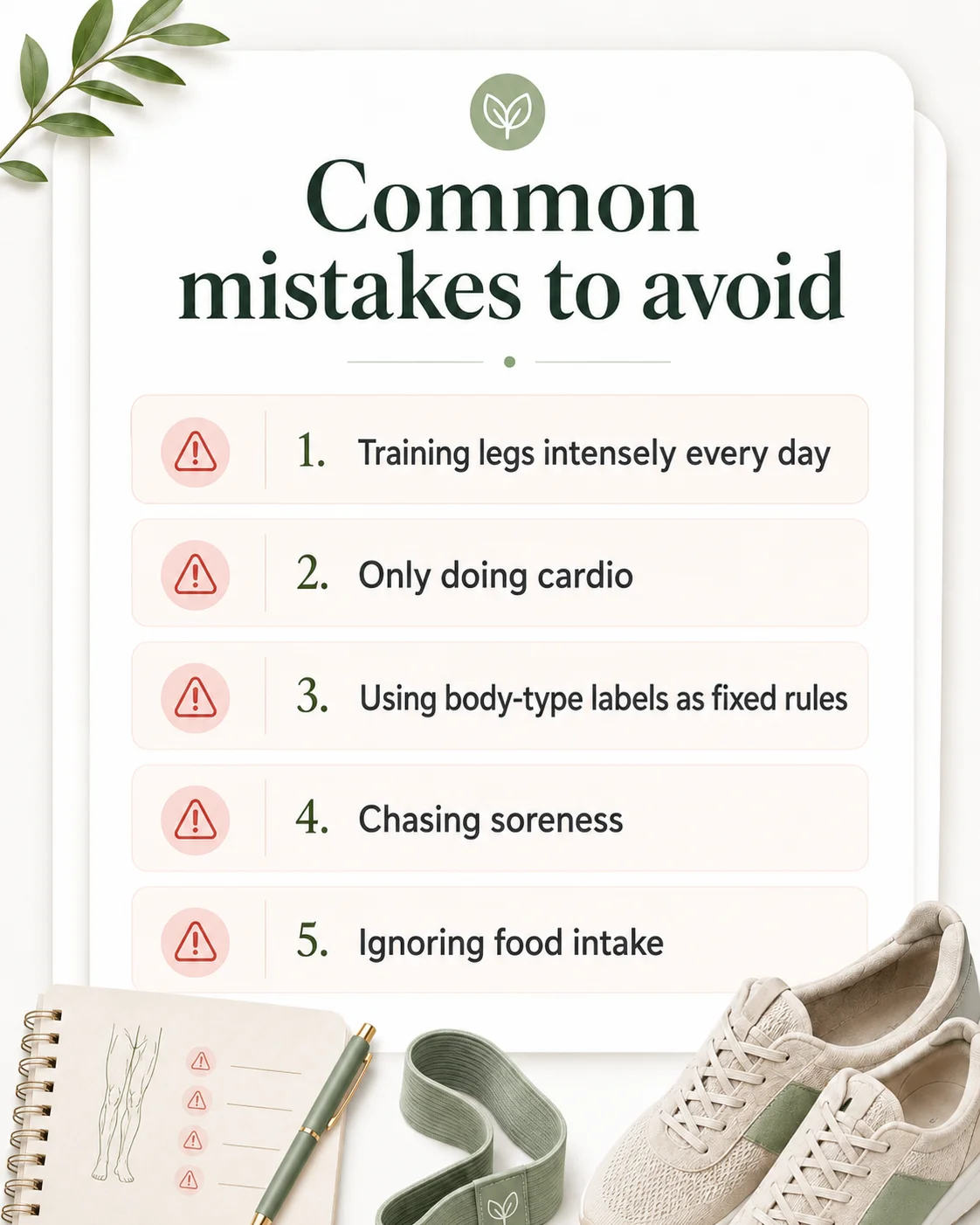
| Mistake | Why it matters | Better move |
|---|---|---|
| Training legs intensely every day | Too much lower-body stress can increase soreness, water retention, and fatigue. | Use 2–3 focused strength sessions and leave room for walking, mobility, and rest. |
| Only doing cardio | Cardio helps health and calorie burn, but strength work supports muscle, posture, and shape. | Combine cardio with full-body resistance training. |
| Using body-type labels as fixed rules | Body-type language can be a rough clue, but it should not become a rigid identity. | Track your actual response to workouts, measurements, photos, energy, and recovery. |
| Chasing soreness | Soreness is not proof of a better result. It may simply show your body was not adapted. | Choose controlled progression over punishment. |
| Ignoring food intake | Exercise cannot reliably overcome inconsistent nutrition if fat loss is part of the goal. | Build simple meals around protein, fiber-rich carbs, healthy fats, hydration, and portions that match your goals. |
Workout comparison: which methods help with lean legs without bulking?
No single workout type is magic. Each method has a job. The best routine usually combines several methods in the right dose.
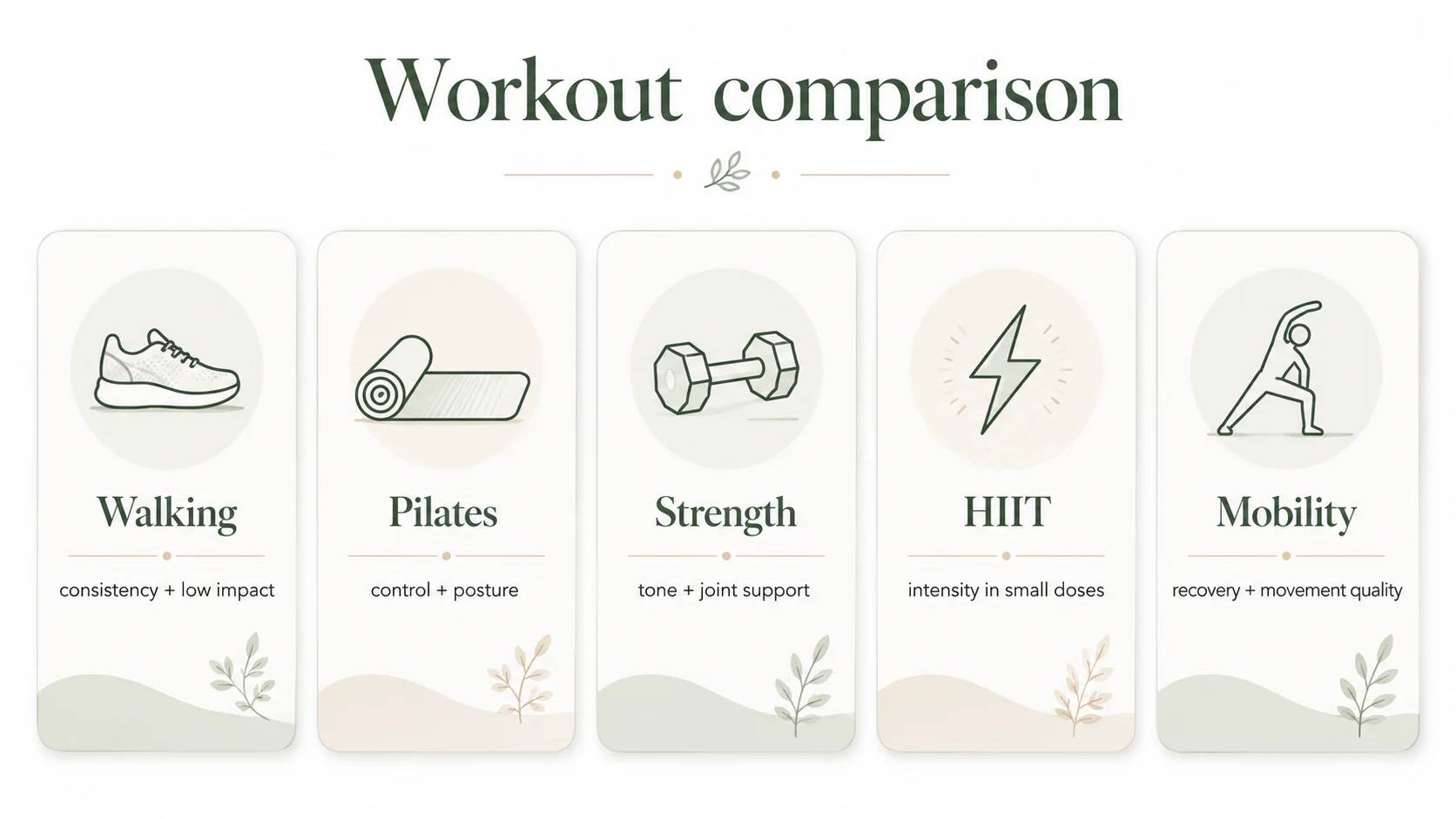
| Method | Best for | Possible drawback | Smart use |
|---|---|---|---|
| Brisk walking | Low-impact activity, calorie burn, consistency, recovery days. | May not build enough strength on its own. | Use most days, adjusted to time, steps, and recovery. |
| Pilates or controlled mat work | Core control, posture, mobility, lower-impact strength. | May not be enough for full strength development if never progressed. | Use 2–4 times weekly depending on intensity. |
| Lower-body strength training | Strength, muscle tone, joint support, functional movement. | High volume and heavy loading may not match every aesthetic goal. | Use controlled volume, good form, and recovery. |
| HIIT | Conditioning and time-efficient intensity. | Too much can increase fatigue and lower-body stress. | Limit to 1–2 sessions weekly if it fits your recovery. |
| Mobility and stretching | Movement quality, comfort, range of motion, recovery. | Does not directly replace strength or cardio. | Add 5–10 minutes after workouts or on easy days. |
Pros and cons of a lean-leg-focused approach
Pros
- Encourages consistency instead of extreme workouts.
- Works well for home-based routines.
- Can support overall fitness, posture, and confidence.
- Allows room for walking, Pilates, strength, and recovery.
- Helps you train for your own goal rather than copying someone else’s plan.
Cons
- Progress can be slower than social media suggests.
- It requires honest nutrition habits if fat loss is the goal.
- You may need trial and error to find your ideal lower-body volume.
- Genetics and fat distribution affect visible changes.
- Too much fear of “bulk” can lead to undertraining and weaker muscles.
Actionable steps: how to build your lean-leg routine
The goal is not to change everything at once. The goal is to adjust the routine in a way that is realistic, trackable, and safe.
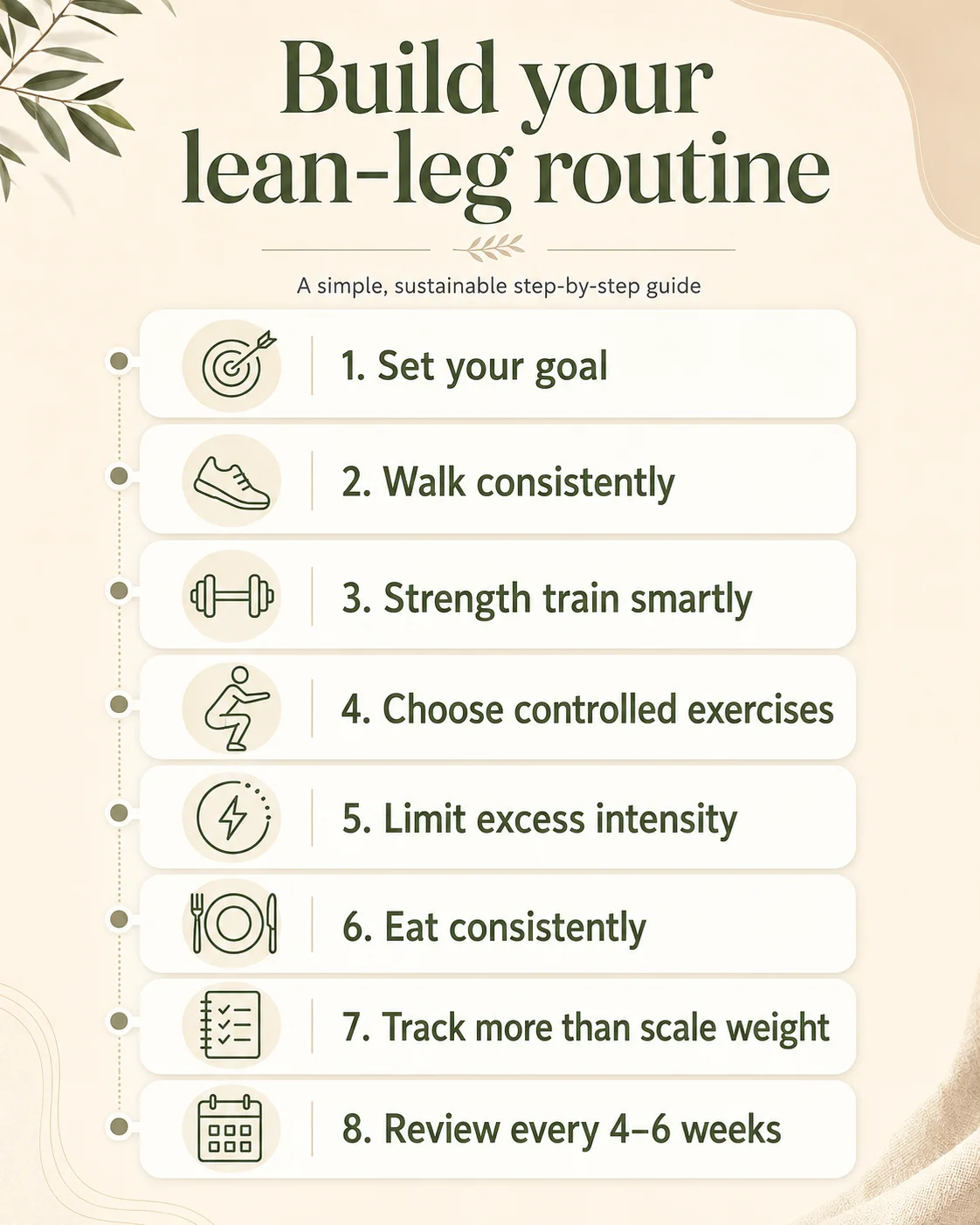
- Set the right goal. Decide whether you want fat loss, less thigh fullness, better tone, more strength, or simply a routine that feels good. A clear goal helps you choose the right training dose.
- Make walking your base. Brisk walking is easy to scale, low impact for many people, and useful for building daily activity. Start with a realistic baseline, then add time or steps gradually.
- Use resistance training, but manage volume. Train the full body 2–3 times weekly. Include legs, glutes, core, upper body, and back. If your legs feel bigger than desired, reduce heavy lower-body volume before removing strength work entirely.
- Choose controlled lower-body exercises. Good options include glute bridges, step-ups, supported split squats, dead bug variations, side-lying leg lifts, band walks, calf raises, and slow bodyweight squats.
- Limit high-intensity leg stress. Sprint intervals, jump-heavy HIIT, spin climbs, and daily squat or lunge challenges can be useful for some goals, but they may be too much if you are already feeling lower-body fullness.
- Eat for consistency, not panic. If fat loss is part of your goal, aim for steady eating patterns. Prioritize protein, produce, fiber-rich carbohydrates, healthy fats, and hydration.
- Track more than the scale. Use thigh, hip, and waist measurements, progress photos, workout notes, energy, sleep, and how clothes fit.
- Review every 4–6 weeks. If your legs feel more comfortable and your energy is good, continue. If your legs feel heavy, sore, or fuller than desired, reduce lower-body intensity, add recovery, and check nutrition consistency before changing everything.
Simple weekly structure example
This is only an example. Adjust the days, duration, and intensity based on your schedule, fitness level, recovery, and health needs.
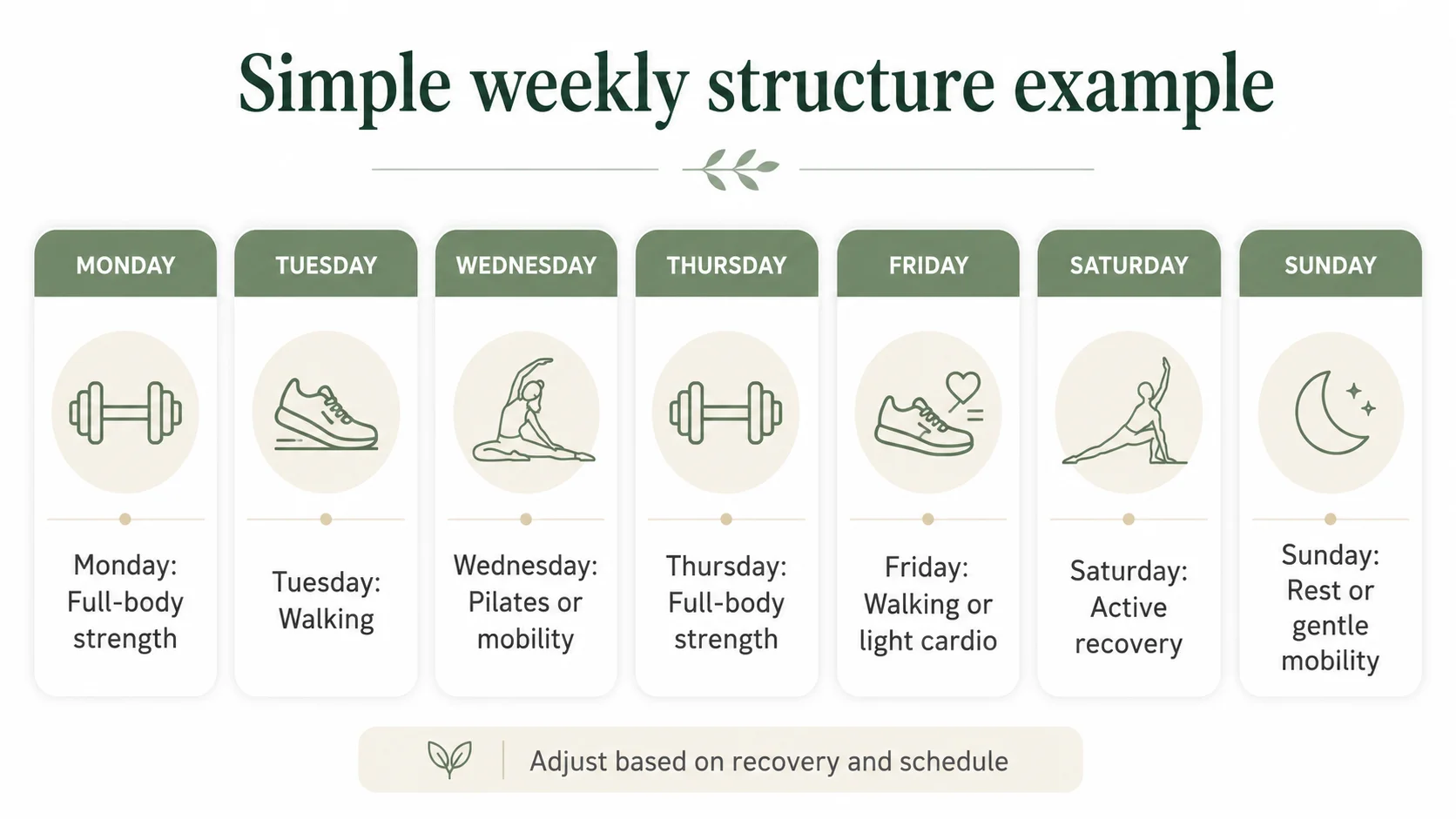
| Day | Focus | Example |
|---|---|---|
| Monday | Full-body strength | Controlled resistance workout plus 10–20 minutes easy walking. |
| Tuesday | Walking | 30–45 minutes brisk walking, adjusted to your schedule. |
| Wednesday | Pilates or mobility | Core, glutes, hips, posture, and flexibility work. |
| Thursday | Full-body strength | Moderate full-body session with controlled lower-body volume. |
| Friday | Walking or light cardio | Easy-to-moderate cardio that does not leave your legs drained. |
| Weekend | Recovery and optional activity | One active day and one easier day, depending on sleep, soreness, and schedule. |
When to get professional help
Consider working with a qualified healthcare professional, registered dietitian, physical therapist, or certified trainer if you have pain, dizziness, a history of disordered eating, major weight changes, pregnancy or postpartum concerns, chronic illness, medication questions, or injuries that affect exercise.
A professional can help you adapt training safely instead of guessing. This matters because the right plan should improve your health and confidence, not create fear, pain, or obsessive tracking.
Experience, expertise, authoritativeness, and trust
Experience viewpoint
This guide is written from a practical editorial viewpoint: the goal is to help readers understand why some lower-body plans feel mismatched and how to evaluate a routine without relying on dramatic claims. It does not claim personal testing or individual results.
Expertise framework
The framework evaluates five signals: energy balance, cardio dose, resistance-training stimulus, recovery, and personal response tracking. These are more useful than copying random exercise lists.
Authoritativeness signals
The article aligns with widely used public-health and fitness guidance: adults need regular aerobic activity and muscle-strengthening work; resistance training should be individualized; and body-type labels should be treated as flexible clues, not fixed rules.
Trust policy
No fake statistics, no invented expert quotes, no guaranteed thigh-fat claims, and no medical diagnosis are used. Readers should adjust exercise to their health status and seek professional guidance when needed.
FAQs about lean legs without bulking
Can you get lean legs without bulking?
Yes, many people can train for a leaner lower-body look by balancing overall fat-loss habits, walking, controlled strength training, and recovery. The exact result depends on genetics, nutrition, training history, and consistency.
Do squats make thighs bigger?
Squats can strengthen and build the thighs, especially with heavy loading, high volume, and progressive overload. Bodyweight or moderate squats in a balanced routine do not automatically create bulky thighs.
Is walking good for lean legs?
Walking can support lean legs because it adds low-impact activity and helps overall energy expenditure. It works best when paired with sustainable nutrition and strength training that maintains muscle and joint support.
Can Pilates slim legs?
Pilates can improve control, core strength, posture, and lower-body endurance, which may help your legs look more toned. It does not directly melt thigh fat, so results still depend on overall activity, nutrition, and consistency.
How often should I train legs if I do not want bulky thighs?
A practical starting point is 2–3 full-body strength sessions per week with controlled lower-body volume. Add walking on other days and adjust based on soreness, measurements, energy, and how your clothes fit.
Why do my thighs look bigger after starting workouts?
New workouts can cause temporary muscle swelling, soreness, and water retention. If the fuller feeling continues for several weeks, check your lower-body training volume, recovery, nutrition, and intensity.
Can I lose fat only from my thighs?
You cannot reliably choose exactly where fat comes off first. You can strengthen thigh muscles and support overall fat loss, but fat distribution is influenced by genetics, hormones, age, and lifestyle.
Should I stop lifting weights if I want lean legs?
Usually, no. Strength training supports health, muscle, bone, posture, and metabolism. Instead of quitting weights completely, adjust exercise choice, load, sets, frequency, and recovery to match your goal.
Final thoughts
Lean legs without bulking is not about avoiding effort. It is about matching effort to the right outcome. Walking, controlled resistance training, nutrition consistency, and recovery can work together when they are planned instead of thrown together randomly.
Your next step is simple: track your current routine for two weeks, identify the biggest mismatch, and adjust one variable at a time. For readers comparing structured options, this structured lean-legs plan review may help you understand what to look for in a guided program.
External sources
 ✓
✓