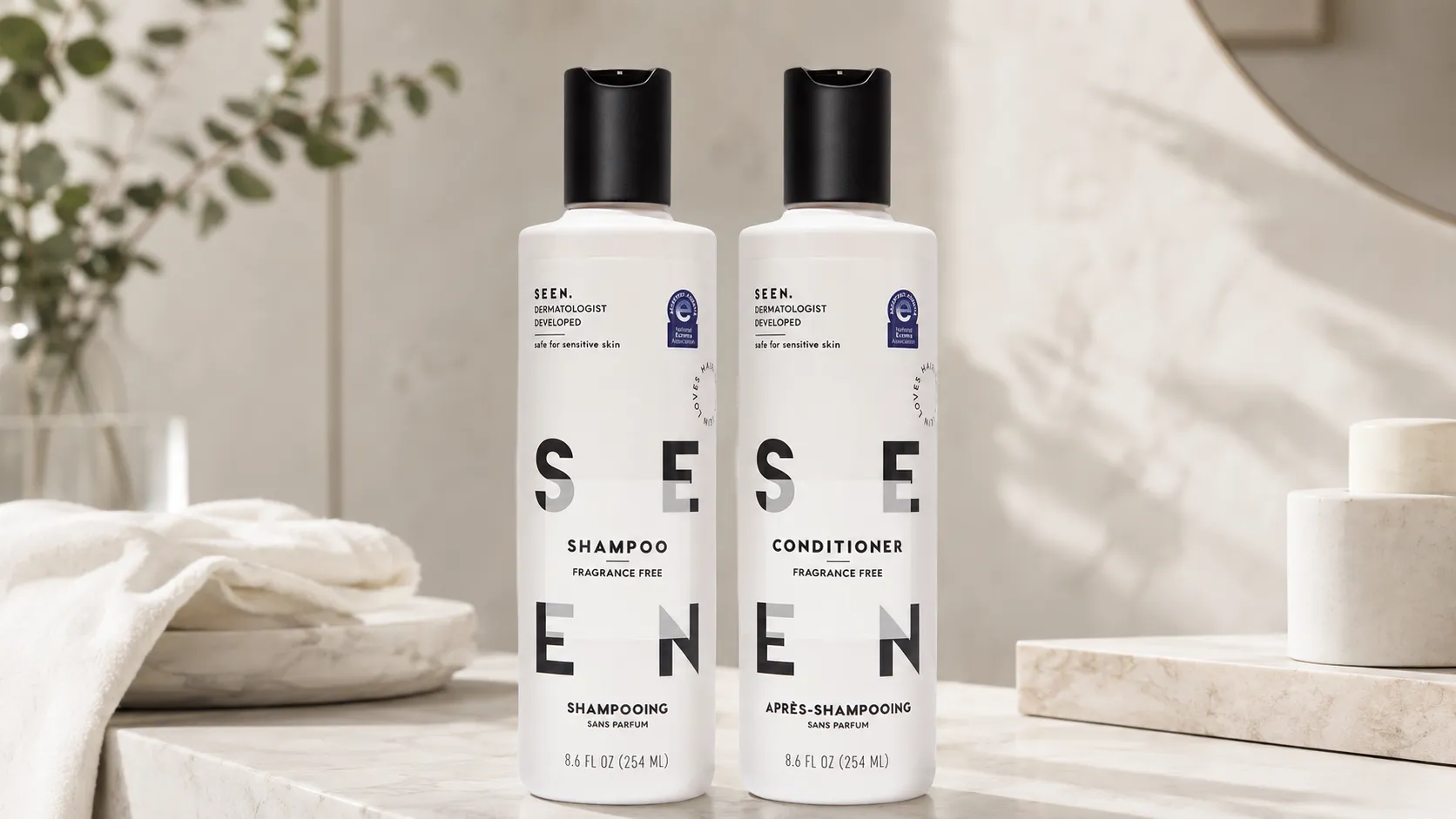
SEEN is a dermatologist-designed hair-care brand built around a skin-conscious idea: shampoo, conditioner and styling products should be evaluated not only for how they treat hair, but also for what happens when those formulas touch the forehead, hairline, neck, shoulders and back.
HealthAffPro did not physically test SEEN for this review. This analysis is based on current official product information and policies, ingredient and claim research, public customer reports, our separate formula-change investigation and comparisons with relevant alternatives.
Is SEEN Haircare worth it?
SEEN is worth considering if your buying priority is skin-conscious, fragrance-free or acne-conscious hair care and you are comfortable paying a premium price. The strongest case for SEEN is not that it can “treat acne,” but that its fragrance-free shampoo is specifically positioned for sensitive and acne-prone skin and the brand publishes more skin-focused product information than many mainstream hair-care lines.
It is less compelling if your main priority is low cost, if you already tolerate inexpensive hair care well, or if you expect a shampoo to treat a medical skin condition. Public customer reports are also mixed: some long-term users praise the fragrance-free line, while others describe dryness, scalp irritation or recent concerns about residue and bottle-to-bottle consistency.
If your main goal is styling help with oily roots, frizz, or volume rather than a skin-conscious shampoo, our IGK Hair product guide looks at a different set of buying problems. The two brands do not serve identical needs.
Buyer decision in 30 seconds
Best fit if you:
- prefer fragrance-free hair care;
- are trying to reduce contact between acne-prone skin and heavier hair products;
- want a shampoo explicitly marketed for sensitive and acne-prone skin;
- value dermatologist-designed positioning and clearly published product information;
- are willing to pay more than typical drugstore pricing.
Consider skipping if you:
- want the lowest-cost everyday shampoo;
- have very dry hair and are buying the shampoo without a conditioning plan;
- are looking for a medicated acne, eczema or psoriasis treatment;
- are uncomfortable with recent customer reports about residue or inconsistent performance;
- need a guarantee that a “non-comedogenic” product cannot break you out.
Price, subscription, shipping and returns
SEEN’s Auto-Ship & Save program currently gives 10% off regular-size products and 15% off bundles, liters and eco-refills. Subscription orders of $50+ qualify for free shipping, and subscribers can manage frequency, skip, pause or cancel through their account.
Important return limits: SEEN says Liter and Eco-Refill purchases, repeat purchases of the same product and shipping fees are not eligible for refund or exchange under the standard policy. International customers do not receive free return shipping.
Sources: SEEN Shampoo, Fragrance Free; Auto-Ship & Save; Shipping & Returns.
What exactly is SEEN Haircare?
SEEN was founded by dermatologist Dr. Iris Rubin and is built around the overlap between hair care and skin contact. The line includes shampoo, conditioner, deeper conditioner, scalp products, serums, styling products, face/body products, bundles, minis, liters and eco-refills.
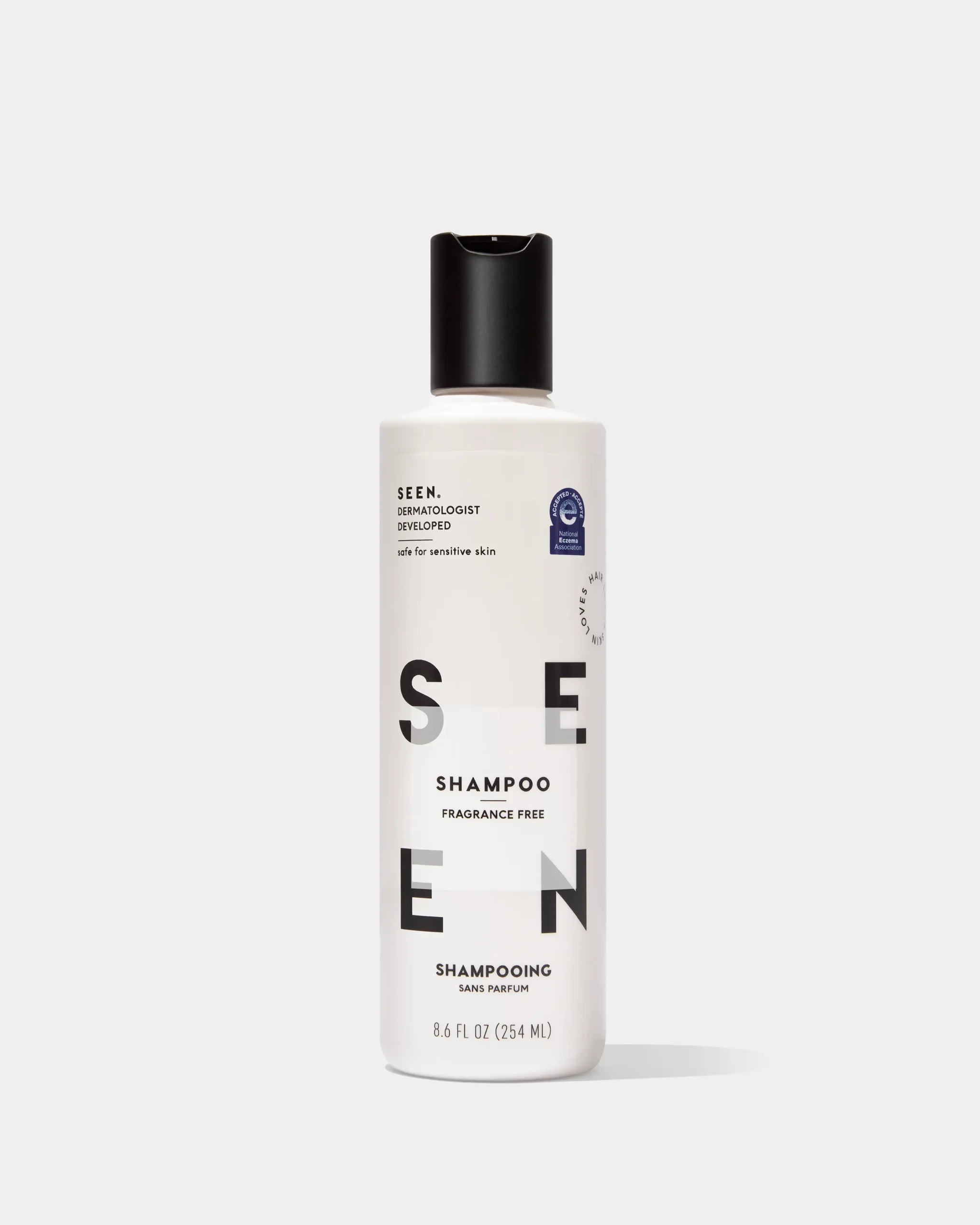
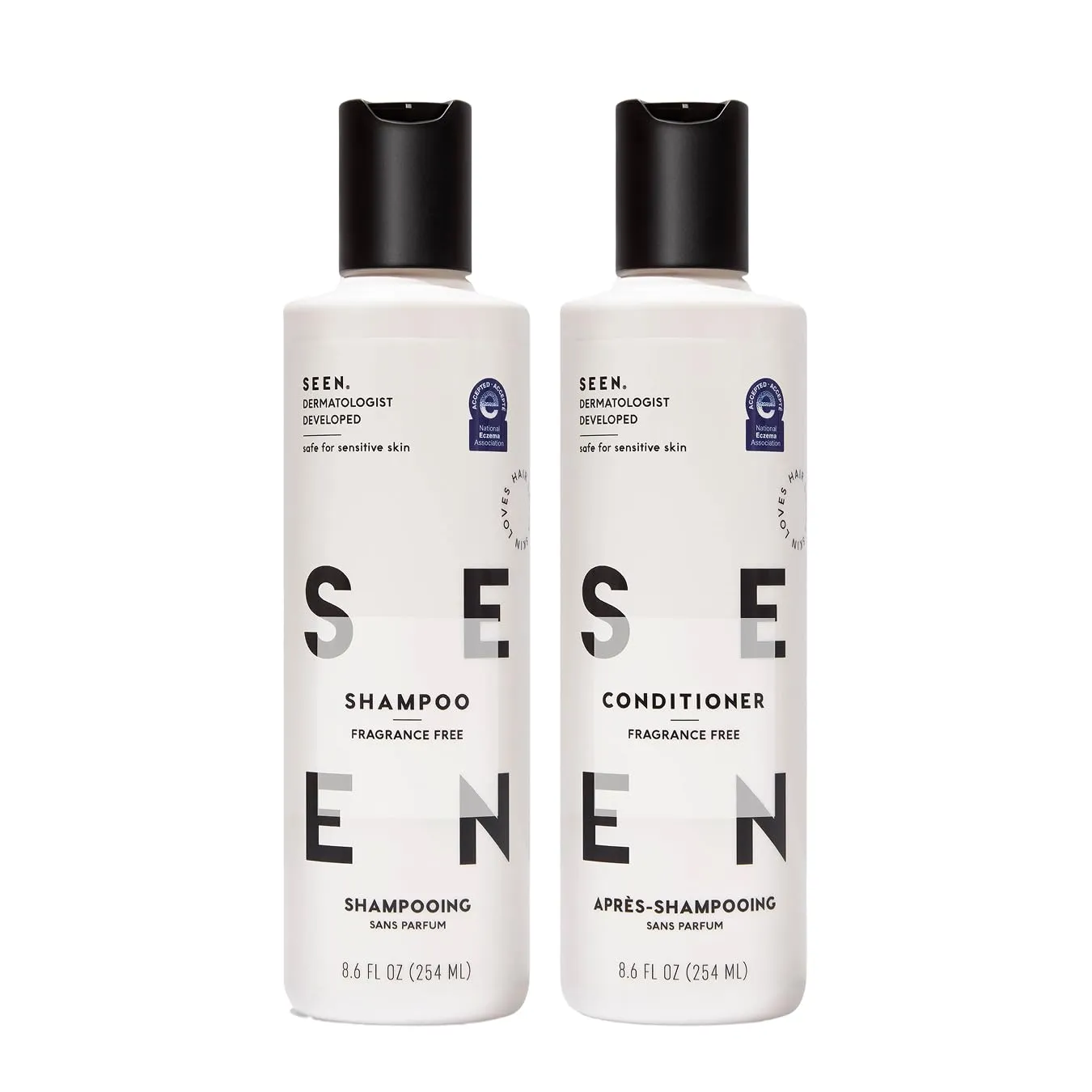
For acne-prone or fragrance-sensitive buyers, the most relevant starting product is usually SEEN Shampoo, Fragrance Free. The current official page lists it as a dermatologist-designed, color-safe, cruelty-free and vegan shampoo marketed as safe for sensitive and acne-prone skin.
Can hair products actually contribute to breakouts?
Yes, for some people. The American Academy of Dermatology notes that shampoos, conditioners and styling products can contribute to whiteheads and other acne around the hairline, forehead and back of the neck when product residue or oils contact the skin.
That does not mean every breakout is caused by hair care, and it does not mean SEEN is an acne treatment. It means there is a reasonable buyer problem behind skin-conscious hair care: reducing unnecessary exposure to products that may aggravate acne-prone skin.
If you are still trying to determine whether your hair routine is part of the problem, start with our guide to whether hair products can contribute to acne. If you want to understand the shopping label itself, read what “non-comedogenic” hair care actually means.
Source: American Academy of Dermatology — Are your hair care products causing breakouts?
SEEN’s claims vs what the evidence supports
SEEN markets its fragrance-free shampoo as safe for sensitive, acne-prone, eczema-prone and psoriasis-prone skin and highlights dermatologist-designed and non-comedogenic positioning.
The current official product page lists the regular Fragrance Free Shampoo at $32 and provides the current ingredient panel, product sizes and Auto-Ship option. SEEN also publishes its shipping, return and subscription rules publicly.
The strongest independently useful takeaway is not “SEEN will clear acne.” It is that SEEN is intentionally designed and marketed for buyers who care about skin contact from hair products. That is a legitimate point of differentiation, but individual tolerance still varies.
Public feedback is mixed. Some fragrance-free users report long-term satisfaction, good cleansing and less irritation. Other users describe dryness, itching, flaking, buildup or a tacky residue. These reports are useful for identifying possible buyer concerns, but they do not establish how every bottle or every user will perform.
What the current formula tells us
SEEN’s current Fragrance Free Shampoo ingredient list includes surfactants/cleansing agents and supporting ingredients such as glycerin, glycol distearate, C13-15 alkane, bisabolol, tocopherol and conditioning/formula-support ingredients.
What matters more than picking one “good” or “bad” ingredient is the full formula, the amount of product used, how it is rinsed and where the product contacts your skin. “Fragrance-free,” “sulfate-free” or “silicone-free” also does not guarantee a product will suit every buyer.
There has been a separate buyer concern around whether SEEN changed its shampoo formula. We compared historical and current public ingredient records and found the same 19 named ingredients in the records reviewed, but in a different order. SEEN says its formula did not change. Because public ingredient lists do not disclose exact percentages, we concluded that a reformulation is not confirmed.
Read the full evidence trail in our SEEN Shampoo formula-change investigation.
Complaint pattern worth knowing: dryness, residue and consistency
Recent Reddit discussions include both positive and negative long-term experiences. Some users say SEEN’s fragrance-free hair care works well for their sensitive scalp and is worth the premium price. Others report dry ends, itchiness or flaking. A more recent discussion raised concerns about tacky residue and perceived bottle-to-bottle differences.
These are customer reports, not proof of a universal quality-control problem. We also cannot infer from public comments alone that a specific ingredient caused the reported residue.
For a buyer, the practical lesson is simple: if you are highly sensitive, consider starting with a smaller size where available, keep your order information and lot/batch details, and stop using a cosmetic if you experience a concerning reaction.
Examples reviewed: Reddit discussions in r/FragranceFreeBeauty and r/Haircare, including positive long-term use reports and recent residue/dryness complaints.
SEEN vs Vanicream: which buyer is each better suited to?
SEEN and Vanicream overlap because both attract fragrance-sensitive and sensitive-skin buyers, but the buyer proposition is different. SEEN is a premium, skin-conscious hair-care brand with explicit acne-prone/non-comedogenic positioning. Vanicream is often considered by buyers who prioritize a simpler sensitive-skin option and lower-cost routine.
There is no universal winner. The more useful question is which formula, price point and policy setup better fits your skin sensitivity, hair needs and budget.
See the full side-by-side analysis in SEEN vs Vanicream Shampoo.
Pros and cons
Pros
- Clear focus on skin-conscious hair care.
- Fragrance-free shampoo and conditioner options.
- Current product information, ingredient lists and policies are publicly available.
- Multiple sizes and Auto-Ship options.
- Useful fit for buyers specifically concerned about hair products touching acne-prone or sensitive skin.
Cons
- $32 for a regular shampoo is premium pricing.
- Public customer feedback includes dryness, itching, flaking and residue complaints.
- Non-comedogenic positioning cannot guarantee that every person will avoid breakouts.
- Not a substitute for medical acne, eczema or psoriasis treatment.
- Return policy has exclusions, especially for repeat purchases and larger refill formats.
How long should you judge SEEN before deciding?
SEEN currently says it can take 2–3 weeks of consistent use to enjoy the full hair and skin benefits of its products. That is the brand’s guidance, not a guaranteed outcome for an individual buyer.
For acne-related product changes more broadly, the American Academy of Dermatology notes that acne caused by hair products can take several weeks to clear after the triggering product stops contacting the skin. That makes it difficult to judge a hair-care switch after one or two washes.
Practical approach: change one important variable at a time, track where breakouts occur, and avoid promising yourself a fixed result date.
Who should buy SEEN — and who should skip it?
| Buyer situation | Our take |
|---|---|
| You suspect hair products are aggravating hairline/forehead/back breakouts | SEEN is a reasonable product line to research because its positioning directly addresses skin contact from hair care. |
| You need fragrance-free hair care | Strong reason to consider the Fragrance Free line, while still checking the full ingredient list for your own sensitivities. |
| You have very dry or damaged hair | Do not assume the shampoo alone will be ideal. Public reports include dryness, so conditioner choice matters. |
| You want the cheapest routine | Probably skip. $32 shampoo pricing is materially above many drugstore options. |
| You want acne treatment | Skip that expectation. Hair-care changes can remove a possible trigger, but SEEN is not acne medication. |
| You are extremely reactive to cosmetics | Proceed cautiously, consider a smaller size, and prioritize your own known sensitivities over marketing labels. |
Want to check the current SEEN product page?
Verify today’s price, sizes, ingredient list and available offers directly with SEEN before purchasing.
View SEEN HaircareAffiliate disclosure: HealthAffPro may earn a commission if you buy through this link, at no additional cost to you. Affiliate availability does not determine our editorial conclusions.
Final verdict
SEEN is a credible premium option for buyers who specifically value fragrance-free, skin-conscious hair care, but the case for buying it should be based on fit—not hype.
The brand’s clearest strengths are its focused positioning, transparent current product information and relevant options for sensitive or acne-prone buyers. The trade-offs are premium pricing, return-policy limits and mixed customer experiences around dryness and residue.
We would not describe SEEN as a guaranteed solution for acne or sensitive skin. We would describe it as a well-positioned product line to consider when your hair routine may be part of a skin-contact problem and you are willing to pay more for that positioning.
Sources used for this update
- SEEN — Shampoo, Fragrance Free (current price, product information and ingredient list).
- SEEN — Auto-Ship & Save (subscription discounts and management).
- SEEN — Shipping & Returns.
- American Academy of Dermatology — Hair care products and breakouts.
- Reddit — positive fragrance-free SEEN experiences.
- Reddit — residue/consistency complaint discussion.
- Reddit — dryness and fragrance-free buyer discussion.
- HealthAffPro — SEEN Shampoo formula-change investigation.
Customer discussions are used to identify patterns and buyer concerns, not as proof that every user will have the same experience.
 ✓