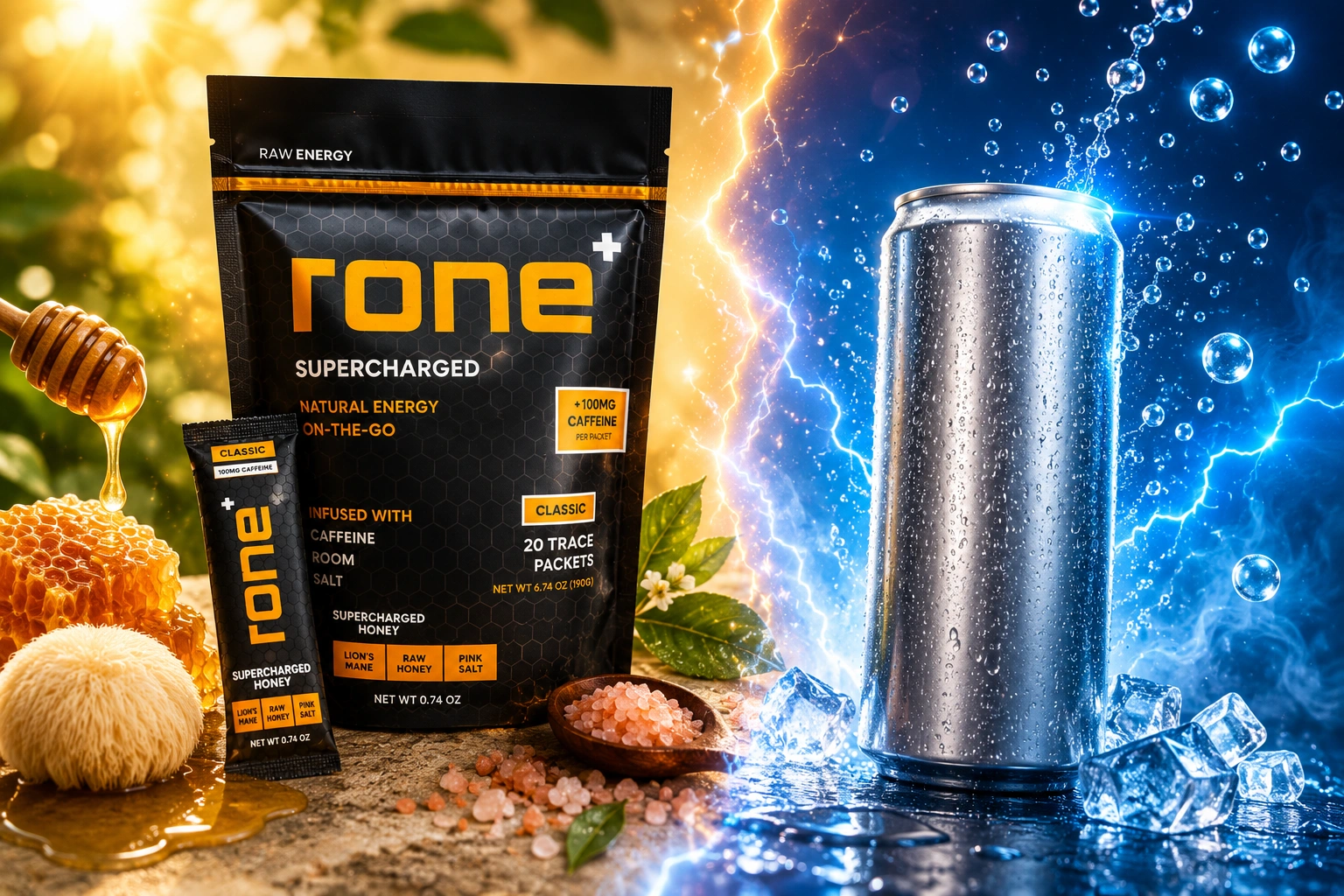
Is a raw-honey energy packet really a smarter pick than your usual can — or just a trendier one? Here is a fair, label-based breakdown to help you decide.
Quick answer
For most people the honest answer is: it depends on what you actually want from a “boost.” RONE SuperCharged Honey makes sense if you want a portable, raw-honey-based packet with a short, natural ingredient list — green-tea caffeine, lion’s mane and Himalayan salt — that you can squeeze straight into your mouth before a workout. Mainstream energy drinks still make sense if you want fizzy, familiar taste, a wide range of zero-sugar options, cheap caffeine, and the convenience of grabbing one from any store. Neither is “better” for everyone — they solve slightly different problems.
TL;DR
- RONE = single-serve raw-honey packet, natural caffeine from green tea, lion’s mane and pink salt, no mixing, pocket-sized.
- Energy drinks = canned, usually carbonated, synthetic caffeine, sugar or artificial sweeteners, taurine/B-vitamins, sold everywhere.
- RONE leans workout / clean-label / portability; energy drinks lean taste / convenience / price.
- RONE’s caffeinated version is 100mg natural caffeine (200mg and caffeine-free versions exist). Most energy drinks sit somewhere in a similar-to-higher range depending on the can.
- Caffeine sensitivity, pregnancy, medication and blood-sugar concerns apply to both — read the section on safety.
Why people compare RONE with energy drinks
If you reach for an energy drink before the gym, a long drive or a 3 p.m. slump, you have probably wondered whether there is a “cleaner” way to get the same lift. That is exactly the gap RONE is built around. RONE positions SuperCharged Honey as a natural alternative to both pre-workouts and energy drinks, leaning on raw honey for carbohydrates instead of added sugar or artificial sweeteners. So the real comparison isn’t “good vs bad” — it’s which trade-offs you prefer. Energy drinks win on familiarity, fizz and shelf availability; RONE pitches itself on a simpler ingredient story and pocket portability. If you want the deeper background on where natural caffeine differs from lab-made caffeine, our explainer on how natural and synthetic caffeine compare is a useful companion read.
What RONE actually is
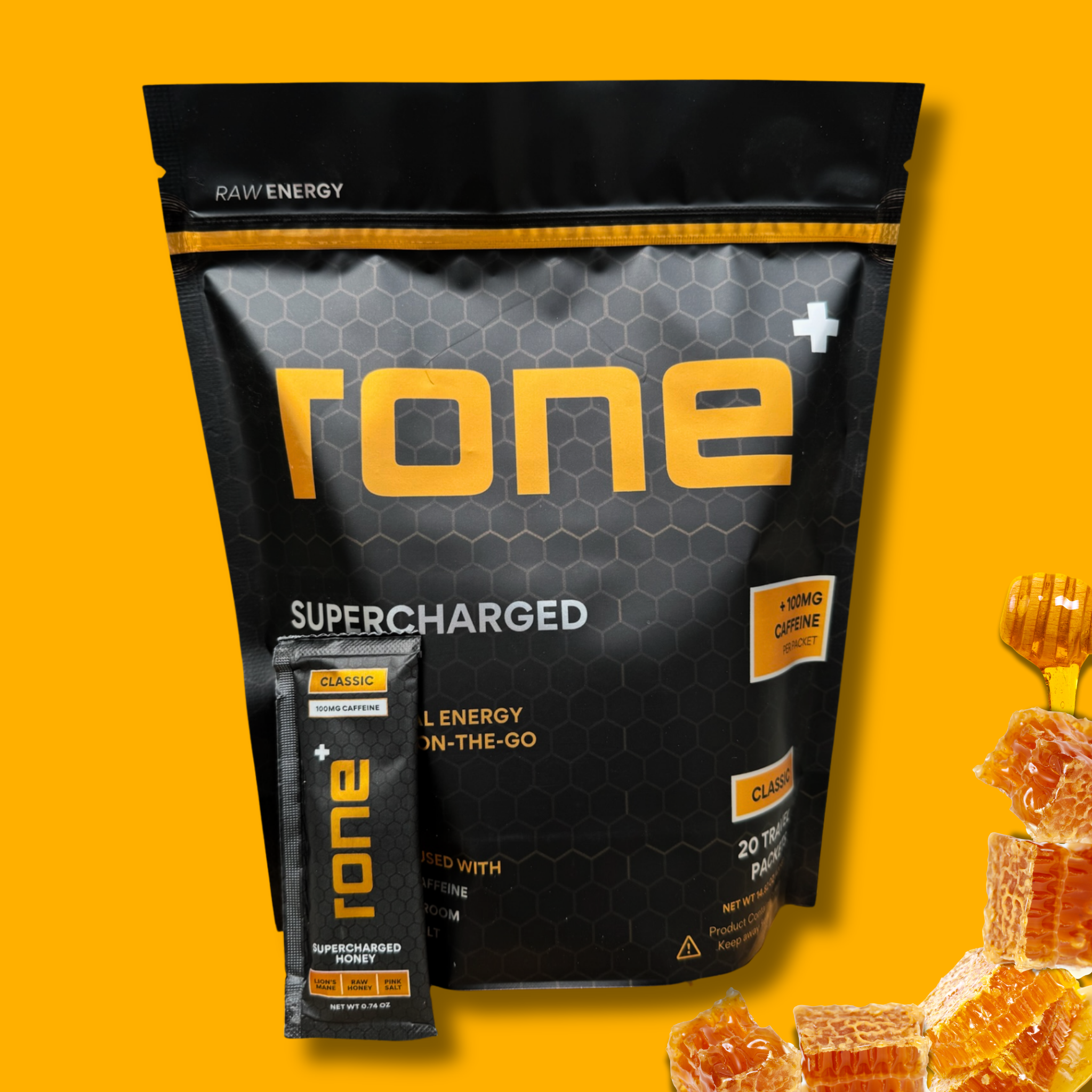
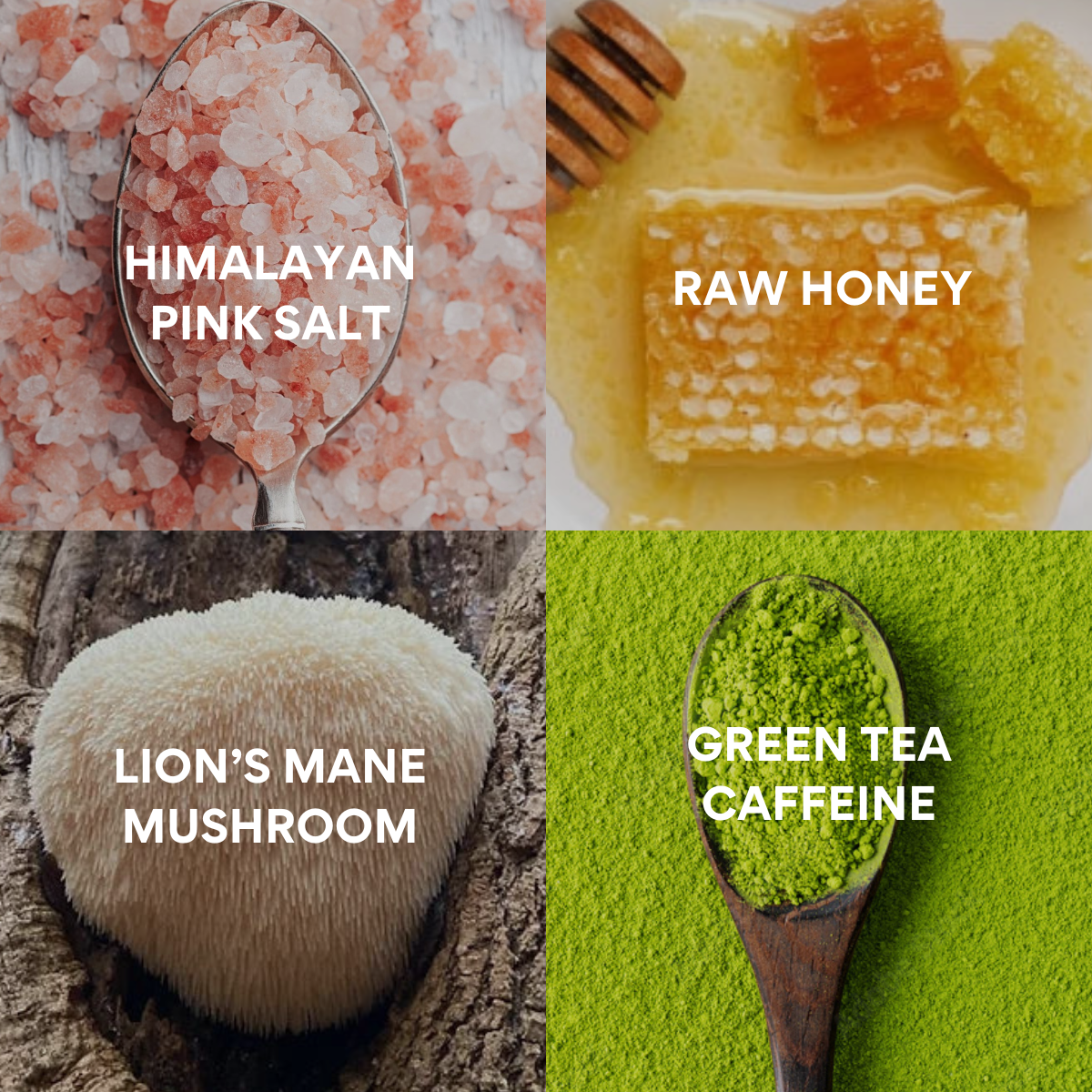
RONE SuperCharged Honey is a single-serve packet of raw, unfiltered honey blended with a short list of functional ingredients. According to RONE’s official product pages, the classic formula combines raw U.S./Montana honey (the carbohydrate and energy base), 100mg of natural caffeine from green tea, lion’s mane mushroom (fruiting body), and Himalayan pink salt for electrolytes. There is no mixing involved — you tear, squeeze and consume it directly, typically about 10 minutes before activity. RONE also offers a higher-caffeine 200mg version and a caffeine-free version, plus several flavors. The brand describes it as a clean, portable fuel designed to replace traditional pre-workouts and energy drinks, and markets a 30-day money-back guarantee on its own site. If you want the full deep-dive, see our complete RONE Nutrition review, and for the honey angle specifically, our piece on raw honey as an energy and exercise fuel.
What typical energy drinks are
“Energy drink” covers a huge category, so it is fair to talk in general terms. A typical canned energy drink is a ready-to-drink beverage — usually carbonated, occasionally still — built around caffeine (commonly synthetic), often with taurine, B vitamins, and either added sugar or artificial sweeteners in the zero-sugar versions. Caffeine per can varies widely by product, from modest amounts to high-stimulant formulas. Their strengths are real: they taste familiar, come cold and ready, are sold in virtually every shop, and are usually cheaper per milligram of caffeine than a functional supplement. The trade-off many people cite is the “spike and crash” feeling, which is commonly reported with high-sugar, high-caffeine combinations — though zero-sugar options and your individual tolerance change that picture a lot. We’re not here to demonize energy drinks; for many routines they remain a perfectly reasonable pick.
Quick decision table
| If you want… | Better starting point |
|---|---|
| A portable, no-mix packet for the gym bag | RONE |
| A short, natural-leaning ingredient list | RONE |
| Carbonation and a familiar canned taste | Energy drinks |
| The cheapest caffeine per serving | Energy drinks |
| Carbs from raw honey instead of added sugar | RONE |
| To grab something instantly from any store | Energy drinks |
| To try RONE risk-light | RONE — code EXTRA30 on the official site |
Full side-by-side comparison
| Category | RONE SuperCharged Honey | Typical energy drink |
|---|---|---|
| Format | Single-serve honey packet, no mixing | Ready-to-drink can, usually carbonated |
| Caffeine source | Natural, from green tea | Often synthetic (varies by brand) |
| Caffeine amount | 100mg (also 200mg & caffeine-free) | Wide range, low to high per can |
| Carb/energy base | Raw honey (natural sugars) | Added sugar or artificial sweeteners |
| Extra functional ingredients | Lion’s mane, Himalayan salt | Taurine, B-vitamins (varies) |
| Best use | Pre-workout, runs, hikes, on-the-go | Anytime pick-me-up, desk, driving |
| Portability | Very high (flat packet) | Moderate (bulky can) |
| Availability | Mostly online / official site | Almost every store |
| Cost per caffeine | Higher (functional supplement) | Usually lower |
| “Clean label” positioning | Brand markets no artificial sweeteners/synthetic caffeine | Varies widely by product |
Ingredients comparison
This is where the two diverge most. RONE’s pitch is a deliberately short list: raw honey, green-tea caffeine, lion’s mane and Himalayan salt — and the brand emphasizes the absence of artificial sweeteners, synthetic caffeine and processed sugars. Energy drinks are far more variable. Some are minimalist; others stack sweeteners, acids, colors, taurine and a long additive list. If “fewer, more recognizable ingredients” is a priority for you, RONE has the structural advantage. If you don’t mind a longer label and prefer a specific taste profile, plenty of energy drinks deliver. For context on the lion’s mane angle specifically, our overview of lion’s mane and focus and what the science actually says keeps expectations realistic.
Caffeine comparison
RONE’s classic packet delivers 100mg of natural caffeine from green tea, with a 200mg option for heavier days and a caffeine-free version for sensitive users or evening use. Energy drinks span an enormous range — some sit below RONE’s 100mg, others well above — so a head-to-head depends entirely on the can you pick. The more meaningful difference for many buyers is source: RONE uses green-tea caffeine and frames it as a smoother lift, while many energy drinks use synthetic caffeine. Research generally finds caffeine behaves similarly regardless of source, so the perceived “smoothness” likely owes as much to the surrounding ingredients (honey vs sugar/sweeteners, the presence of L-theanine in green tea, etc.) as to the caffeine molecule itself. Whatever you choose, the U.S. FDA notes that up to 400mg of caffeine a day is generally not associated with negative effects for healthy adults — a useful ceiling to keep in mind across all sources combined.
Sugar & carbs comparison
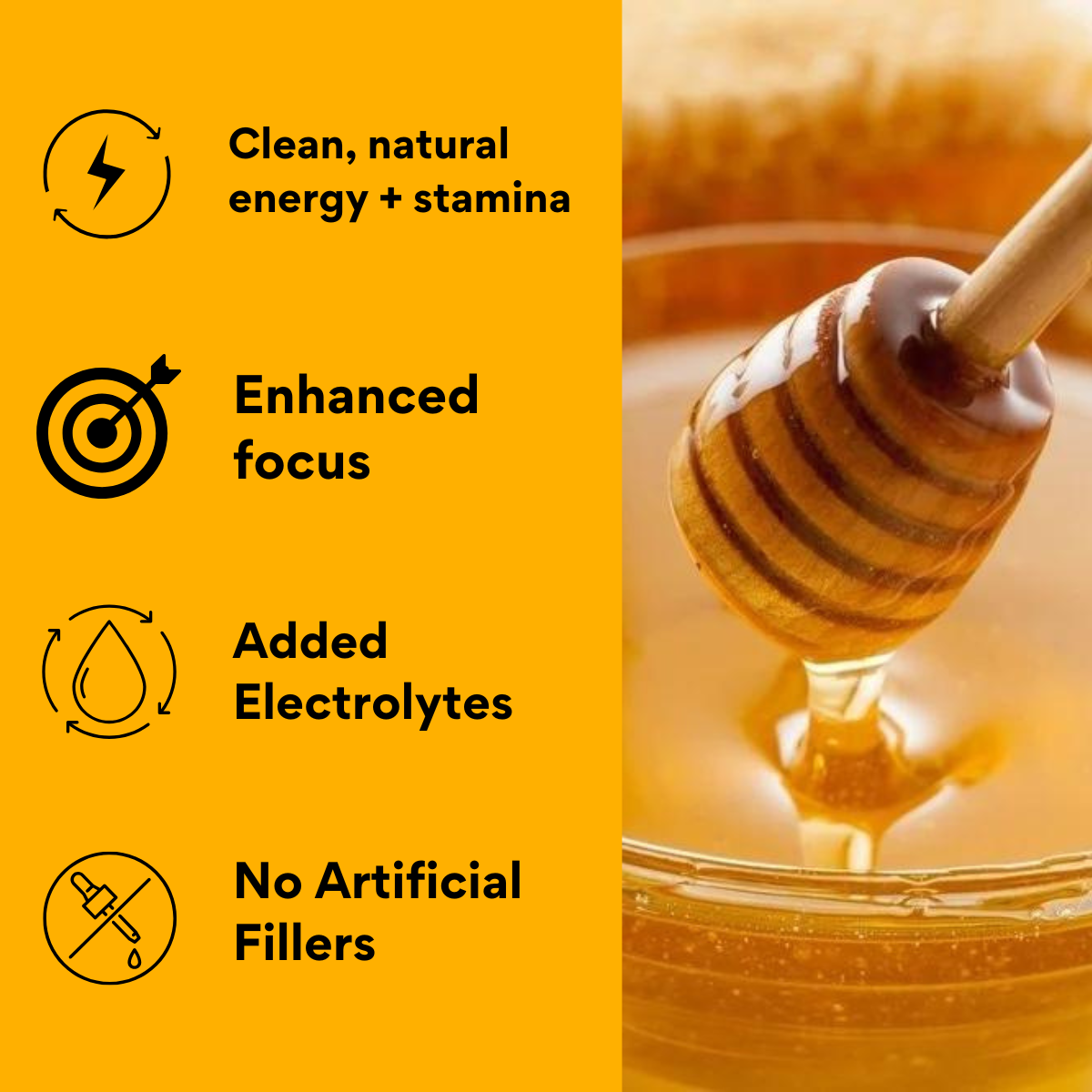
RONE’s carbohydrates come from raw honey — natural sugars that also act as the quick-energy base for activity. The brand markets it as free from added/processed sugar and artificial sweeteners. Energy drinks split into two camps: full-sugar versions (which deliver fast carbs but a meaningful sugar load) and zero-sugar versions (which swap in artificial sweeteners and cut the calories). If you specifically want carbohydrate fuel for a workout, RONE’s honey base is purpose-built for that. If you want zero calories and zero sugar, a sugar-free energy drink does something RONE’s honey base inherently can’t. Neither approach is “healthier” in a vacuum — it depends on whether you want the carbs.
Workout & active use
For training, RONE has a structural edge worth naming. A flat honey packet fits a pocket, glove compartment, running belt or gym bag, needs no can opener or cold storage, and delivers fast carbs plus caffeine in seconds — which is why it’s positioned as a pre-workout alternative. Carbonation, by contrast, isn’t ideal mid-run or mid-lift for everyone, and a cold can is harder to carry on a trail. That said, energy drinks are genuinely convenient for gym-adjacent use: grab one on the way in, sip through a session. If your “active use” is mostly at a desk or behind the wheel rather than mid-movement, that portability advantage matters less. For more on whether natural pre-workout formats actually deliver, see our guide on natural pre-workout and whether it really works.
Taste & convenience
Taste is subjective, but the experiences differ. RONE tastes like flavored raw honey — thick, sweet, and unlike a beverage; some people love it, others prefer to drink their caffeine. Energy drinks offer the familiar fizzy, cold, sippable experience and a vast flavor catalog. On pure convenience, energy drinks win the “instant, everywhere, cold” battle, while RONE wins the “carry ten in a bag, no fridge, no spill” battle. It comes down to whether you’d rather sip something or squeeze something.
Pros & cons of RONE
RONE pros
- Short, natural-leaning ingredient list
- Raw honey carbs instead of added/processed sugar
- Natural caffeine from green tea (100mg, plus 200mg & caffeine-free options)
- Extremely portable, no mixing or fridge
- Purpose-built for pre-workout and active use
- 30-day money-back guarantee on the official site
RONE cons
- Higher cost per serving than a typical can
- Honey texture isn’t for everyone
- Mostly bought online rather than in stores
- Contains natural sugars (not a zero-calorie option)
- Not suitable for infants under 12 months (raw honey)
Pros & cons of energy drinks
Energy-drink pros
- Cold, fizzy, familiar and ready to drink
- Sold in nearly every store
- Usually cheaper per serving
- Huge flavor variety
- Zero-sugar options widely available
Energy-drink cons
- Often longer additive lists (sweeteners, colors, acids)
- Full-sugar versions carry a real sugar load
- “Spike and crash” commonly reported with high sugar + caffeine
- Bulkier to carry; needs cold storage to be pleasant
- Caffeine content varies widely — easy to over-consume across cans
Who should choose RONE
RONE is the more natural fit if you train, run, hike or move and want fast carbs plus caffeine you can carry anywhere; if you specifically want a short, natural-leaning label without artificial sweeteners or synthetic caffeine; or if you’re trying to move away from drinking several cans a day and want a portable swap. The honey-as-fuel concept is genuinely well suited to active use.
Want to try the honey-based option?
RONE offers a 30-day money-back guarantee on its official site, and you can apply code EXTRA30 at checkout.
Check RONE on the Official WebsitePrices and offers shown on the official site at the time of review; verify current details before checkout.
Who should stick with energy drinks
Energy drinks remain the smarter pick if you genuinely prefer carbonation and a cold, sippable drink; if budget per serving is your top priority; if you rely on grabbing something instantly from any shop; or if you specifically want a zero-sugar, zero-calorie option, which RONE’s honey base doesn’t provide. “Familiar and cheap and everywhere” is a legitimate set of priorities — there’s no shame in it.
Safety notes
Both products contain caffeine, so the same cautions apply. The U.S. FDA notes that roughly 400mg of caffeine per day is generally not associated with negative effects in healthy adults, but individual sensitivity varies a lot. If you’re sensitive to caffeine, pregnant or nursing, taking medication, managing a heart condition, or watching blood sugar (RONE’s honey contributes natural sugars), talk to a qualified healthcare professional before adding either product to your routine. RONE’s caffeinated versions are intended for adults 18+, and because RONE contains raw honey, it should not be given to infants under 12 months. This article is for general information only and is not medical advice; it does not claim either product treats, cures or prevents any condition.
Frequently asked questions
Is RONE healthier than an energy drink?
“Healthier” depends on your goals. RONE uses a short, natural-leaning ingredient list with raw-honey carbs and green-tea caffeine, while energy drinks vary enormously — some are minimalist, others heavily sweetened. If you want fewer additives and carbohydrate fuel for activity, RONE has the edge; if you want zero sugar and zero calories, a sugar-free energy drink does something RONE can’t. Neither is automatically healthier in every situation.
How much caffeine does RONE have compared to energy drinks?
RONE’s classic packet has 100mg of natural caffeine from green tea, with a 200mg version and a caffeine-free version available. Energy drinks span a wide range depending on the brand and can — some are lower than 100mg, some much higher. Always check the specific label.
Does RONE cause a crash like sugary energy drinks?
RONE markets smooth energy “without the crash,” but that’s the brand’s positioning rather than an independent clinical claim. The “crash” many people associate with energy drinks is commonly linked to high added-sugar and high-caffeine combinations; individual responses differ. RONE’s honey base provides natural sugars, so it is not sugar-free.
Can I use RONE as a pre-workout?
Yes — RONE positions SuperCharged Honey as a pre-workout and energy-drink alternative, with raw-honey carbs and green-tea caffeine. The brand suggests taking one packet about 10 minutes before exercise. If you’re caffeine-sensitive, start with the caffeine-free version or a smaller dose.
Is RONE worth the higher price?
RONE generally costs more per serving than a standard energy drink because it’s a functional supplement with raw honey and added ingredients. Whether it’s “worth it” depends on how much you value portability, a natural-leaning label and pre-workout suitability. RONE’s 30-day money-back guarantee, shown on its official site, lowers the risk of trying it.
Final verdict
If you want a portable, raw-honey energy packet with a short, natural-leaning label — especially for workouts and on-the-go use — RONE is the more interesting choice, and code EXTRA30 plus its 30-day guarantee make it low-risk to test. If you mainly want fizzy, familiar, cheap caffeine you can grab anywhere, a good energy drink still does the job. Match the product to the priority, not the hype.
See RONE on the Official WebsiteOffers shown on the official site at the time of review; confirm before purchase.
Last updated: June 2026. Product facts, prices and offers can change — check the official RONE page for the latest.
External sources
- RONE Nutrition — official SuperCharged Honey product pages (ingredients, caffeine, usage, guarantee).
- U.S. Food & Drug Administration (FDA) — Spilling the Beans: How Much Caffeine Is Too Much?
- NIH MedlinePlus — Caffeine (general safety and sensitivity guidance).
 ✓
✓