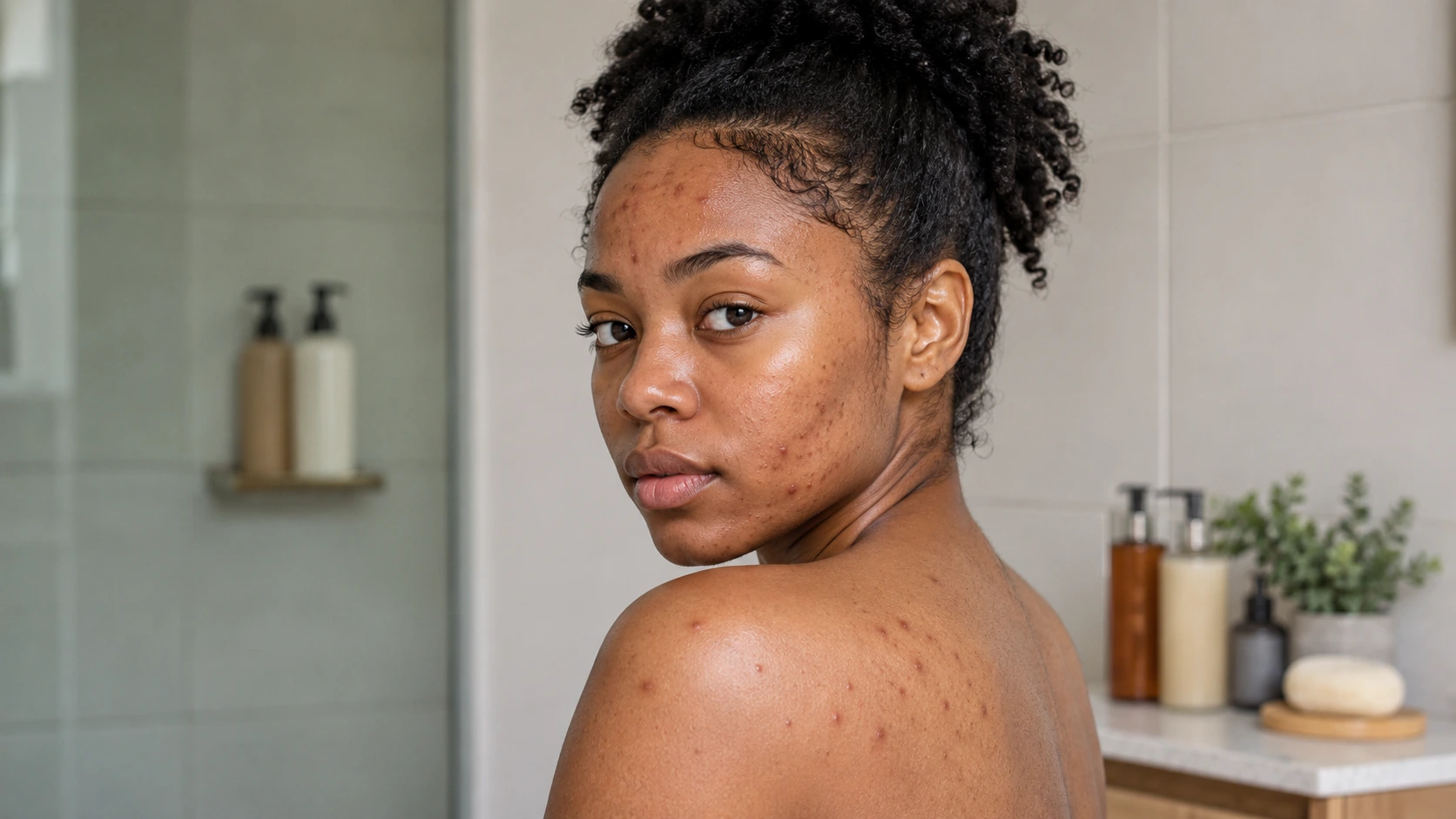
Hair products can absolutely play a role in breakouts, especially when shampoos, conditioners, oils, gels, sprays, or leave-in products leave residue on acne-prone skin. This guide explains why hair products causing acne is common, how to spot the pattern, and how to build a cleaner routine without overcomplicating your hair care.
Quick answer: Yes, hair products can cause acne when residue from shampoo, conditioner, oils, styling creams, waxes, or leave-in treatments transfers onto the skin and clogs pores. Breakouts often appear around the hairline, forehead, temples, cheeks, neck, shoulders, chest, or back. Choosing non comedogenic hair products and rinsing products away from the skin can help reduce this type of breakout.
TL;DR
- Hair care products can trigger acne-like bumps, especially around the hairline, face, scalp, shoulders, and back.
- Conditioner, hair oils, styling creams, pomades, sprays, and leave-in products are common suspects because they stay on the skin longer.
- Look for patterns: breakouts near where your hair touches, where product rinses down, or where residue sits overnight.
- Use acne safe hair products, rinse conditioner carefully, wash your body after washing hair, and keep styling products away from skin.
- If acne is painful, cystic, itchy, spreading, or not improving, speak with a dermatologist.
Table of Contents
- What does it mean when hair products cause acne?
- How do hair products cause acne?
- Where do hair product breakouts usually show up?
- Which hair products are most likely to trigger breakouts?
- What ingredients in hair products can clog pores?
- Can shampoo and conditioner cause acne?
- Hairline acne vs forehead acne vs back acne
- Comparison table: acne-safe vs pore-clogging hair care habits
- Best hair care routine for acne prone skin
- Buyer decision guide
- Common mistakes that make breakouts worse
- Expert-style insight
- Trusted sources
- FAQs
If you keep getting pimples near your hairline, forehead, cheeks, back, or shoulders, it is easy to blame hormones, stress, sweat, or diet first. Those can matter. But there is another everyday trigger many people overlook: the products sitting in their hair.
Shampoo, conditioner, oils, gels, pomades, sprays, dry shampoo, curl creams, and leave-in conditioners can all leave a film behind. That film may not bother everyone. But for acne-prone or sensitive skin, residue can mix with sweat, oil, dead skin cells, and friction. The result can look like small bumps, whiteheads, clogged pores, or stubborn acne in places where hair product touches the skin.
This topic matters because hair products causing acne can be confusing. You may wash your face carefully, use good skincare, and still break out because the trigger is coming from your hair routine. For more hair and wellness education, you can explore the Hair Care section on HealthAffPro or browse broader health and wellness guides.
What Does It Mean When Hair Products Cause Acne?
When people say “hair products cause acne,” they usually mean breakouts that happen after hair product residue comes into contact with the skin. Dermatology resources often describe this as acne cosmetica, which means acne caused by products applied to the skin or hair.
This does not mean every shampoo or conditioner is bad. It also does not mean one ingredient is always the villain. Acne is usually multi-factorial. Pores can become clogged with oil and dead skin cells, and then product residue, sweat, friction, and bacteria can make the situation worse.
Example
You start using a rich leave-in conditioner. Two weeks later, you notice small bumps along your temples and cheeks. The product may be transferring from your hair onto your skin during sleep, workouts, or daily styling.
Real-world use
If the breakout pattern follows where your hair touches your face, where conditioner runs down your back, or where styling product sits near your hairline, your hair routine deserves a closer look.
Simple way to think about it
Hair products are designed to coat, smooth, hold, soften, shine, or protect hair. That coating effect can be useful for hair, but it may be too heavy for acne-prone skin if it sits on pores for hours.
How Do Hair Products Cause Acne?
Hair care products causing acne usually comes down to contact, residue, and time. The product does not need to be applied directly to your face to affect your skin. It can travel from hair to skin through sweat, pillowcases, towels, hats, helmets, hands, and shower runoff.
1. Residue sits on the skin
Conditioners, oils, pomades, waxes, styling creams, and leave-ins often contain ingredients that help coat the hair shaft. If those ingredients touch the skin and stay there, they may contribute to clogged pores in people who are prone to breakouts.
2. Hair touches the face
Bangs, long layers, curls, and face-framing pieces can transfer product directly onto the forehead, cheeks, jawline, and temples. This is one reason forehead acne from hair products and face acne from hair products can be so persistent.
3. Shower runoff lands on the back and chest
Conditioner causing acne on the back is a common pattern. If you rinse conditioner while it runs down your shoulders and back, a film may remain on the skin. Then sweat, tight clothing, or friction from workouts can make back acne from hair products worse.
4. Product builds up on pillowcases
Even if your skin is clean at night, hair product can transfer to your pillowcase. Then your face presses into that residue for hours. This is especially relevant for leave in conditioner causing breakouts, hair oils causing acne, and styling products causing acne.
Example
Someone uses a smoothing oil at night to reduce frizz. Their hair looks better in the morning, but they begin to notice cheek and jawline bumps. The oil may be moving from hair to pillowcase to skin.
Real-world use
If your acne improves when you tie your hair back, switch pillowcases more often, or stop using a leave-in product near your face, that is a clue that product transfer may be part of the problem.
Where Do Hair Product Breakouts Usually Show Up?
Breakouts from hair products often appear in areas where hair, rinse-off product, or styling residue touches the skin. The location can give you useful clues.
| Breakout Area | Possible Hair Product Link | What to Check |
|---|---|---|
| Hairline | Pomade, gel, wax, edge control, hairspray, dry shampoo | Look for bumps right where styling products touch the skin. |
| Forehead | Bangs, leave-in conditioner, oils, styling cream | Check whether hair rests on the forehead during the day or night. |
| Temples | Hair oils, curl creams, edge products, sweat plus product residue | Watch for bumps around where hair is styled or pulled back. |
| Cheeks | Long hair, pillowcase transfer, leave-in products | Notice whether one side breaks out more based on sleeping position. |
| Neck | Conditioner, fragrance, hairspray, hair touching skin | Look for irritation or bumps after new scented products. |
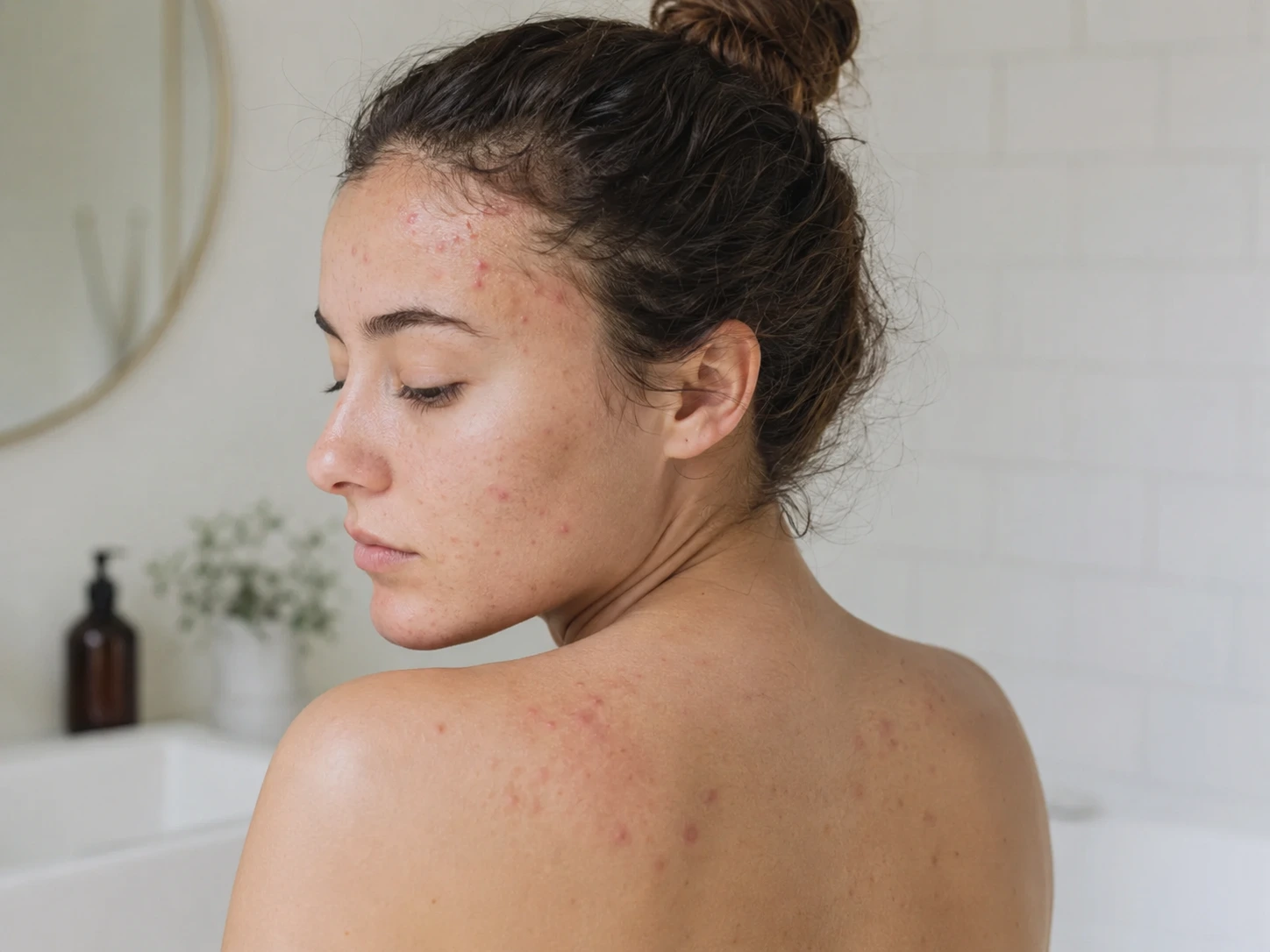
| Back and shoulders | Conditioner runoff, hair masks, oils, post-shower residue | Wash body after rinsing hair products. |
| Scalp | Heavy oils, buildup, sweat, infrequent washing, irritating formulas | Check for itchy or painful scalp acne and product buildup. |
Example
If your back breaks out mostly after deep-conditioning days, the trigger may not be your body wash. It may be conditioner residue that remains on your shoulders and upper back.
Real-world use
Map your acne location for two weeks. Write down which hair products you used and where the bumps appeared. Pattern tracking is one of the easiest ways to identify acne from shampoo, conditioner, or styling products.
Which Hair Products Are Most Likely to Trigger Breakouts?
Any product can irritate the wrong person’s skin, but some categories are more likely to create problems because they are heavier, more occlusive, or designed to stay on the hair.
Conditioner
Conditioner is one of the most common suspects because it is made to soften, smooth, and coat hair. If it runs onto your face, neck, chest, shoulders, or back and is not fully rinsed away, it can contribute to clogged pores.
Example: You rinse conditioner last, step out of the shower, and then towel-dry. Some residue may remain on your upper back.
Real-world use: Rinse conditioner thoroughly, clip hair up after rinsing, and wash your face and body after your hair routine.
Hair oils
Hair oils can be helpful for dryness, shine, and frizz control. But hair oils causing acne is a real concern for acne-prone skin, especially when oils touch the forehead, temples, cheeks, neck, or pillowcase.
Example: A few drops of oil on the ends of your hair may be fine, but applying oil near the scalp or face-framing layers can increase skin contact.
Real-world use: Apply oils only to the mid-lengths and ends, keep hair off your face, and avoid sleeping with oily hair against your cheeks.
Leave-in conditioner
Leave-in conditioner causing breakouts can happen because the product is designed to stay in the hair. That gives it more time to transfer onto the face, neck, and pillowcase.
Example: A curl cream or leave-in product applied after every wash may sit against your skin for hours.
Real-world use: Use less product, apply below the ears when possible, and choose non comedogenic hair products if you are acne-prone.
Pomades, waxes, and edge-control products
These products are often thicker and more occlusive. They can be especially linked to hairline acne because they are applied close to the skin.
Example: A styling wax used daily around the hairline may create small bumps right along the forehead or temples.
Real-world use: Avoid applying heavy styling products directly on the skin, and cleanse the hairline at night.
Hairspray and dry shampoo
Sprays can land on the forehead, cheeks, neck, and shoulders. Dry shampoo can also build up on the scalp and hairline if used repeatedly without washing.
Example: You spray near your bangs and later notice tiny forehead bumps.
Real-world use: Shield your face when spraying, wash your hairline after styling, and avoid using dry shampoo as a long-term substitute for cleansing.
What Ingredients in Hair Products Can Clog Pores?
There is no universal “bad ingredient” list that applies to everyone. A product can break one person out and work perfectly for another. Still, people with acne-prone skin should be more cautious with heavy, greasy, waxy, or highly fragranced formulas.
Ingredients and formula types to watch
- Heavy oils and butters: Can feel rich on hair but may be too occlusive for acne-prone facial or back skin.
- Waxes and pomades: Often used for hold and shine, but they can sit heavily around the hairline.
- Thick silicones: Silicones are not automatically bad, but some heavy formulas can leave a film that traps residue for certain users.
- Fragrance-heavy formulas: Fragrance in hair products acne concerns are often mixed with irritation concerns. Fragrance can trigger sensitivity or contact dermatitis in some people.
- Rich leave-in products: The longer a product remains on hair, the more opportunity it has to transfer to skin.
What about sulfates and acne?
Sulfates and acne are often discussed online, but sulfates are not automatically acne-causing. Some people find sulfate-based shampoos drying or irritating, while others tolerate them well. If a shampoo leaves your scalp or skin irritated, tight, itchy, or inflamed, it may not be a good fit for you.
What about silicones and acne?
Silicones and acne are also not a simple yes-or-no issue. Many silicone ingredients are used to smooth hair and improve slip. The bigger question is the total formula, how much is used, where it touches your skin, and whether it is fully washed away.
Example
A lightweight silicone-based conditioner used only on hair ends may not cause problems. A heavy cream with oils, butters, waxes, and fragrance applied near the scalp and face may be more likely to trigger issues.
Real-world use
Instead of panicking over one ingredient, evaluate the formula and the contact pattern. If breakouts happen where the product touches, test a lighter or non comedogenic hair care option for several weeks.
Can Shampoo and Conditioner Cause Acne?
Yes, shampoo and conditioner can contribute to acne in some people. Shampoo causing acne may happen if the formula irritates the skin or leaves residue around the hairline. Conditioner causing acne may happen when rich conditioning agents coat the skin, especially on the forehead, neck, shoulders, chest, or back.
Shampoo causing acne
More likely when shampoo is fragranced, irritating, not fully rinsed, or frequently runs over acne-prone areas.
Conditioner causing acne
More likely when conditioner is rich, oily, heavy, or rinsed down the body without washing the skin afterward.
Example
You switch to a moisturizing shampoo and conditioner set. Your hair feels softer, but your forehead and upper back break out. That does not prove the products are the only cause, but it is enough reason to test a different routine.
Real-world use
- Shampoo first.
- Condition hair from mid-lengths to ends.
- Rinse very thoroughly.
- Clip hair away from the skin.
- Wash your face, chest, shoulders, and back after rinsing hair products.
Hairline Acne vs Forehead Acne vs Back Acne From Hair Products
Different breakout locations often point to different habits. Here is how to think through the most common patterns.
Hairline acne
Hairline acne often appears as small bumps or whiteheads along the edge of the forehead, temples, or nape of the neck. It is commonly linked with styling gels, pomades, waxes, edge-control products, oils, sunscreen near the hairline, hats, and sweat.
Example: You apply styling gel every morning and notice bumps exactly where the gel meets your skin.
Real-world use: Apply styling product slightly away from the skin, wipe the hairline after styling, and cleanse the area before bed.
Forehead acne from hair products
Forehead acne from hair products is common when bangs, curls, or front layers touch the forehead. Leave-ins, oils, sprays, and dry shampoo can all transfer onto the skin.
Example: Breakouts improve when you pin your bangs back for a week.
Real-world use: Keep hair off the forehead during workouts and sleep, and use lighter products near the front of the hair.
Face acne from hair products
Face acne from hair products can show up on the cheeks, jawline, temples, or neck. Pillowcase transfer is a major clue, especially if one side of the face breaks out more than the other.
Example: Your right cheek breaks out more because you sleep on your right side with product-coated hair.
Real-world use: Change pillowcases often, sleep with hair loosely tied back, and avoid applying heavy products before bed.
Back acne from hair products
Back acne from hair products often comes from conditioner, hair masks, oils, and rinse-off treatments. Product can run down the back in the shower and stay on the skin if you do not cleanse afterward.
Example: Upper-back breakouts get worse after using a deep conditioner or hair mask.
Real-world use: Wash your back after rinsing conditioner. This one change can make a big difference for some people.
Scalp acne
Scalp acne can feel itchy, sore, or bumpy. It may be linked to product buildup, sweat, oil, occlusive styling products, hats, or not washing often enough for your scalp type.
Example: You use dry shampoo for several days in a row and notice tender bumps near the scalp.
Real-world use: Rotate in a gentle cleansing routine and avoid letting dry shampoo or styling products accumulate for too long.
Comparison Table: Acne-Safe vs Pore-Clogging Hair Care Habits
| Habit | Higher Breakout Risk | More Acne-Safe Alternative |
|---|---|---|
| Conditioning | Applying conditioner near scalp and letting it run down the back | Apply conditioner from mid-lengths to ends and wash body after rinsing |
| Styling | Using pomade, wax, or gel directly on the hairline | Keep styling product off skin and cleanse the hairline at night |
| Leave-in products | Applying heavy leave-ins near face-framing layers | Use lightweight leave-ins lower on the hair shaft |
| Hair oils | Sleeping with oily hair against the face | Apply oil sparingly to ends and protect pillowcases |
| Dry shampoo | Using dry shampoo for many days without washing | Use occasionally and cleanse the scalp regularly |
| Fragrance | Using strong fragrance near sensitive skin | Choose fragrance-free or low-fragrance formulas if sensitive |
| Pillowcases | Sleeping on product buildup for several nights | Change pillowcases frequently, especially during breakout testing |
Best Hair Care Routine for Acne Prone Skin
The best hair care routine for acne prone skin is simple, consistent, and designed to reduce product contact with breakout-prone areas. You do not need to throw away every product immediately. Start by changing the highest-impact habits first.
Step 1: Wash hair before washing face and body
This helps remove shampoo and conditioner residue from your skin before you finish your shower.
Example: Shampoo and condition first, then cleanse your face, chest, shoulders, and back last.
Real-world use: This is especially helpful if you get acne from conditioner on the back or shoulders.
Step 2: Keep conditioner away from the scalp and skin
Unless your scalp specifically needs conditioner, apply it from mid-lengths to ends. This reduces the chance of residue touching the hairline, forehead, and neck.
Example: If your hair is long, gather it over one shoulder while rinsing so product does not run down your back.
Real-world use: Clip conditioned hair up while it sits, then rinse thoroughly and wash skin afterward.
Step 3: Choose acne safe hair products
Look for labels such as non comedogenic, oil-free, fragrance-free, sensitive skin-friendly, dermatologist-tested, or suitable for acne-prone skin. These labels are not perfect guarantees, but they can help narrow your options.
Example: If a rich styling cream breaks you out, try a lighter serum or spray used only on the ends.
Real-world use: Introduce one new product at a time so you can tell what your skin tolerates.
Step 4: Reduce product near the face
Use the smallest amount needed. Concentrate products on the mid-lengths and ends rather than the roots, bangs, or face-framing pieces.
Example: Apply curl cream below ear level instead of smoothing it through the front hairline.
Real-world use: If you need product near the front, wipe the skin around the hairline afterward.
Step 5: Change pillowcases and clean hair tools
Pillowcases, bonnets, scarves, hats, helmets, brushes, and combs can hold product residue. If your skin is breaking out, these items matter.
Example: A hairbrush used with styling cream can reapply old residue to freshly washed hair.
Real-world use: Wash pillowcases at least weekly, and more often during active breakouts.
Buyer Decision Guide: How to Choose Hair Products for Acne-Prone Skin
Choosing hair products for acne prone skin is not about buying the most expensive product. It is about matching your hair needs with your skin tolerance.
Mini buyer checklist
- Does the product say non comedogenic or acne-safe?
- Is it fragrance-free or suitable for sensitive skin?
- Is the texture lightweight instead of greasy, waxy, or heavy?
- Will it touch your forehead, cheeks, neck, shoulders, or back?
- Is it rinse-off or leave-in?
- Can you apply it only to the ends of your hair?
- Are you introducing only one new product at a time?
- Can you patch test before using it all over?
Best product type by concern
| Concern | Look For | Be Careful With |
|---|---|---|
| Hairline acne | Lightweight styling products, non comedogenic formulas | Pomades, waxes, heavy gels, edge-control products on skin |
| Forehead acne | Products that do not transfer easily, hair off face | Bangs with leave-in conditioner, oils, sprays |
| Back acne | Rinse-clean conditioners, body wash after hair care | Heavy conditioners, masks, oils running down the back |
| Sensitive skin | Fragrance-free, gentle, dermatologist-tested products | Strong fragrance, harsh formulas, irritating essential oils |
| Scalp acne | Balanced cleansing, lightweight scalp products | Product buildup, heavy oils, repeated dry shampoo use |
For more educational content around wellness, beauty, and personal care routines, visit HealthAffPro.
Common Mistakes That Make Hair Product Acne Worse
Mistake 1: Washing your body before rinsing conditioner
If conditioner is the last thing that touches your back, residue can remain on the skin. Wash your body after rinsing conditioner instead.
Mistake 2: Applying hair oil too close to the face
Hair oils can migrate. If you are acne-prone, keep oils on the ends of your hair and away from face-framing pieces.
Mistake 3: Using too much styling product
More product does not always mean better hair. Excess gel, cream, wax, or spray can build up and transfer to skin.
Mistake 4: Ignoring pillowcases
Your pillowcase can collect conditioner, oil, hairspray, sweat, and skincare. During breakouts, change it more often.
Mistake 5: Switching too many products at once
If you replace shampoo, conditioner, leave-in, gel, and skincare all at the same time, you will not know what helped or hurt.
Mistake 6: Assuming “natural” always means acne-safe
Natural oils, butters, essential oils, and botanical extracts can still clog pores or irritate sensitive skin. The skin only cares how it reacts, not how natural the label sounds.
Expert-Style Insight: The Pattern Matters More Than the Product Name
When evaluating hair products causing acne, the most useful question is not simply “Is this product bad?” The better question is: “Where does this product touch my skin, how long does it stay there, and did breakouts start or worsen after I introduced it?”
A heavy conditioner used only on the ends and rinsed thoroughly may be fine for one person. The same product applied near the scalp, rinsed down the back, and left on the pillowcase may trigger breakouts for someone else.
For acne-prone skin, contact time matters. Leave-in products, oils, pomades, and styling creams often deserve closer attention because they remain on the hair and can transfer throughout the day. Rinse-off products matter too, especially if they leave residue on the back, neck, or hairline.
A practical 3-week test
- Week 1: Keep your products the same, but change your technique. Wash body after hair, keep hair off skin, and change pillowcases more often.
- Week 2: Remove the most suspicious leave-in or styling product. Do not change everything else.
- Week 3: If breakouts improve, continue. If not, test a lighter shampoo or conditioner designed for sensitive or acne-prone skin.
Important: If your acne is painful, deep, cystic, infected-looking, itchy, spreading quickly, or leaving scars, do not rely only on product changes. A dermatologist can help identify whether you are dealing with acne, folliculitis, contact dermatitis, seborrheic dermatitis, or another scalp or skin condition.
Trusted Sources and Further Reading
FAQs
Can hair products cause acne?
Yes. Hair products can cause or worsen acne when residue from shampoo, conditioner, oils, gels, sprays, pomades, or leave-in products touches the skin and clogs pores. Breakouts often appear near the hairline, forehead, cheeks, neck, shoulders, chest, or back.
Can shampoo cause acne?
Shampoo can contribute to acne for some people, especially if it irritates the skin, leaves residue, contains strong fragrance, or repeatedly runs over acne-prone areas. If breakouts started after a new shampoo, switch back or test a gentler formula.
Can conditioner cause acne?
Yes. Conditioner is a common trigger because it is designed to coat and soften hair. If it runs down your back or touches your face and is not fully rinsed away, it may contribute to clogged pores and breakouts.
Why do I get acne around my hairline?
Hairline acne may be linked to pomades, gels, waxes, edge-control products, oils, hairspray, dry shampoo, sweat, hats, or product buildup. If bumps appear exactly where styling products touch your skin, your hair routine may be involved.
Can hair oil cause pimples?
Hair oil can cause pimples in acne-prone people if it transfers to the forehead, temples, cheeks, neck, pillowcase, or back. To reduce risk, apply oil only to the ends of your hair and keep oily hair away from your face while sleeping.
Can leave-in conditioner cause acne?
Leave-in conditioner can cause breakouts because it stays on the hair and may transfer onto the skin over time. This is more likely if you apply it near the scalp, bangs, face-framing layers, or before bed.
What hair products clog pores?
Heavy oils, waxes, pomades, thick creams, rich conditioners, and some leave-in styling products are more likely to clog pores for acne-prone skin. However, the full formula and how it contacts your skin matter more than one ingredient alone.
How do I know if my hair products are causing acne?
Look for timing and location. If breakouts started after a new hair product and appear where your hair touches, where conditioner rinses down, or where styling product sits, your hair routine may be contributing. Try removing one suspected product for two to three weeks.
How can I prevent acne from hair products?
Wash your face and body after rinsing hair products, keep conditioner away from the scalp and back, use lightweight non comedogenic hair products, avoid heavy oils near your face, change pillowcases often, and keep hair off acne-prone skin.
What hair products are safe for acne-prone skin?
Look for acne safe hair products labeled non comedogenic, oil-free, fragrance-free, sensitive skin-friendly, or dermatologist-tested. No label guarantees perfect results, so introduce one product at a time and watch how your skin responds.
Conclusion: Hair Products Can Cause Acne, But You Can Control the Risk
Hair products causing acne is more common than many people realize. Shampoo, conditioner, oils, gels, sprays, pomades, leave-in conditioners, and styling creams can all contribute to breakouts when residue sits on acne-prone skin.
The good news is that you do not need a complicated routine to improve the situation. Start with the basics: rinse hair products thoroughly, wash your face and body after your hair routine, keep heavy products away from the hairline and face, change pillowcases often, and choose non comedogenic hair products when possible.
Most importantly, pay attention to patterns. Hairline acne, forehead acne from hair products, back acne from hair products, and scalp acne often tell a story. When you understand where the product is touching your skin, you can adjust your routine more intelligently.
For more practical wellness and hair care content, visit HealthAffPro, browse the Health & Wellness category, or explore more guides in Hair Care.
 ✓
✓