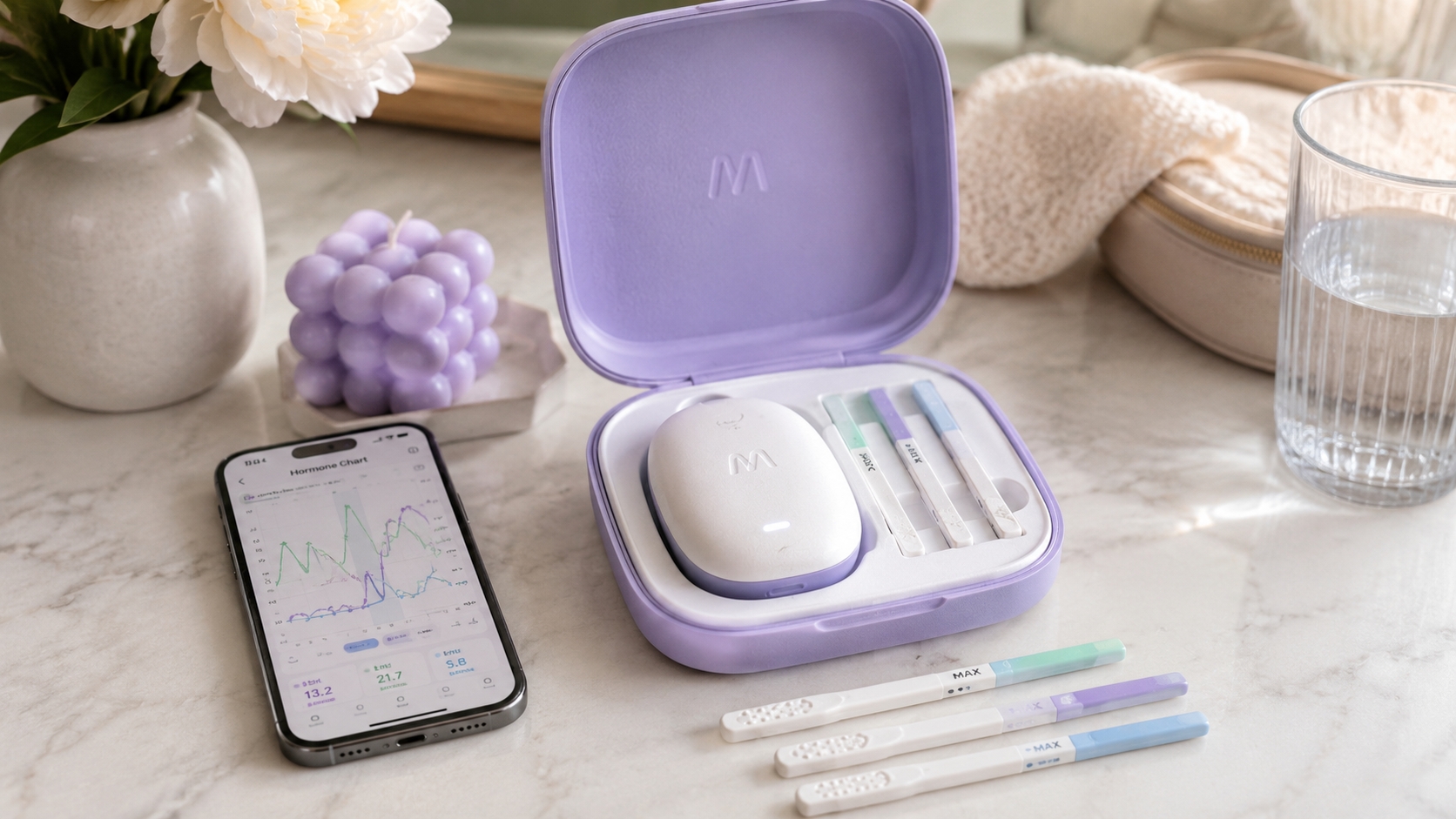
If you are considering Mira, the buying question is not whether it gives you more hormone data than a basic ovulation strip. It is whether that extra data will change what you do enough to justify the monitor and recurring wands. This Mira Hormone Monitor review focuses on that decision: when Mira adds useful context, what its “ovulation confirmation” language really means, and when a cheaper method may already be enough.
Quick Answer
Mira makes the most sense if you specifically want numerical multi-hormone trends rather than only an LH positive/negative result. The Max Kit tracks LH, E3G and PdG; Ultra4 adds FSH. If basic LH strips already give you a clear, actionable surge and you do not need pre- or post-surge hormone context, Mira’s recurring wand cost may be difficult to justify.
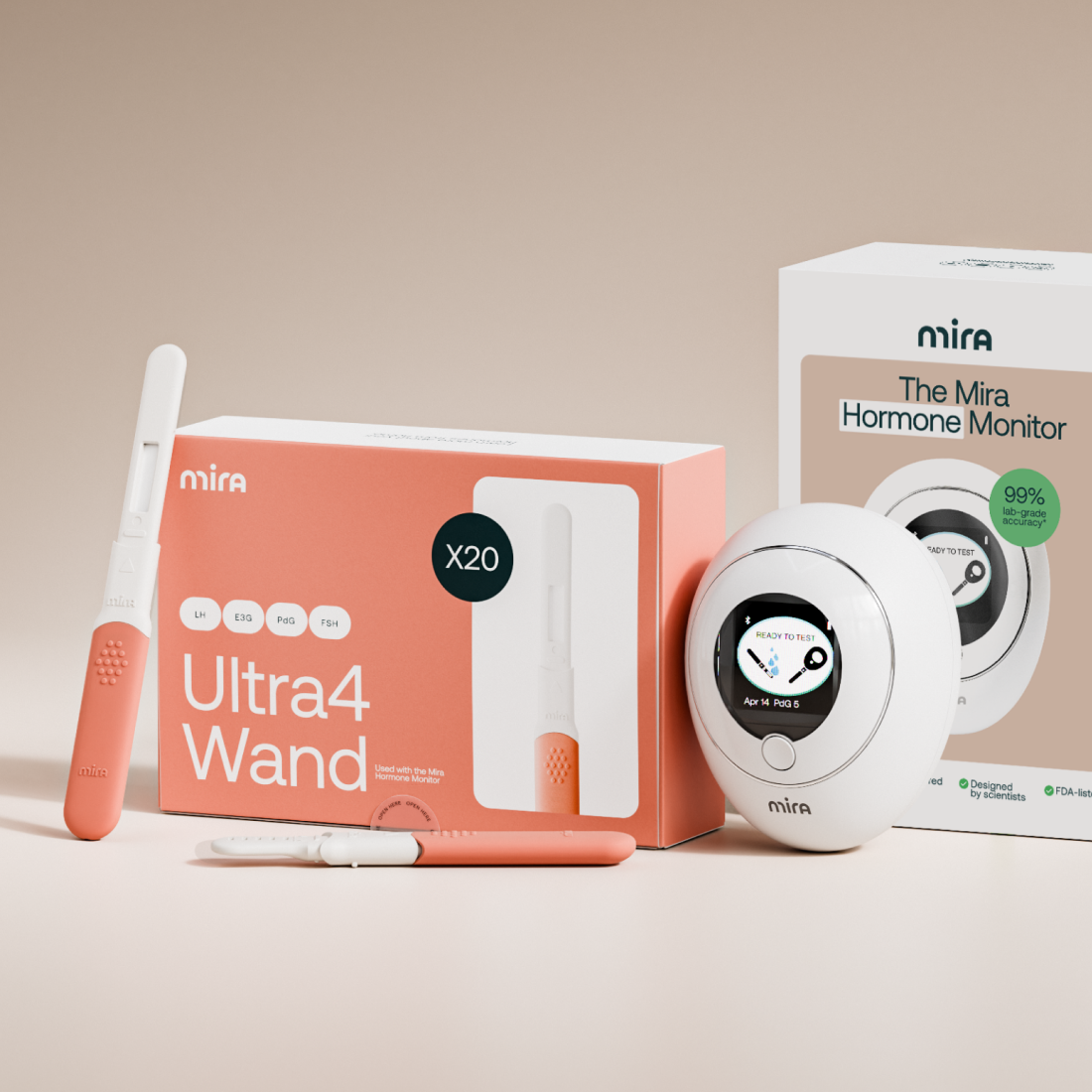
Mira Hormone Monitor: Ultra4 Kit
Four-hormone tracking for buyers who specifically want LH, E3G, PdG and FSH in one system.
$249 with 20 Ultra4 Wands; the 30-wand option is currently $269. [1]
What Does Mira Actually Do?
Mira measures hormone changes from urine and displays numerical trends in its app. The Max Kit measures LH, E3G and PdG. Mira currently lists it at $219 with 10 Max Wands or $229 with 20. The Ultra4 Kit measures LH, E3G, PdG and FSH, with 20 wands listed at $249 and 30 at $269. [1] [2]
A basic LH strip mainly shows a surge. Mira adds E3G before it and PdG afterward; Ultra4 also adds FSH. That extra information matters only if it answers a question you actually have.
Does Mira Really Confirm Ovulation?
This is the claim buyers should interpret most carefully. Mira markets the Max Kit as able to “predict & confirm ovulation” because it tracks PdG alongside LH and E3G. Ultra4 also includes PdG and shows post-surge hormone patterns in the app. [2]
But Mira’s product-level “confirmation” language is not the same as clinical confirmation of ovulation. ASRM describes urinary LH as indirect evidence because the surge generally precedes ovulation by one to two days, and false results can occur. Clinical evaluation may use other evidence such as menstrual history, serum progesterone or ultrasound. [3]
An LH rise can indicate approaching ovulation, while a sustained post-surge PdG pattern adds supporting context. One Mira reading should not be treated as proof of normal ovulation, fertility, or pregnancy.
When Does Mira Add More Value Than Cheap Ovulation Strips?
If your only question is when an LH surge appears, a standard OPK may be enough. Mira becomes more relevant with variable cycles, more than one apparent LH rise, or when you specifically want E3G before the surge and PdG afterward. Ultra4 adds FSH if that additional marker matters to you.
Home PdG data should not be used to diagnose “low progesterone” or luteal-phase deficiency. ASRM notes that even serum progesterone can fluctuate substantially and that proposed tests do not reliably distinguish fertile from infertile women. [4]
Mira also states that Ultra4 is for hormone monitoring and cycle tracking and is not intended to diagnose PCOS, ovarian function, egg supply, or another medical condition. [1]
What Does Mira Cost After the Starter Kit?
The starter price is only part of the decision. Mira currently lists 20 Max Wands at $89. Ultra4 refills are $99 for 20 wands and $139 for 30. [5] [6]
Mira says most Ultra4 users need around 18–22 wands per cycle. It recommends 20 wands for a regular cycle up to 30 days and 30 for longer, irregular, or variable cycles. [1]
The value question is whether the added hormone context is useful enough to keep paying for cycle after cycle.
What Are the Real Advantages and Trade-Offs?
Pros
- Numerical hormone trends instead of only an LH result.
- Max combines LH, E3G and PdG in one system.
- Ultra4 adds FSH for four-hormone tracking.
Cons
- Continued tracking requires recurring wand purchases.
- More numbers do not automatically create more clarity.
- Mira is not a diagnostic tool for infertility, PCOS or suspected anovulation.
- Returns are subject to conditions and a 15% restocking fee; return-label charges can also apply. [7]
Mira currently states a one-year warranty against manufacturing defects for the monitor, subject to its warranty terms. [7]
Should You Choose Max or Ultra4?
Max is the more focused choice if E3G, LH and post-surge PdG are the information you want. [2]
Ultra4 makes more sense when you specifically want FSH added or prefer its 20- or 30-wand options. Four hormones are not automatically better than three. [1]
Who Should Buy Mira—and Who Should Skip It?
Mira makes more sense if:
- You want numerical hormone trends, not only an LH positive/negative result.
- You have a specific reason to follow E3G and PdG around your LH surge.
- Your cycles are variable enough that a fixed calendar prediction is not useful.
- You are comfortable paying for refill wands.
Skip or delay Mira if:
- Cheap LH strips already give you a clear, actionable surge.
- You expect a home monitor to diagnose a fertility problem.
- The extra hormone data would not change any decision you make.
- The recurring cost would make consistent testing unrealistic for you.
If you are choosing between premium monitors, see our Mira vs Inito comparison and Mira vs Clearblue comparison. If your concern is device errors, failed wands, refunds or support, read our Mira Fertility complaints guide. For unpredictable cycles, our irregular-period ovulation tracking guide covers the broader tracking problem.
Final Verdict: Is Mira Worth It?
Mira is worth considering when the extra hormone trends answer a real question that cheaper LH strips leave unresolved. Max is the more focused option if LH, E3G and PdG are enough; Ultra4 is easier to justify when you specifically want FSH added.
With a predictable cycle and clear LH surge, Mira may be more data than necessary. If pre- and post-surge trends matter to you, it provides more context than basic OPKs.
The buying rule is simple: pay for Mira because you need the additional information—not because more hormone numbers automatically mean a better fertility outcome.
Mira Ultra4 Kit
Four-hormone tracking for buyers who have a clear reason to use the additional data.
$249 with 20 Ultra4 Wands. [1]
FAQs
Can Mira tell if I did not ovulate?
Mira can show unexpected hormone patterns, but it should not be used to diagnose anovulation. Persistently unclear or irregular cycles are better discussed clinically.
Is Mira better than regular ovulation strips?
If LH timing is all you need, basic strips may be enough. Mira adds numerical E3G, LH and PdG trends, plus FSH with Ultra4.
When should I seek a fertility evaluation instead of buying more tracking tools?
ASRM recommends evaluation after 12 months of trying for women under 35 and after 6 months for women 35 or older, with earlier evaluation when a fertility-affecting condition is present. [3]
Sources & References
- Mira — Ultra4 Kit
Ultra4 hormones, kit pricing, wand guidance and diagnostic limitations.
Open source ↗ - Mira — Max Kit
Max hormones, kit pricing and manufacturer ovulation-confirmation language.
Open source ↗ - ASRM — Fertility Evaluation of Infertile Women
Clinical interpretation of urinary LH and fertility-evaluation timing.
Open source ↗ - ASRM — Diagnosis and Treatment of Luteal Phase Deficiency
Limitations of progesterone testing and luteal-phase diagnosis.
Open source ↗ - Mira — Max Wands
Current Max Wand refill pricing.
Open source ↗ - Mira — Ultra4 Wands
Current Ultra4 refill pricing.
Open source ↗ - Mira — Cancellation, Refund & Warranty Policy
Return conditions, restocking fee and monitor warranty terms.
Open source ↗
 ✓