
If your app says your fertile window has passed, your LH test turns positive twice, or your temperature does not rise, the problem is not simply “finding ovulation day.” With irregular periods, the harder part is deciding which signal deserves attention.
The better question is “What sequence of signs is appearing in this cycle?” This guide focuses on what to do when calendar predictions, LH tests, BBT, or PdG do not line up.
Quick Answer
Track the pattern, not a fixed calendar day. Use cycle dates and cervical mucus for context, LH to identify a possible approaching ovulation, and post-surge information such as PdG trends or temperature as supporting evidence. ASRM describes urinary LH as indirect evidence and notes that false-positive and false-negative results can occur. [2]
Why Do Irregular Cycles Make Ovulation Harder to Predict?
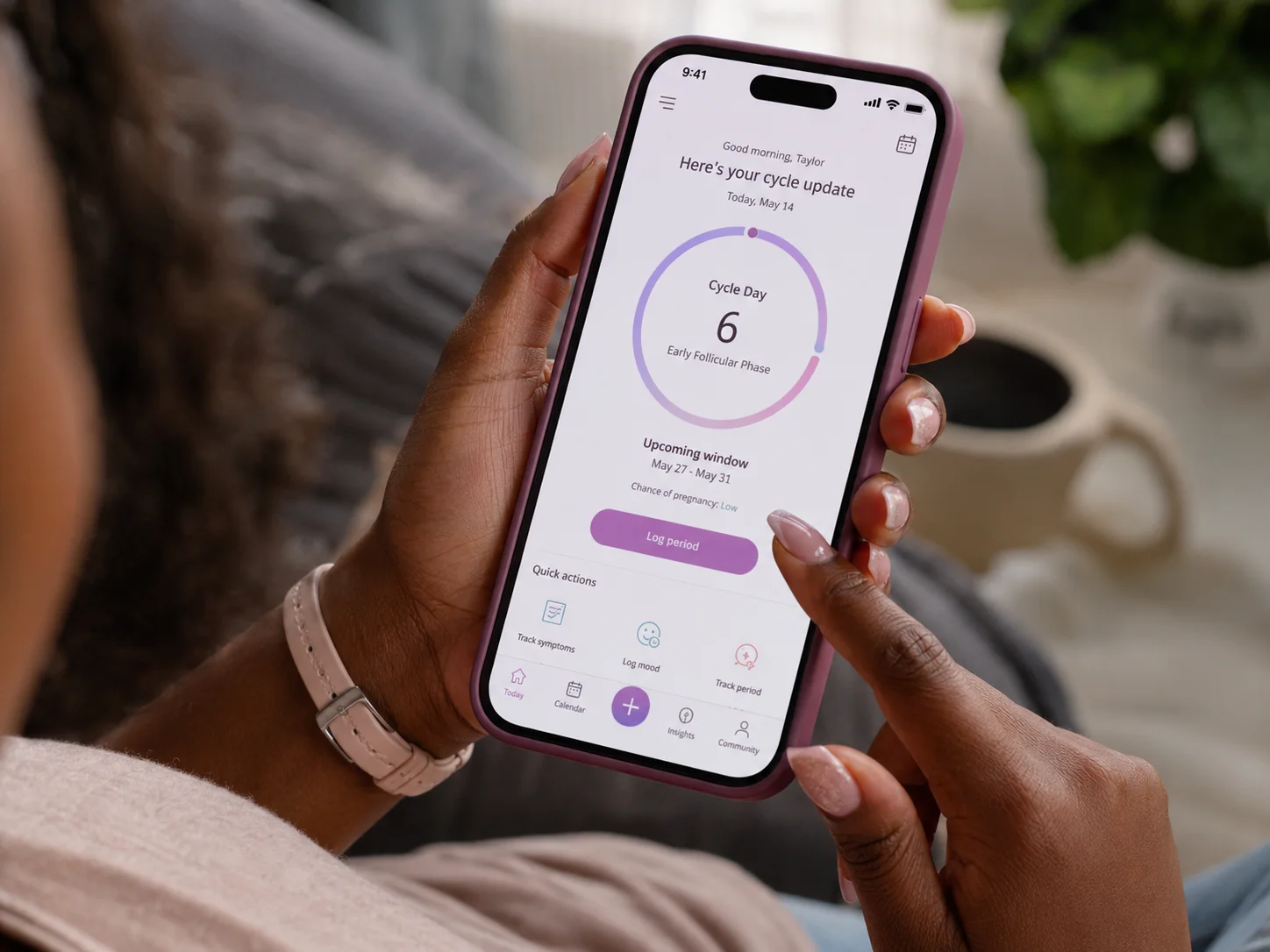
Calendar-based predictions depend heavily on previous cycle timing. When cycle length changes from month to month, the predicted fertile window can fall before or after what is happening in the current cycle. ACOG describes cycles under 21 days, over 35 days, or varying by more than about 7–9 days as abnormal or irregular patterns. [1]
An app can organize dates, but it should not overrule current-cycle evidence. If the predicted day passes without the signs you expected, the estimate may simply be off.
What If My App Says I Should Have Ovulated but I Haven’t Seen an LH Surge?
ASRM says urinary LH testing identifies a surge that usually precedes ovulation by about 1–2 days, but test performance varies and false negatives can occur. [2] If the app’s date arrives without a clear surge, that does not automatically mean you missed ovulation.
For a long or shifting cycle, prioritize current-cycle signs: cervical mucus, LH testing according to the product instructions, and the broader pattern you are seeing.
What If I Get More Than One Positive LH Test?
Research has documented several LH-surge patterns, including rapid, gradual, biphasic, plateau and multiple-peak patterns. [4] A surge does not always appear as one clean positive followed by one obvious next step.
ASRM also notes that some people with PCOS can have higher baseline LH, which may contribute to false-positive urinary LH results. [2] The practical takeaway is that the first positive result is a signal to watch what follows, not proof that egg release occurred.
If LH Rises, How Do I Know What Happened Next?
Urinary LH is useful because it can show that ovulation may be approaching, but ASRM describes it as indirect evidence. [2] That distinction matters most when you see repeated surges or a positive OPK followed by no clear post-surge pattern.
Some people use PdG or basal body temperature afterward for more context. NICE advises against using BBT charts to confirm ovulation. [3] A temperature shift can still be recorded retrospectively, but it should not be treated as definitive proof on its own.
What If My LH, BBT and PdG Results Don’t Agree?
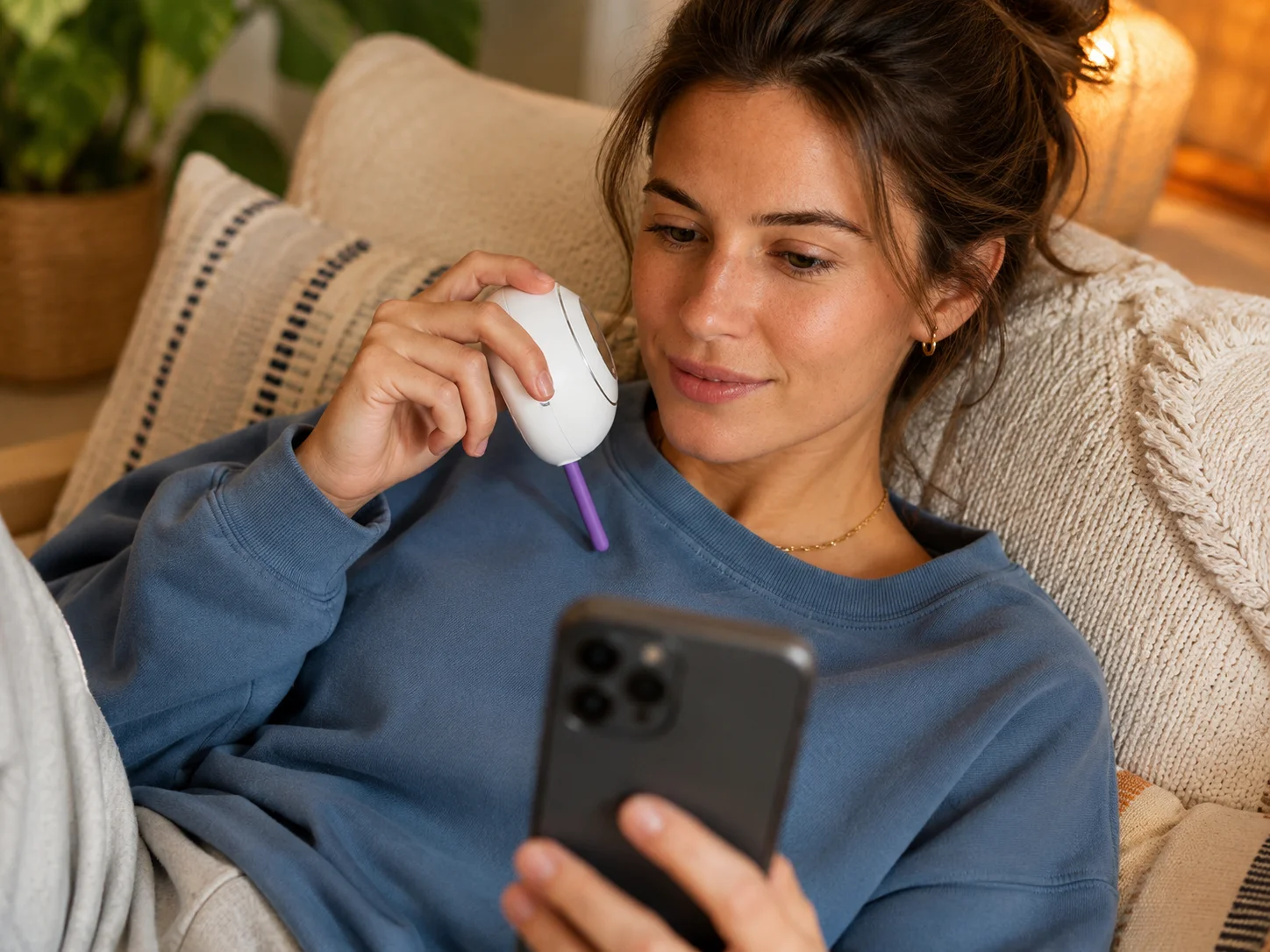
Mixed signals do not automatically mean something is medically wrong. The markers reflect different parts of the cycle, and a positive LH result with no obvious temperature shift may simply leave the cycle uncertain.
One low progesterone-related result should not become a diagnosis of “low progesterone.” ASRM’s 2026 luteal-phase guidance says progesterone can fluctuate substantially over a short period and that no single minimum serum progesterone concentration defines normal or fertile luteal function. [5]
Use several observations to understand a pattern rather than turning one home result into a medical conclusion.
When Is Simple Ovulation Tracking Enough?
If your cycles are mildly variable and your main question is “When might ovulation be approaching?”, cervical mucus plus inexpensive LH strips may be enough.
This simpler route has a clear limitation: LH can indicate a surge, but it does not establish that ovulation definitely occurred. [2] If that limitation does not affect the decision you are trying to make, paying for more data may not add much value.
When Can Multi-Hormone Tracking Add Useful Context?
If you repeatedly see unclear OPK lines, several LH rises, or long cycles, quantitative multi-hormone tracking may add context around a suspected surge.
The trade-off is important: more hormone data also means more testing, more interpretation and recurring consumable cost. More information is useful only when it answers a question that simpler tracking is not answering.
Where Does Mira Fit?
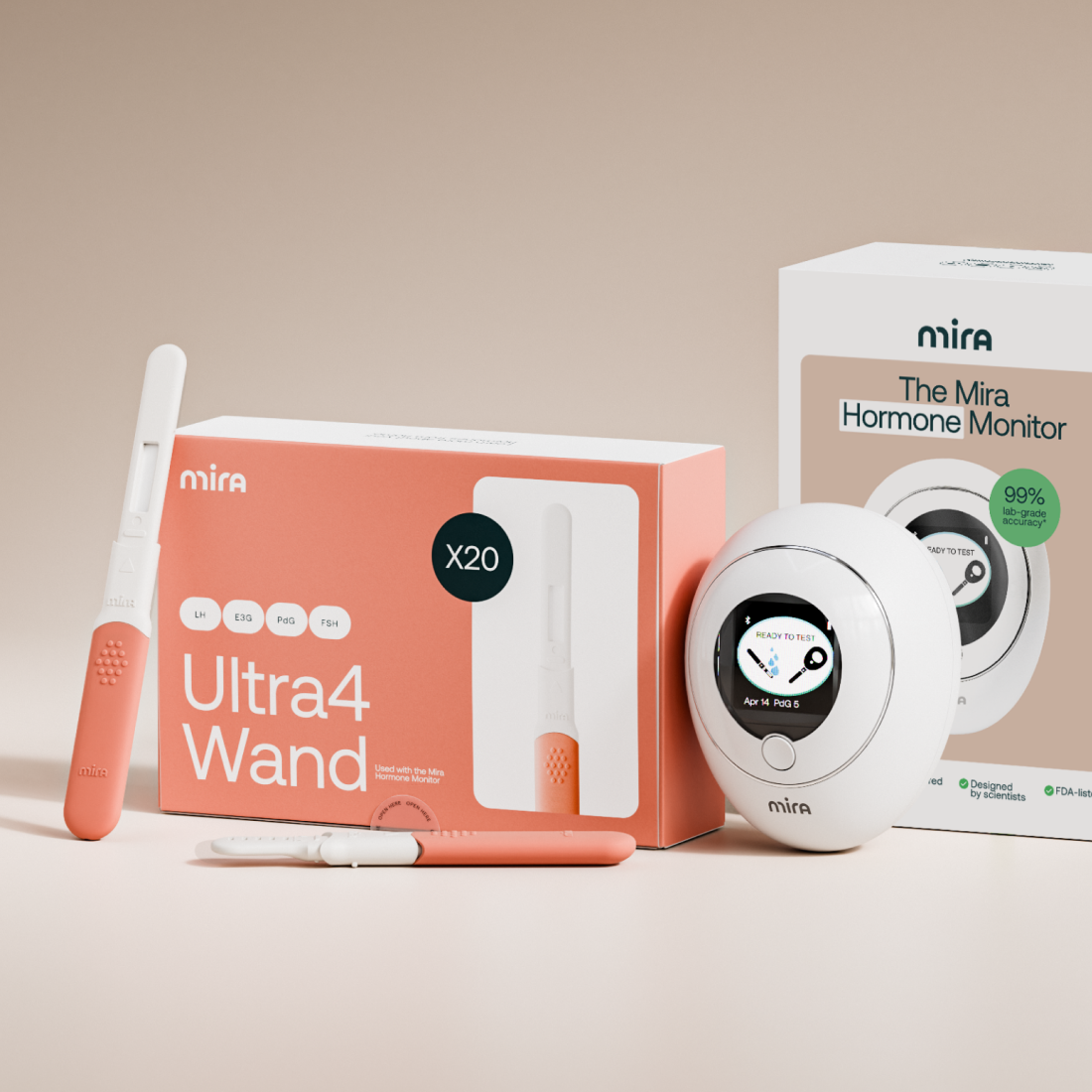
Mira becomes more relevant when your main frustration is not knowing what is happening around an LH surge. Mira states that its products are for hormone monitoring and cycle tracking, not diagnosis. [6]
That makes Mira a possible next step when standard OPKs leave important questions unanswered. But if basic LH tracking already gives you a clear pattern, a monitor and recurring wands may add cost without solving a real problem.
For the buying decision, see our Mira Hormone Monitor review, Mira vs Inito, Mira vs Clearblue, or Mira complaints analysis.
When Does More Tracking Stop Helping?
The simplest useful method is usually the one that answers your actual question. More numbers can also create more interpretation.
LH may be enough for approaching-ovulation timing. Broader hormone trends may help with repeated surges. But a home monitor cannot explain persistent irregularity.
When Should I Stop Troubleshooting at Home?
Home tracking should support—not delay—medical assessment. ACOG recommends infertility evaluation after 12 months of trying if you are 35 or younger, after 6 months if you are older than 35, and discussing evaluation now if you are older than 40. [7]
Seek advice sooner when periods are persistently irregular or absent, bleeding is unusual, pelvic pain is significant, or a known reproductive-health condition is involved. NICE recommends clinical hormone testing in prolonged irregular cycles rather than relying on BBT alone. [3]
If your separate concern is period pain rather than ovulation timing, our Myoovi vs TENS machine comparison covers the device trade-offs for pain management; Myoovi is not an ovulation-tracking tool.
Frequently Asked Questions
Does a positive LH test confirm ovulation?
No. ASRM describes urinary LH as indirect evidence. It can identify a surge that often precedes ovulation, but it does not prove follicle rupture occurred. [2]
Are cheap ovulation strips enough for irregular cycles?
They may be enough if your main goal is identifying a clear LH surge. If you repeatedly get ambiguous lines, several rises, or long cycles, broader tracking may provide more context.
Can Mira diagnose PCOS or low progesterone?
No. Mira states that its products are for hormone monitoring and cycle tracking, not for diagnosing PCOS or another medical condition. [6]
Final Answer
With irregular periods, do not build your tracking around one predicted ovulation date. Follow the current cycle, use LH as a possible approaching-ovulation signal, and treat post-surge information as supporting context rather than absolute proof.
If inexpensive tracking gives you a clear pattern, keep it simple. If repeated LH rises or long cycles leave you guessing, multi-hormone tracking may add useful context. But when irregularity itself is persistent or symptoms are concerning, the sensible next step is clinical evaluation—not simply more home tests.
Sources & References
- ACOG — Abnormal Uterine Bleeding
Supports irregular-cycle definitions and abnormal bleeding guidance.
View source - ASRM — Fertility Evaluation of Infertile Women
Supports urinary LH timing, indirect-evidence limitations and false-positive/false-negative considerations.
View source - NICE NG257 — Investigation of Fertility Problems
Supports BBT limitations and clinical assessment in prolonged irregular cycles.
View source - Peer-Reviewed Review — Detection of Ovulation
Supports variation in LH-surge patterns.
View source - ASRM — Luteal Phase Deficiency Committee Opinion (2026)
Supports limitations of interpreting a single progesterone value.
View source - Mira — Terms of Use
Supports the manufacturer limitation that Mira is for hormone monitoring and cycle tracking rather than diagnosis.
View source - ACOG — Evaluating Infertility
Supports general fertility-evaluation timing by age.
View source
 ✓
✓